
Technology
Earbuds vs. In-Ear Headphones: What Is the Difference?
Open-fit earbuds rest at the ear opening, while in-ear headphones use tips to form a seal. Compare fit, isolation, bass response, comfort, stability, and safety.
Browse more Explore clear technology guides, practical tips and useful insights that help you understand devices, software and digital services.
Open-fit earbuds rest at the ear opening, while in-ear headphones use tips to form a seal. Compare fit, isolation, bass response, comfort, stability, and safety.

Bluetooth 5.0 added important Low Energy radio features, but the label alone does not guarantee better sound, lower latency, longer range, multipoint, or longer battery life.

Identify 3.5mm TS, TRS, and TRRS plugs, understand stereo and microphone wiring, solve combo-jack compatibility problems, and choose the right adapter.

Understand what headphone sensitivity measures, why dB/mW and dB/V cannot be compared directly, how impedance changes amplifier requirements, and when an external amp helps.

Hi-Fi is a goal of accurate, low-distortion reproduction rather than one universal headphone standard. Learn what matters in the headphones, source, DAC, amplifier, and fit.

Learn what a headphone's ohm rating means, why impedance varies with frequency, how sensitivity affects loudness, and when a phone, laptop, or amplifier has enough power.

A headset combines headphones or earphones with a microphone. Compare boom, inline, and built-in mics, wired and wireless connections, comfort, call quality, and gaming features.

Understand over-ear, on-ear, open-back, closed-back, wired, and wireless headphones, and learn which specifications and comfort factors actually matter before buying.
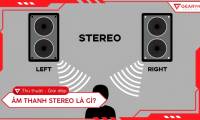
Stereo carries separate left and right channels, while mono carries one channel. Learn how each behaves on speakers and headphones, how 2.1 differs from surround, and when to enable mono in Windows.

Compare where each headphone style sits, how fit affects comfort and isolation, and which design is practical for home listening, travel, glasses, exercise, calls, and gaming.

ANC headphones use microphones and signal processing to reduce outside sound. Learn which noises they handle well, how feedforward, feedback, hybrid, and adaptive systems differ, and what ANC cannot do.
Hi-Res Audio usually means digital audio above CD's 16-bit/44.1kHz format. Learn what sample rate and bit depth do, how lossless differs, and which playback upgrades are actually useful.

Learn how headphone drivers turn electrical signals into sound and compare dynamic, balanced-armature, planar-magnetic, electrostatic, hybrid, and bone-conduction designs without the usual size myths.

Wireless describes any headphone without a cable to the source; true wireless specifically means two separate earbuds with no cable between them. Compare Bluetooth, USB receivers, fit, latency, batteries, calls, and PC support.

A headphone housing protects the driver and forms part of its acoustic chamber. Learn how open, closed, and semi-open designs and plastic, metal, resin, or wood construction affect leakage, durability, weight, and comfort.

Headphone burn-in is the practice of playing audio for hours before judging a new pair, but there is no reliable reason to treat it as required. Learn what can change, how listener adaptation affects impressions, and how to test safely.

Bass is the low-frequency part of sound, usually discussed from about 20Hz to 250Hz. Learn sub-bass and mid-bass roles, what makes bass tight or boomy, and how fit, rooms, speakers, headphones, and EQ affect it.

Bluetooth Core 6.0 added secure fine ranging through Channel Sounding plus scanning, ISOAL, feature-discovery, and frame-timing improvements. Here is what those changes mean for real devices.

Make removable USB disks read-only with Windows policy or the legacy USB WriteProtector tool, understand the limits, and restore write access.

Encrypt a removable USB drive, choose a secure password, back up the BitLocker recovery key, test access, and decrypt it safely.