Discover nature
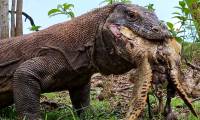
Video: Komodo Dragon Swallows a Turtle
Watch a Komodo dragon break apart and swallow a turtle, then learn how these large monitor lizards feed and why they can handle tough prey.
Explore Discover nature news, research highlights and clear explainers that make important discoveries, ideas and developments easier to understand.
Watch a Komodo dragon break apart and swallow a turtle, then learn how these large monitor lizards feed and why they can handle tough prey.

Poisonous flowers are abundant around the world. This guide will compile a list of poisonous flowers that can be deadly.

Research on tool use, voice recognition, gestures, social reassurance, responses to death, vocal imitation, and memory shows why elephant cognition is unusually complex.
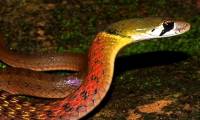
Besides the red-headed snake, you also have the red-necked snake. What kind of snake is the red grass snake, and is it venomous?
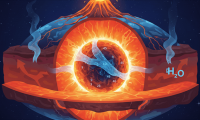
New research suggests that the Earth's core contains an amount of hydrogen equivalent to 45 oceans, which could influence volcanic activity.
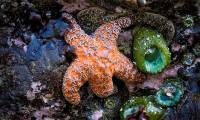
Can crickets regrow their legs? Can snakes regrow their tails? This guide will give you the answers about animals that can regenerate body parts.

An analysis of five global temperature datasets finds a measurable acceleration in warming since the mid-2010s and explains how researchers separated the long-term trend from natural variability.

A 16-study review found promising but limited evidence on bamboo shoots, blood sugar, cholesterol, and digestion. Here is what it means and how to prepare them safely.
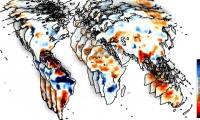
Satellite-based research links ENSO to wet and dry water-storage extremes across distant regions, with limits on what it can tell us about individual floods.
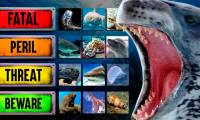
Saltwater crocodiles, bull sharks, cone snails, box jellyfish and blue-ringed octopuses pose different risks. Know why distance and local safety advice matter.

A PNAS study found that some Earth system models overestimate natural nitrogen fixation. That can exaggerate how much extra plant growth rising CO₂ will support.
A tree trunk can split suddenly with a loud report in very cold weather. The phenomenon is frost cracking, and it is not a forecast that trees will burst apart at a fixed temperature.
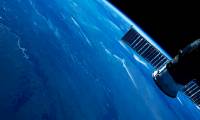
SWOT measured the Kamchatka tsunami's sea-surface height and wave pattern, giving researchers new evidence for testing tsunami models.
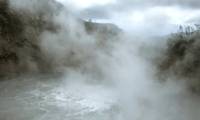
Boiling Lake, Lake Kivu, the Salton Sea, Lake Natron and Roopkund are unusual for different reasons—from geothermal heat to an archaeological mystery.
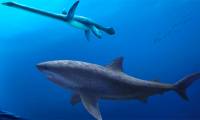
Five fossil vertebrae from northern Australia point to a shark roughly 6–8 meters long, pushing back evidence for giant lamniform sharks by about 15 million years.

A food-location experiment found that chimpanzees weighed conflicting clues. Here is what the study showed and why it does not establish human-like reasoning in every situation.
Where the Black Sea lies, how it connects to the Mediterranean, and why its oxygen-rich surface and anoxic depths support very different ecosystems.

Compare monocled, Chinese and Indochinese spitting cobras, and understand why the king cobra belongs to a different genus despite occurring in Vietnam.

Read the histories of five famous final survivors, including extinct subspecies, a short-lived ibex clone and a frog whose extinction remains unconfirmed.
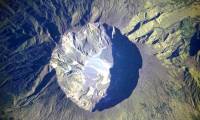
Understand the causes and consequences of five real disasters, from volcanic cooling and polluted fog to an asteroid airburst and a devastating wildfire.