Table of Contents
Kraits are venomous Asian snakes in the genus Bungarus. Some are active at night near homes and may slip through an opening while moving in search of prey or shelter. If you find a snake indoors, keep people and pets away and call a trained snake remover or local wildlife authority.
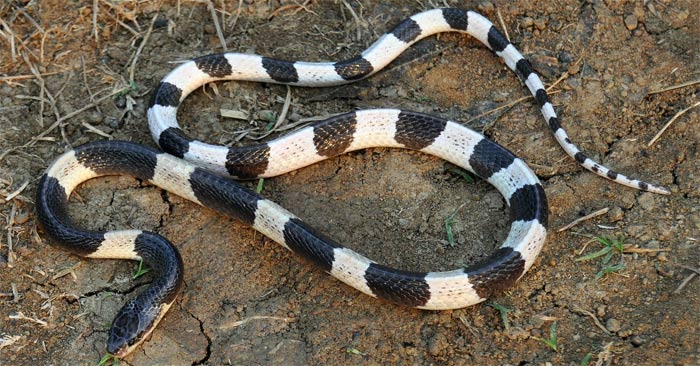
What does a krait look like?
Kraits belong to the same snake family as cobras. The banded krait (Bungarus fasciatus) typically has broad black and yellow bands and a blunt tail. Other kraits may have black and white bands or less obvious markings. Several unrelated snakes can look similar, so keep your distance even if you think you recognize the pattern.
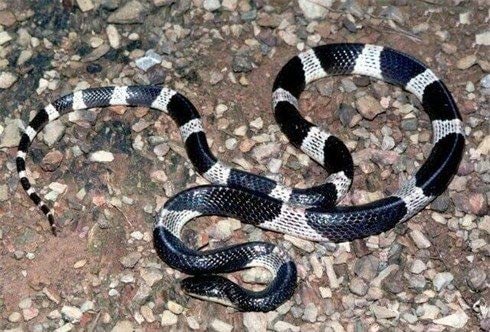
Banded kraits occur in parts of South and Southeast Asia and southern China. They are nocturnal and mainly prey on other snakes. They can occur in agricultural areas and around settlements as well as in natural habitats.
Why a krait might get indoors
An open door, gap under a door, broken vent, or opening around a pipe can give a snake access. Sheds, debris, and other covered areas offer hiding places. Flooding can also displace snakes. You usually can’t tell from a single sighting what drew the animal indoors.

Reduce the chance of another encounter
- Fit door sweeps and repair screens. Seal holes around utility lines and use suitable mesh on vents that need airflow.
- Store animal feed securely, keep garbage covered, and clear piles of wood or debris away from entrances.
- Use a light at night and avoid reaching into gaps or lifting objects where you can’t see underneath.
What to do if someone may have been bitten
Call emergency services or get the person to emergency care immediately, even if the bite barely hurts or leaves little swelling. Keep the person still and support the affected limb during transport. Don’t try to catch the snake. Avoid tight tourniquets, cutting the wound, suction, or home remedies. Krait venom can affect breathing, and symptoms may develop after a delay. Follow World Health Organization snakebite guidance and instructions from local emergency responders.
Related Articles
 What is a crawl? What is index?
 The simplest tips to deal with ants crawling into your laptop at home
 How to clean and decontaminate houses to prevent disease
 Admire the 10 exotic houses perfectly hidden between nature
 Why does America choose wood instead of concrete to build houses?
 Smart cell home box knows 'transformation', fully self-assembled in 10 minutes
Reader Comments 0
Sign in with email or Google to join the discussion.