Table of Contents
Explore powerpoint 2019 (part 22): charts, including the key concepts, practical examples, important considerations, and useful guidance.
Types of charts
PowerPoint offers several types of charts, allowing you to choose the one that best suits your data. To use charts effectively, you'll need to understand how to use the different types.
PowerPoint offers many different types of charts, each with its own advantages. Bar charts use vertical bars to represent data. They can be suitable for many different types of data, but are most commonly used for comparing information.
- Line charts are ideal for displaying trends. Data points are connected by lines, making it easy to see whether values are increasing or decreasing over time.
- Pie charts make it easy to compare percentages. Each value is displayed as a portion of a circle, so it's easy to see which values make up the overall percentage.
- Bar charts work similarly to column charts, but they use horizontal bars instead of vertical ones.
- Area charts are similar to line charts, except they include areas below the lines connecting the data points.
- Surface charts allow you to display data in a 3D panorama. They work best with large datasets, allowing you to view multiple types of information simultaneously.
Identify the parts of the chart
In addition to knowing the different types of charts, you'll need to understand how to read them. Charts contain several different elements—or parts—that can help you interpret the data.
Insert chart
PowerPoint uses spreadsheets as placeholders for importing chart data, just like Excel. The data import process is fairly straightforward, but if you're unfamiliar with Excel, you might want to review the lesson: Cell Basics.
How to insert a chart
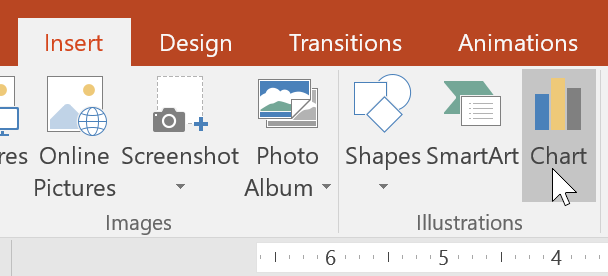
1. Select the Insert tab, then click the Chart command in the Illustrations group.
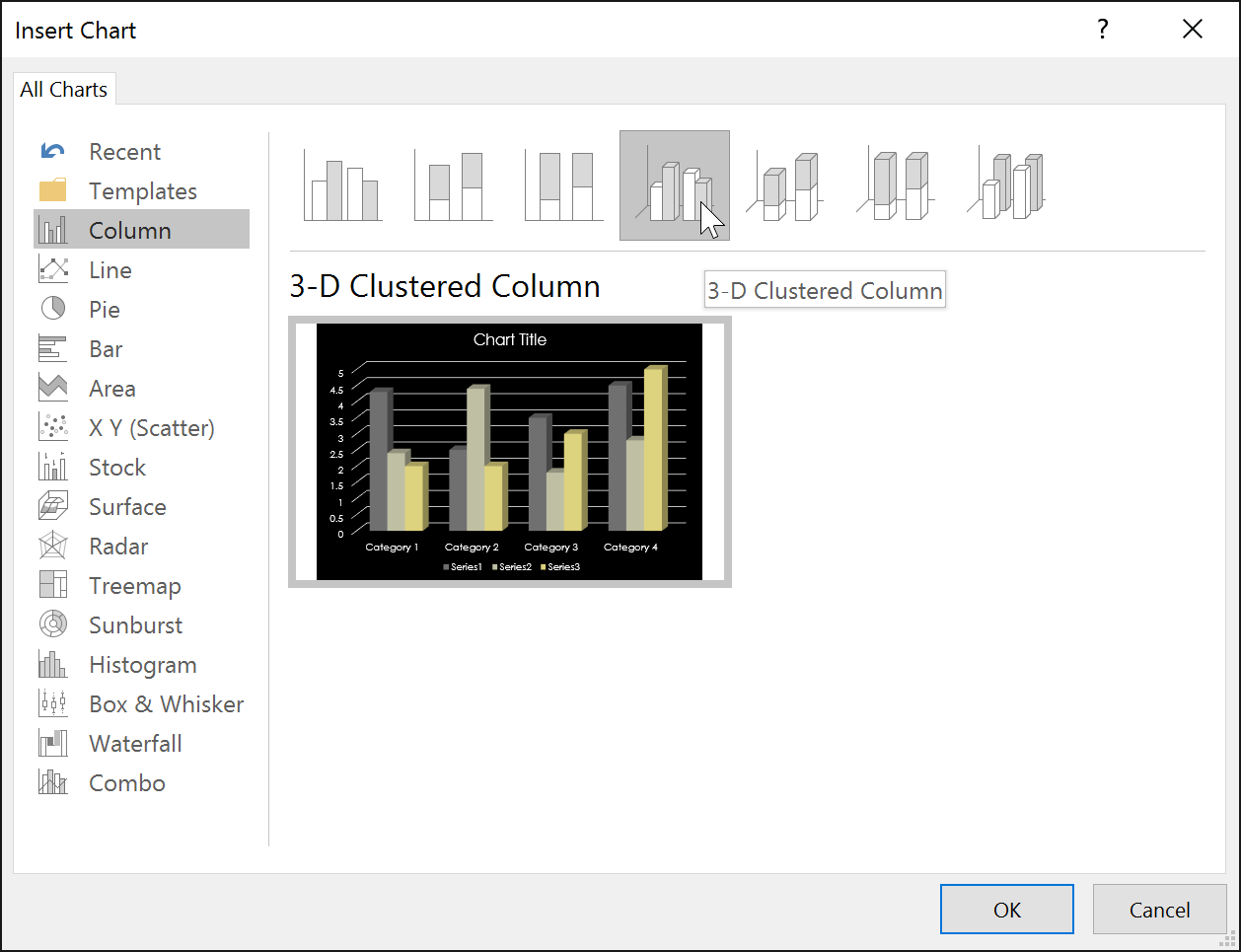
2. A dialog box will appear. Select a category from the left pane and review the charts that appear in the right pane.
3. Select the desired chart, then click OK.
4. A chart and spreadsheet will appear. The data appearing in the spreadsheet is placeholder source data that you will replace with your own information. This source data is used to create the chart.
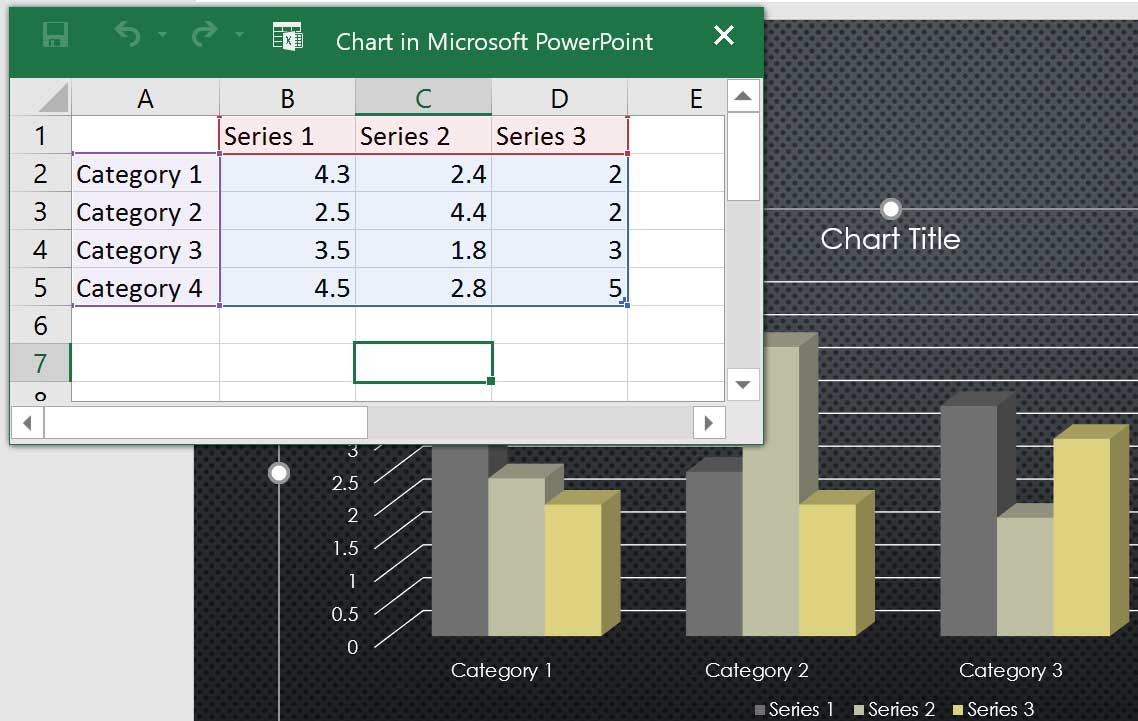
5. Enter the data into the spreadsheet.
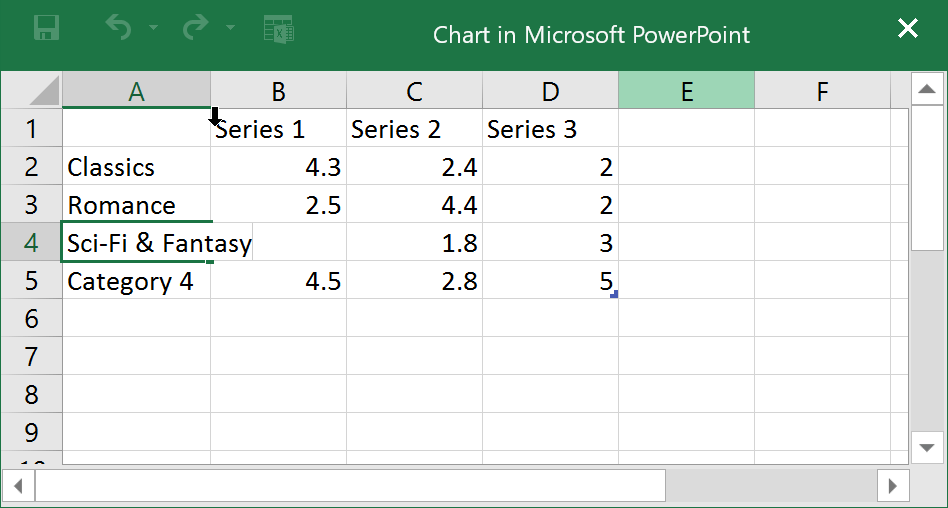
6. Only data enclosed by blue lines will appear in the chart, but this area will automatically expand as you continue typing.
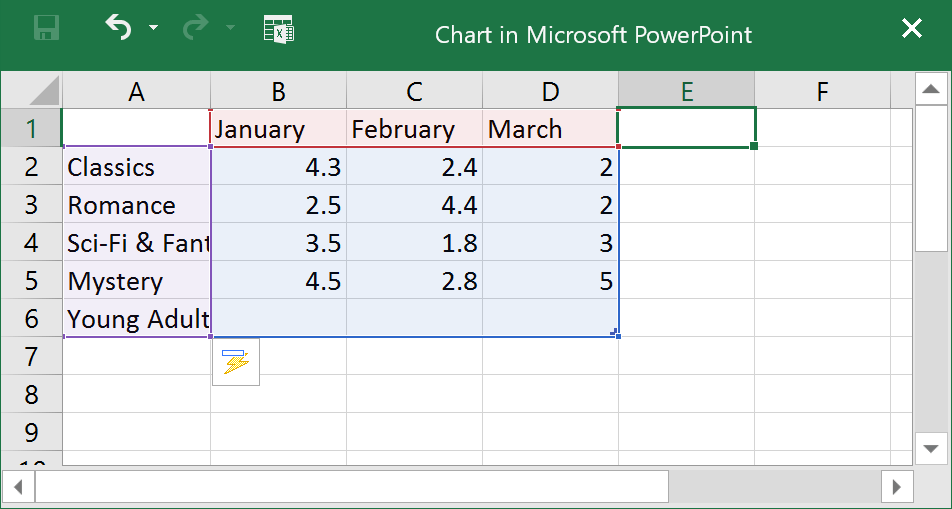
7. When you're finished, click the X to close the spreadsheet.
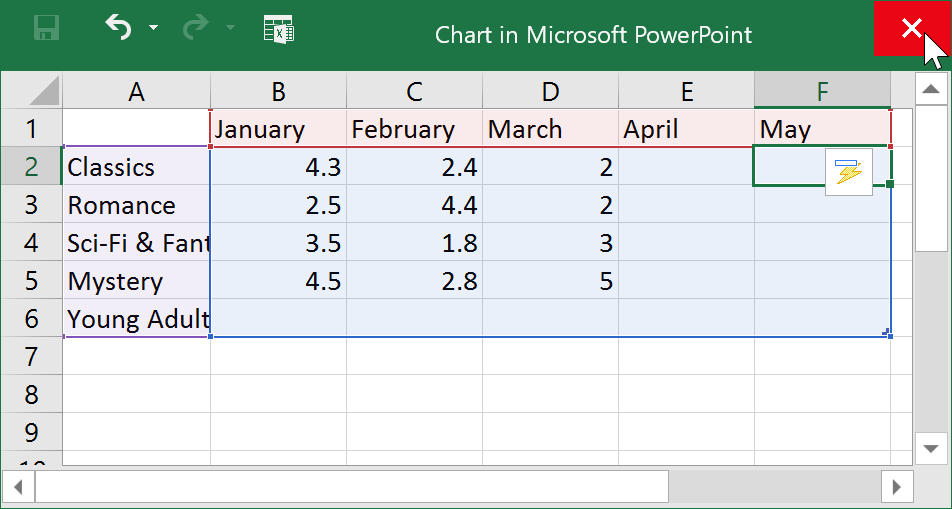
8. The chart will be completed.
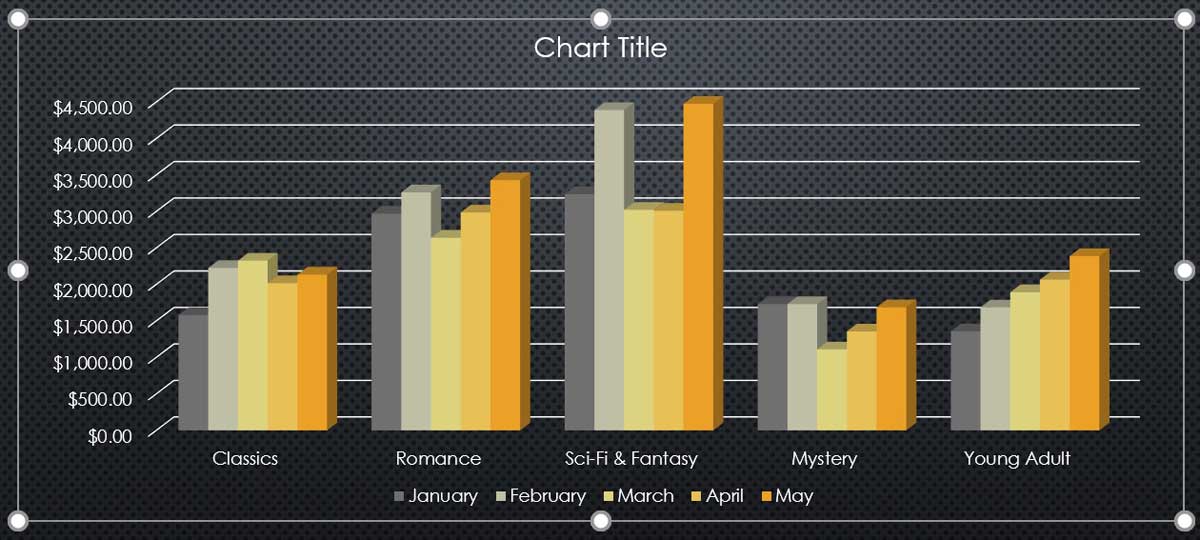
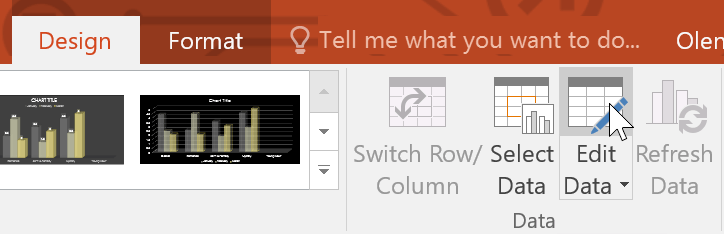
You can edit chart data at any time by selecting your chart and clicking the Edit Data command on the Design tab.
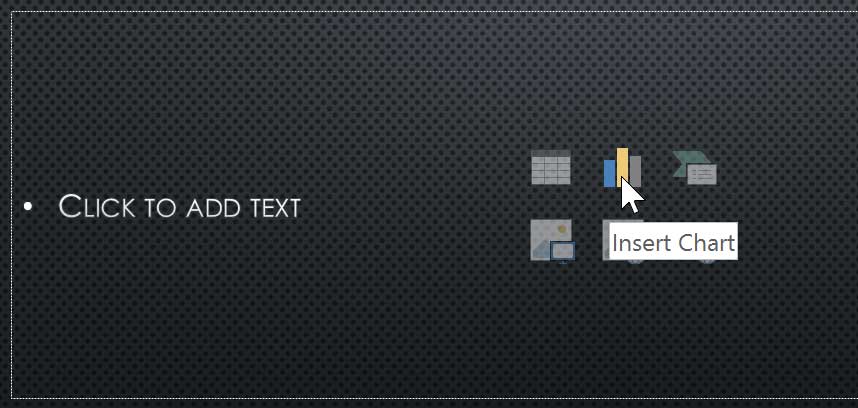
You can also click the Insert Chart command in the placeholder to insert a new chart.
Create charts with existing Excel data
If you already have data in an existing Excel file that you want to use for the chart, you can transfer the data by copying and pasting it. Simply open the spreadsheet in Excel, select and copy the desired data, and then paste it into the source data area for the chart.
You can also embed existing Excel charts into your PowerPoint presentation. This can be useful when you need to update data in an Excel file and want the chart to automatically update whenever the Excel data changes.
Modify the chart using charting tools
There are many other ways to customize and arrange charts. For example, PowerPoint allows you to change the chart type, rearrange the chart data, and even change the chart layout and style.
How to change the chart type
If you find that your data doesn't work with a particular chart type, you can easily switch to a different chart type. For example, this would change the chart from a column chart to a line chart.
1. Select the chart you want to change. The Design tab will appear on the right side of the Ribbon.
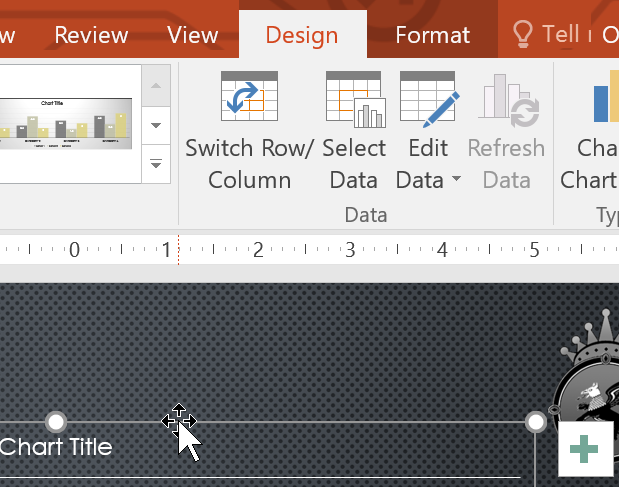
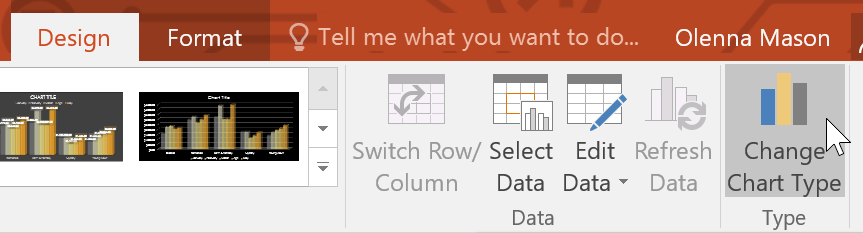
2. From the Design tab, click the Change Chart Type command.
3. A dialog box will appear. Select the desired chart type, then click OK.
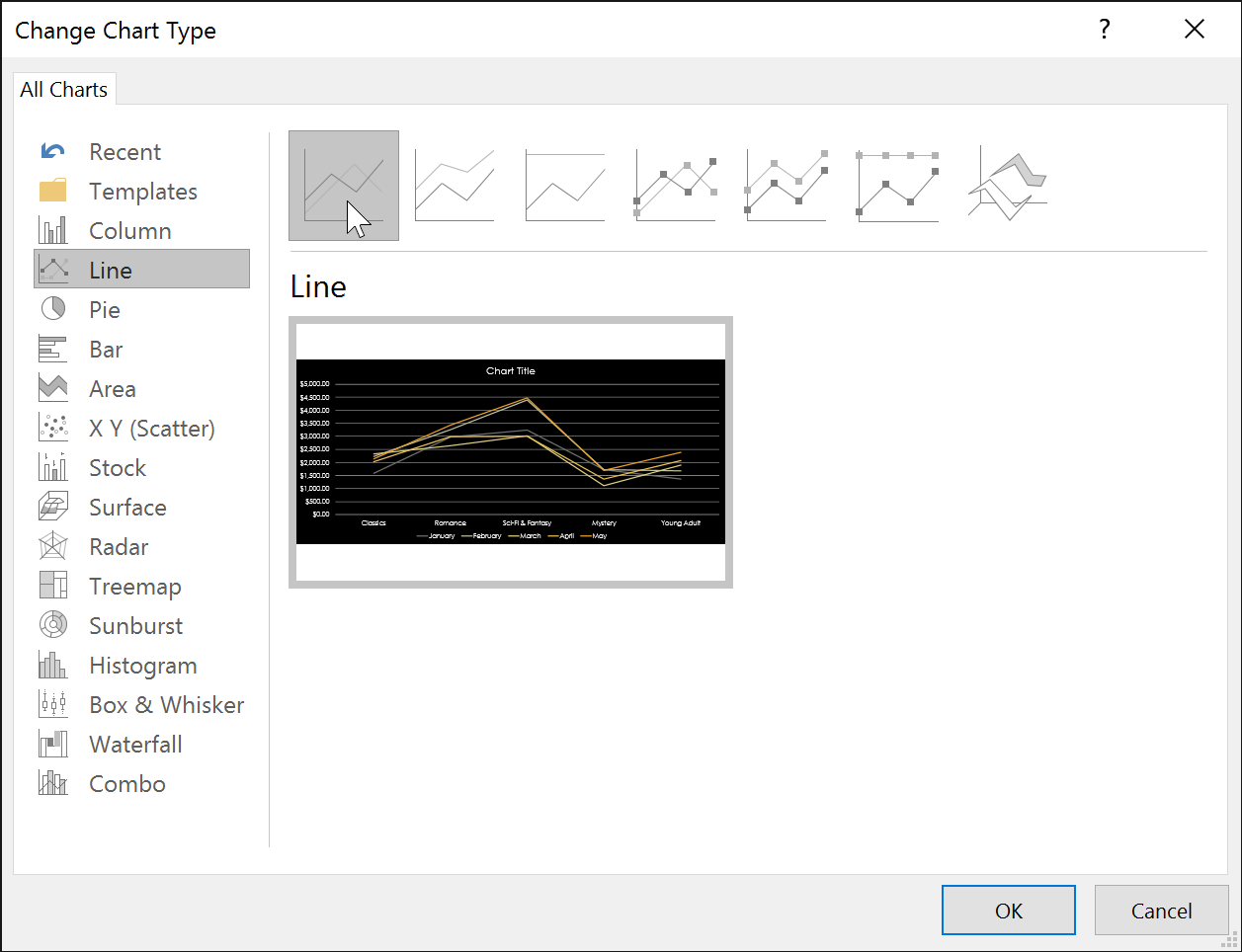
4. A new type of chart will appear.
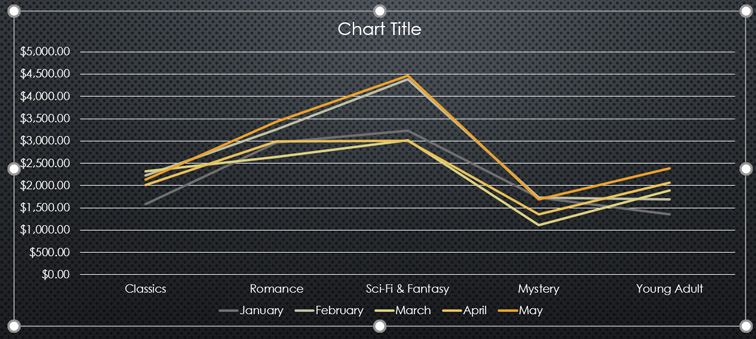
How to convert row and column data
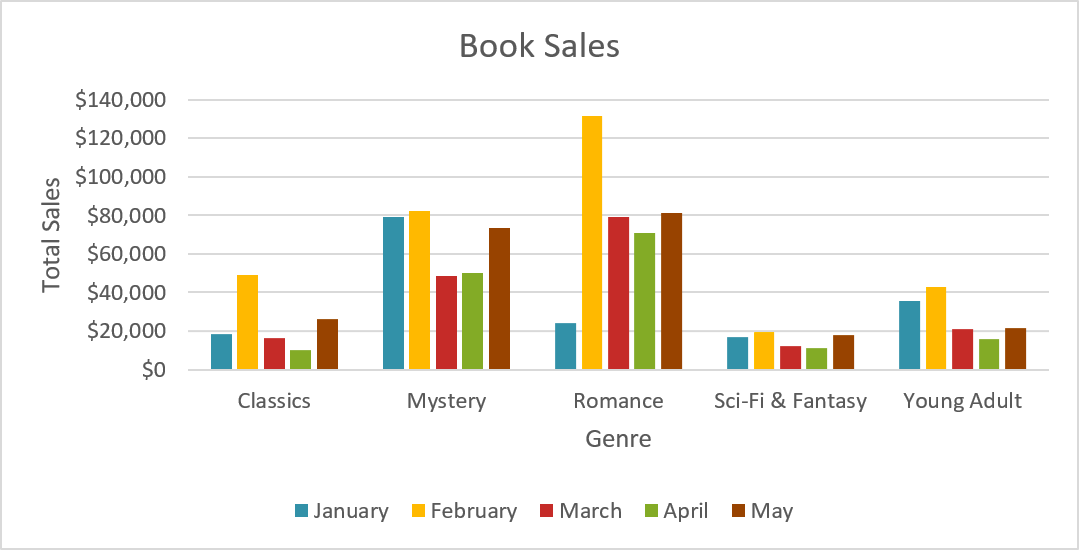
Sometimes, you might want to change how your chart groups your data. For example, in the chart below, book sales data is grouped by category, with rows for each month. However, it's possible to swap the rows and columns so the chart will group the data by month, with rows for each category. In both cases, the chart contains the same data; it's just organized differently.
1. Select the chart you want to modify. The Design tab will appear.
2. From the Design tab, select the Edit Data command in the Data group.
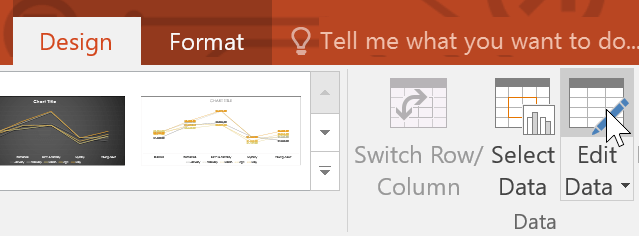
3. Click on the chart again, then select the Switch Row/Column command in the Data group.
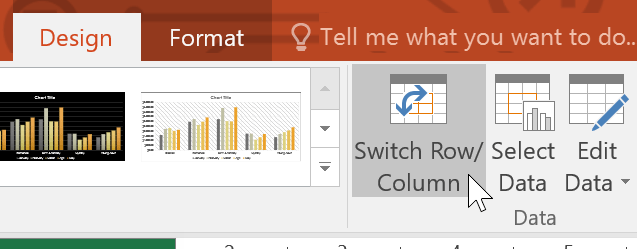
4. The rows and columns will be transformed. In the example, the data is now grouped by month, with rows for each category.
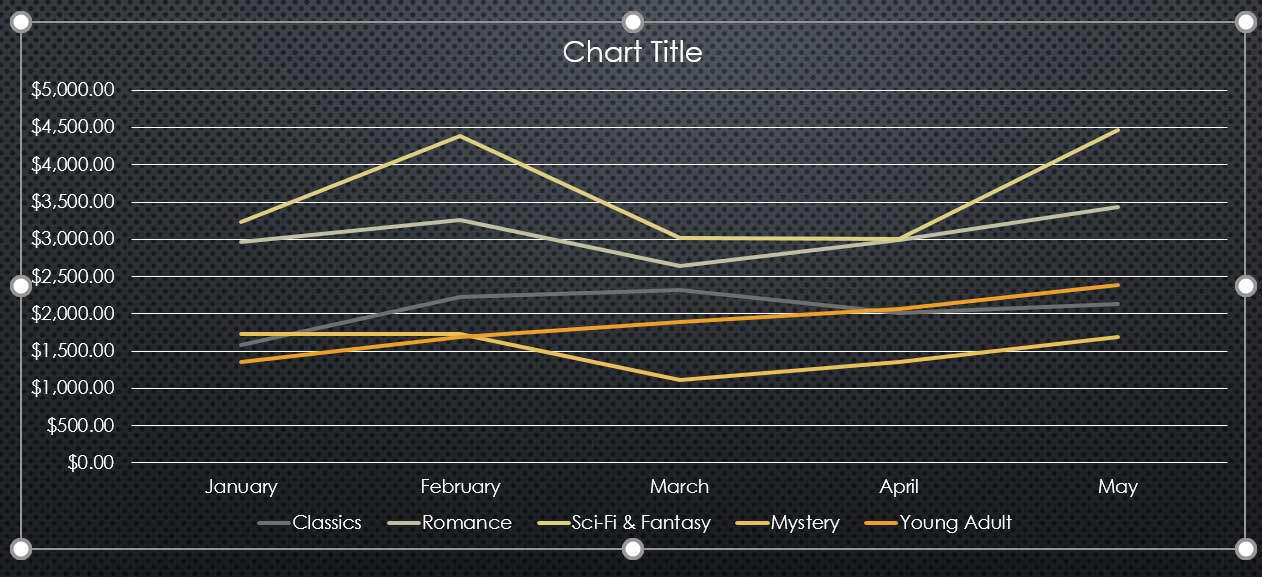
Once numerical data has been entered into the first column of a spreadsheet, switching rows and columns can produce unexpected results. One solution is to enter a single quotation mark before each number so that the spreadsheet formats it as text instead of a numeric value. For example, the year 2016 would be entered as '2016'.
How to change the chart layout
Predefined chart layouts allow you to modify chart elements—including chart titles, legends, and data labels—to make the chart easier to read.
1. Select the chart you want to modify. The Design tab will appear.
2. From the Design tab, click the Quick Layout command.

3. Select your desired predefined layout from the menu that appears.
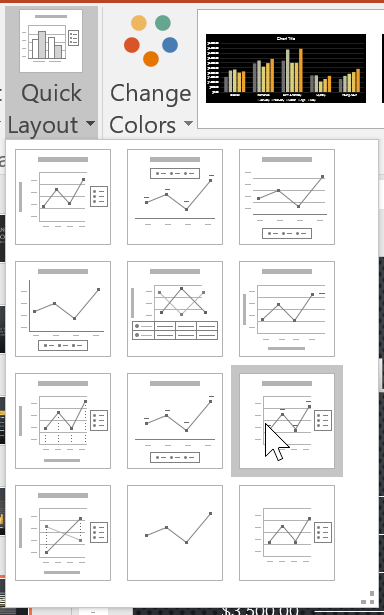
4. The chart will be updated to reflect the new layout.
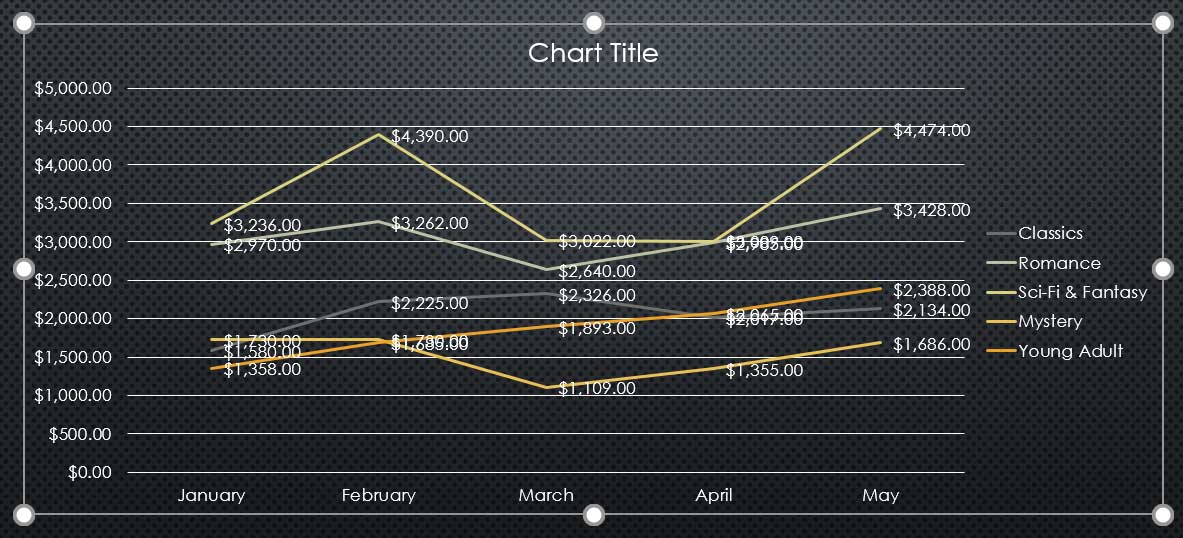
To change a chart element (such as the chart title), click on the element and start typing.

How to change chart types
Chart styles allow you to quickly modify the appearance of a chart.
1. Select the chart you want to modify. The Design tab will appear.
2. From the Design tab, click the More drop-down arrow in the Chart Styles group.
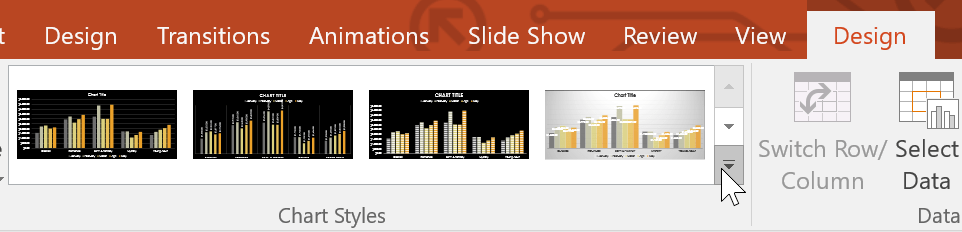
3. Select your desired style from the menu that appears.
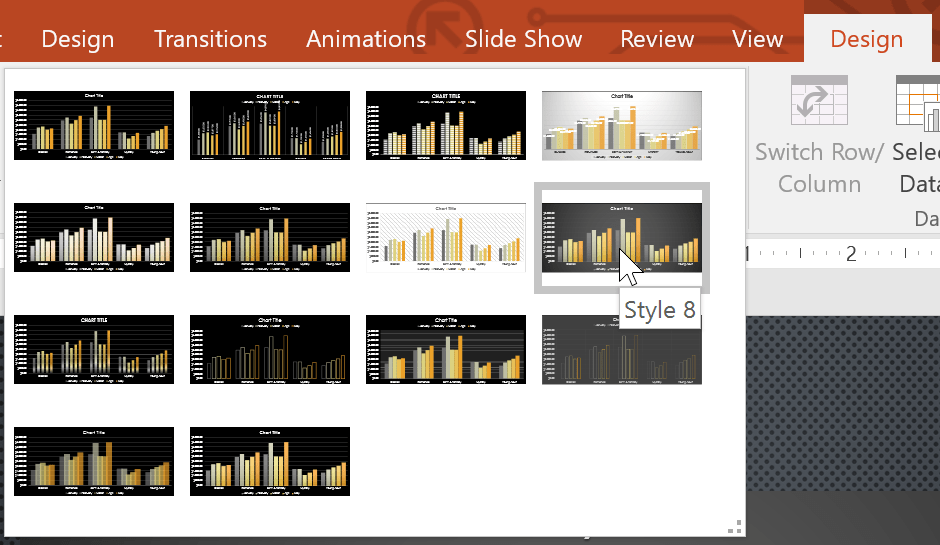
4. The chart will appear in the selected style.
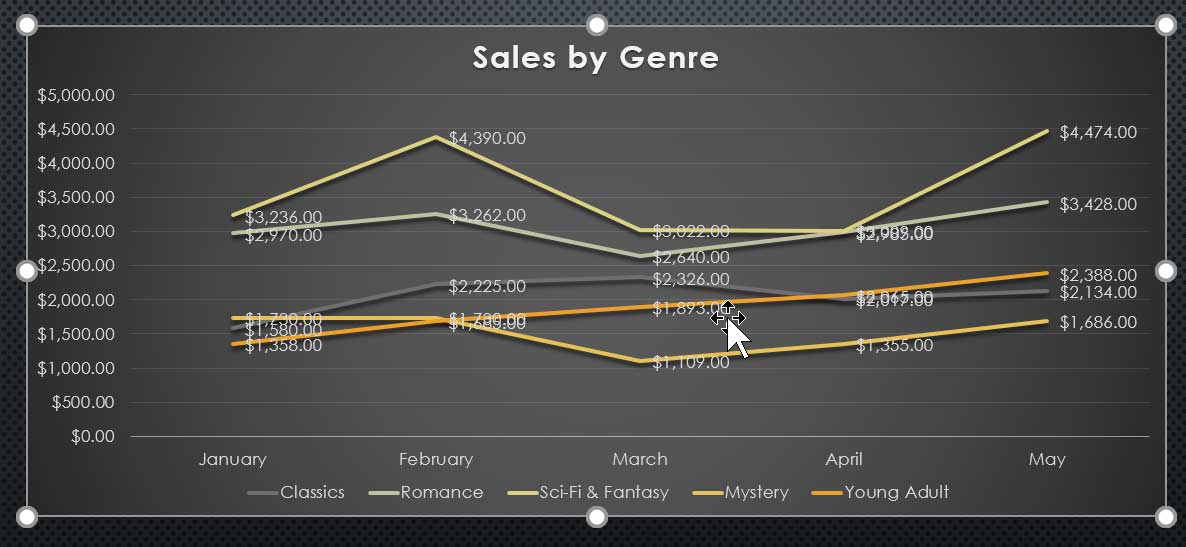
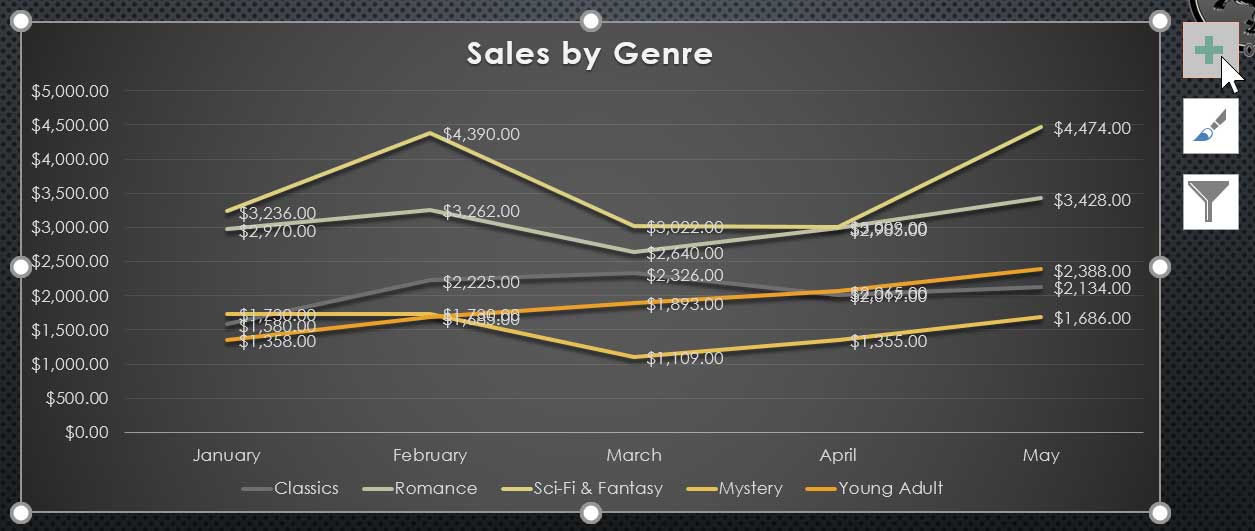
You can also use chart formatting shortcuts to quickly add chart elements, change chart styles, and filter chart data.
Final Thoughts
Understanding powerpoint 2019 (part 22) makes it easier to evaluate the information and apply the most relevant recommendations. Focus on the key points above and verify details that may change over time.
FAQ
What is powerpoint 2019 (part 22)?
Explore powerpoint 2019 (part 22): charts, including the key concepts, practical examples, important considerations, and useful guidance.
What key points does this article cover?
The article focuses on Types of charts, Identify the parts of the chart, Insert chart, with practical explanations and examples.
How can you use this information in practice?
Use the explanations to compare options, verify important details, and make a more informed decision. Apply the recommendations that best match your goals and situation.
Related Articles
 Instructions for Creating Charts on PowerPoint5 minutes read
 PowerPoint 2016: Working with Charts9 minutes read
 Work with Charts in PowerPoint 20167 minutes read
 How to Displaying Charts in PowerPoint 20072 minutes read
 MS PowerPoint 2007 - Lesson 7: Insert Images and Graphics in the4 minutes read
 How to Draw a Gantt Chart in PowerPoint5 minutes read
Reader Comments 0
Sign in with email or Google to join the discussion.