Table of Contents
Explore simple daily habits can help you live up to 11 years longer.
According to the study, walking for more than two and a half hours a day can significantly reduce the risk of chronic diseases and improve life expectancy. This finding also underscores the importance of public health policies aimed at creating living environments that encourage active lifestyles.
The longevity benefits of physical activity
A simulation study published on November 14 in the British Journal of Sports Medicine suggests that if all Americans over 40 exercised as much as the most active 25% of the population, they could live an average of about five more years.
More notably, if the least active group achieved the same level of activity as the most active group, their lifespan could increase by nearly 11 years, according to the research team's estimates.
Although it has long been known that a sedentary lifestyle increases the risk of diseases such as cardiovascular disease, stroke, and premature death, the specific impact of physical activity on longevity in different population groups, especially those over 40, has not been fully understood until now.
To address this issue, researchers developed a predictive model to assess the impact of increased physical activity levels on longevity.
The model uses data on physical activity collected using activity trackers in the U.S. National Health and Nutrition Survey from 2003–2006, focusing on individuals over 40 years of age. This data is combined with 2019 census data and 2017 mortality records from the National Center for Health Statistics.
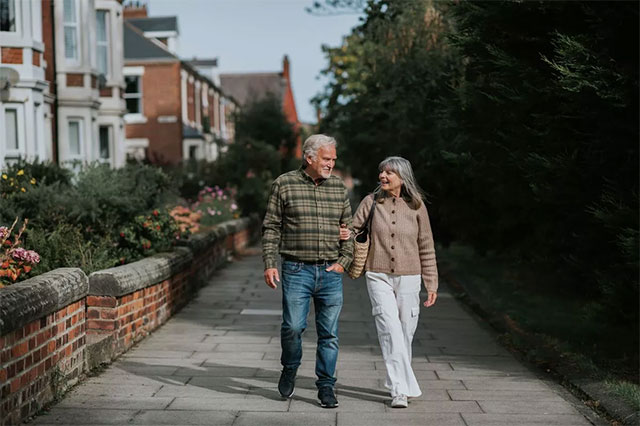
Activity levels and life expectancy: some noteworthy figures
The total physical activity of the most active 25% of Americans over 40 is equivalent to about 160 minutes of walking per day at a moderate pace, approximately 4.8 km/hour.
Based on this level, the research team estimated that if all Americans over 40 maintained a similar level of daily activity, their average lifespan would increase by more than 5 years, raising the average life expectancy at birth from 78.6 years to nearly 84 years.
Meanwhile, the least active 25% would need to walk an additional 111 minutes per day at the same pace (or equivalent effort level) to reach the activity level of the most active group. In return, their lifespan could increase by nearly 11 years.
The greatest benefit per hour of walking was observed in the least active group. For this group, each additional hour of walking could extend lifespan by approximately 376 minutes, equivalent to more than 6 hours of extra life. As activity levels increased, the increase in benefit gradually decreased. On average, each additional hour of walking resulted in about 169 minutes, or nearly 3 hours of extra life.
This is an observational study, so a direct cause-and-effect relationship cannot be definitively established. The authors also acknowledge some limitations, such as the predictive model potentially underestimating or overestimating the true benefits of physical activity, due to its reliance on background studies used.
Nevertheless, researchers suggest that greater investment in programs that encourage physical activity and create living environments that support physical activity could yield significant benefits for longevity, both at the individual and societal levels.
"Our findings suggest that physical activity provides significantly greater health benefits than previously thought, thanks to the application of more precise measurement methods," the research team wrote.
They emphasized that the greatest increase in lifespan per hour of walking was recorded in the least active group, where just one hour of walking a day could help extend life by up to 6 hours.
However, increasing the physical activity level of the entire population is a complex challenge requiring a systemic approach. According to the authors, solutions such as developing transportation infrastructure that encourages walking, building pedestrian-friendly residential areas, and expanding green spaces could be effective ways to improve community health and longevity.
Final Thoughts
Understanding simple daily habits can help you live up to 11 years longer makes it easier to evaluate the information and apply the most relevant recommendations. Focus on the key points above and verify details that may change over time.
FAQ
What is simple daily habits can help you live up to 11 years longer?
Explore simple daily habits can help you live up to 11 years longer.
What key points does this article cover?
The article focuses on The longevity benefits of physical activity, Activity levels and life expectancy: some noteworthy figures, with practical explanations and examples.
How can you use this information in practice?
Use the explanations to compare options, verify important details, and make a more informed decision. Apply the recommendations that best match your goals and situation.
Related Articles
 10 Healthy Habits That Help You Live up to 100 Years Old7 minutes read
 Scientific Ways to Help Us Live Longer: Complete Guide8 minutes read
 7 Daily Routines Can Ruin Your Health: Food5 minutes read
 11 Daily Habits Silently Destroy Health without You Knowing7 minutes read
 15 Simple Habits That Help You Live Happier5 minutes read
 Physicist Shows the Coolest Way to Use Electric Fans4 minutes read
Reader Comments 0
Sign in with email or Google to join the discussion.