Table of Contents
This guide provides a practical overview of instructions for backing up and restoring iPhone data with itools with clear explanations and useful details. It focuses on the information users are most likely to need.
Start by install iTools on the computer and connect the device to the computer with a cable. Then follow the instructions below.
1- Backup data
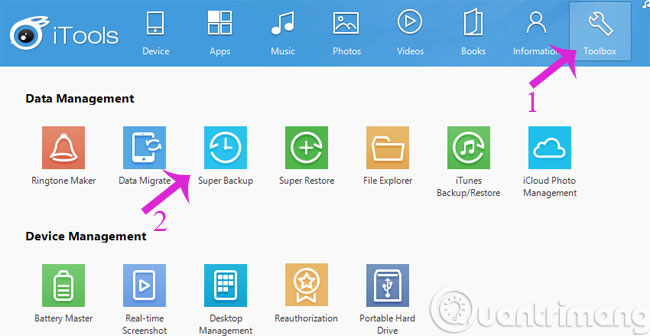
Step 1 : At the iTools interface, press the Toolbox Menu and click Super Backup
Step 2 : Next appears some information such as device name, backup data. Click Next To continue
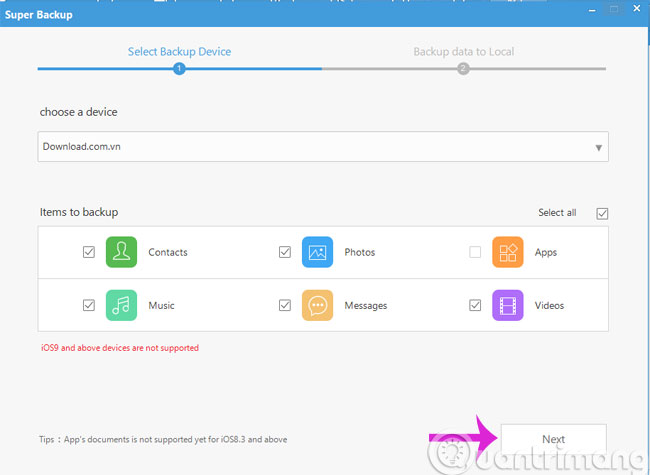
Step 3 : Please select the data to backup and click Start Backup

You wait a few minutes for the data to be saved to the computer.
2- Recover data
Step 1 : Open the iTools application, click the Toolbox Menu and select Super Restore

Step 2 : In the next interface, click Import Backup And then locate the Backup File above and click Next
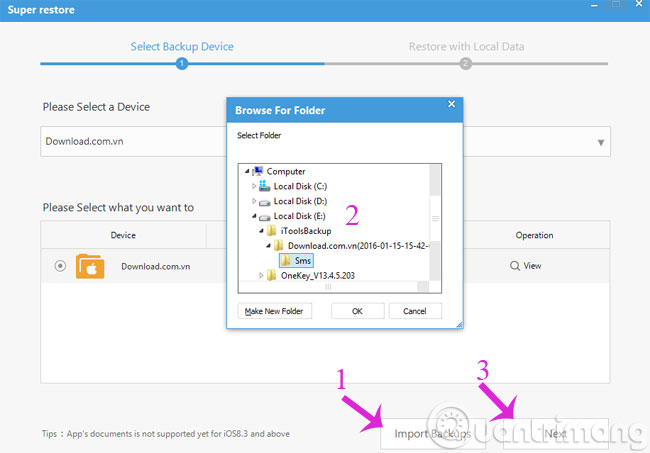
Step 3 : Finally, you just need to select the data to backup (if there are many) and then click Restoring
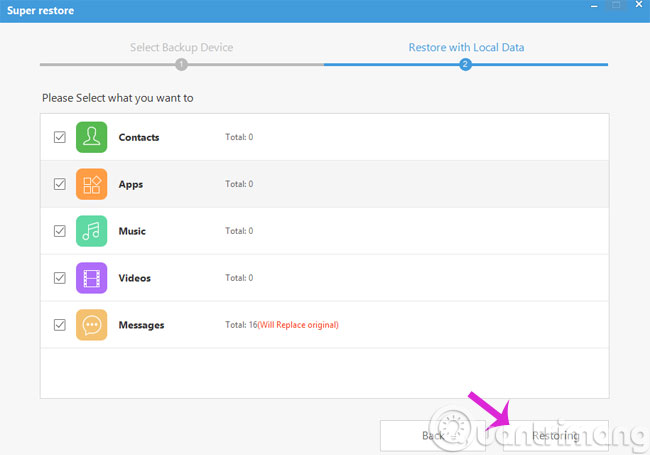
You also wait a few minutes for the data recovery process to complete.
- Create iPhone ringtones with iTools
- Video tutorial - How to rotate iPhone screen with iTools
- How to backup data on iOS?
Good luck!
FAQ
What is the main benefit of instructions for backing up and restoring iPhone data with itools?
The main benefit is a clearer understanding of the topic and a practical way to apply the information covered in this guide.
What should I check before using instructions for backing up and restoring iPhone data with itools?
Confirm compatibility, review the required settings, protect important data, and use the latest supported version whenever possible.
What should I do if the result is different?
Repeat the steps carefully, verify permissions and version differences, and consult the product's official support documentation for changes not shown in the article.
Related Articles
 How to Fix ITools Error Not Receiving iPhone3 minutes read
 How to Restore Data After Restoring iPhone8 minutes read
 Backup iPhone, Restore iPhone Data from iCloud: What to Know9 minutes read
 How to Fix iTools Incompatibility with iTunes3 minutes read
 Instructions for Backing up Individual Messages on iPhone5 minutes read
 Backup iPhone, Restore iPhone Data with iTunes: Complete Overview7 minutes read
Reader Comments 0
Sign in with email or Google to join the discussion.