Table of Contents
Recent versions of Windows 11 Notepad can format a Markdown document with headings, lists, bold and italic text, and links. You can apply formatting from a toolbar or write Markdown directly and switch to the formatted view. For a document you want to keep formatted and edit elsewhere, save it as a Markdown file with the .md extension.

Format text with the toolbar
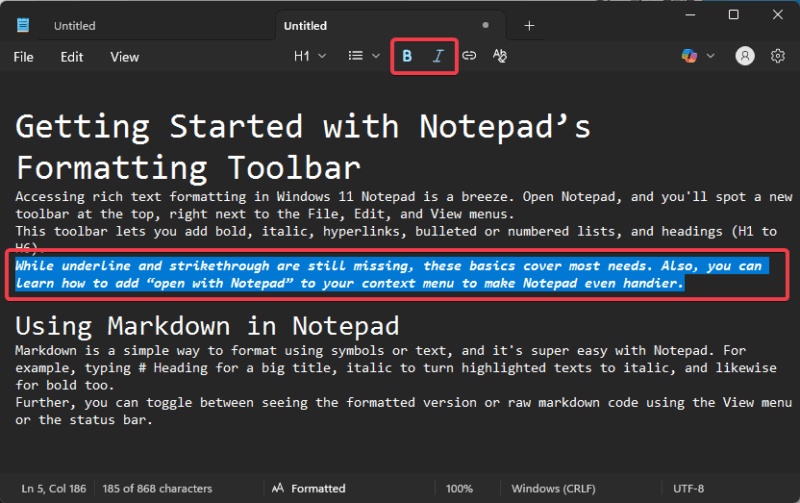
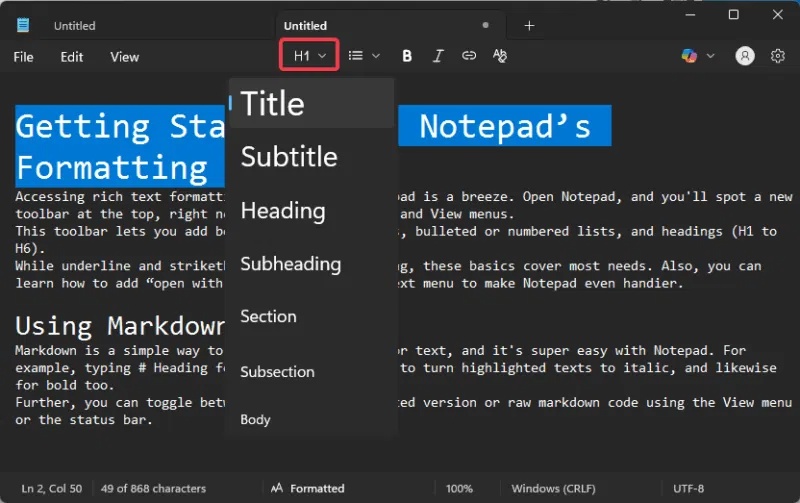
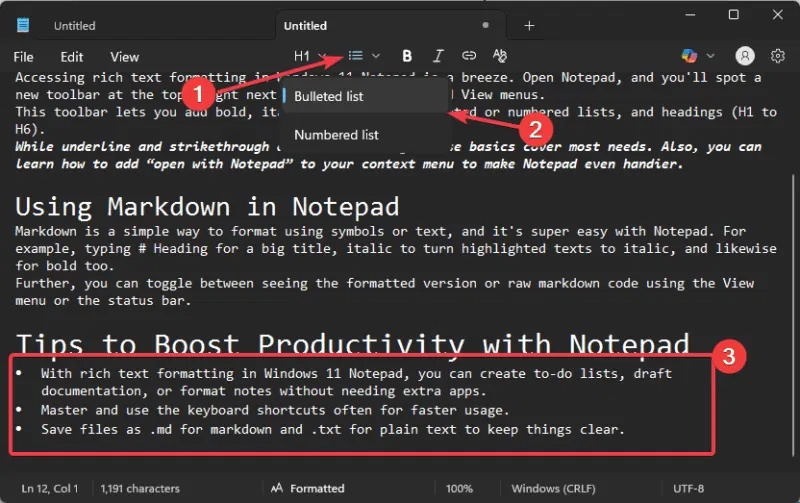
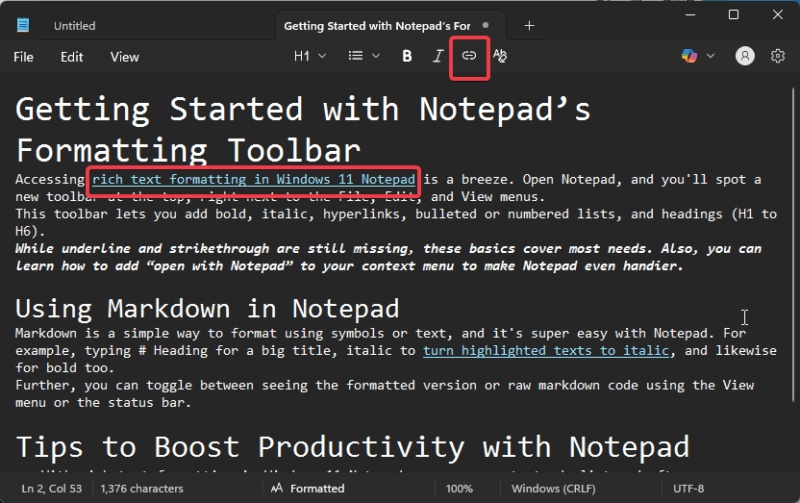
Open Notepad, select the text you want to change, and choose a toolbar option such as Bold, Italic, or Link. To format a line as a heading, put the cursor on that line and use the heading menu. Use the list menu for bullets or numbers. Where supported, Ctrl + B, Ctrl + I, and Ctrl + K open the respective formatting controls.
Switch between Markdown syntax and the formatted view
Use the View menu or the toggle in the status bar to show the underlying Markdown syntax. Try entering this short note, then switch views to see how Notepad displays it.
# Meeting notes

- **Decision:** Keep the current schedule.
- **Next step:** Check the draft before Friday.

[Project site](https://example.org)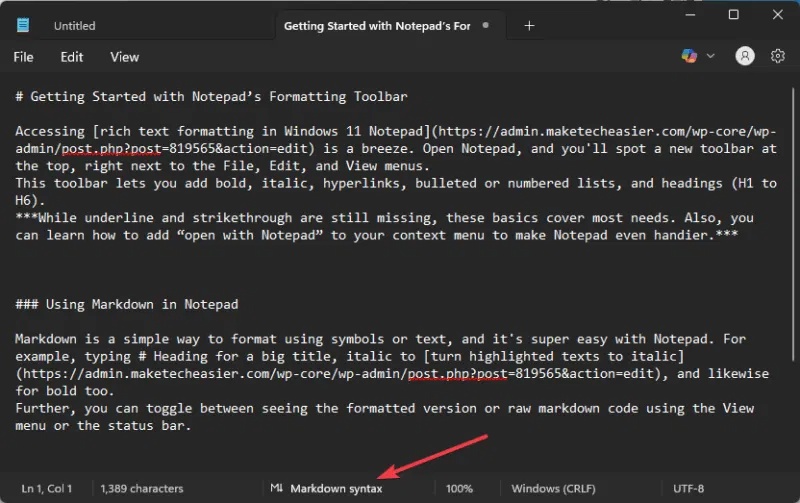
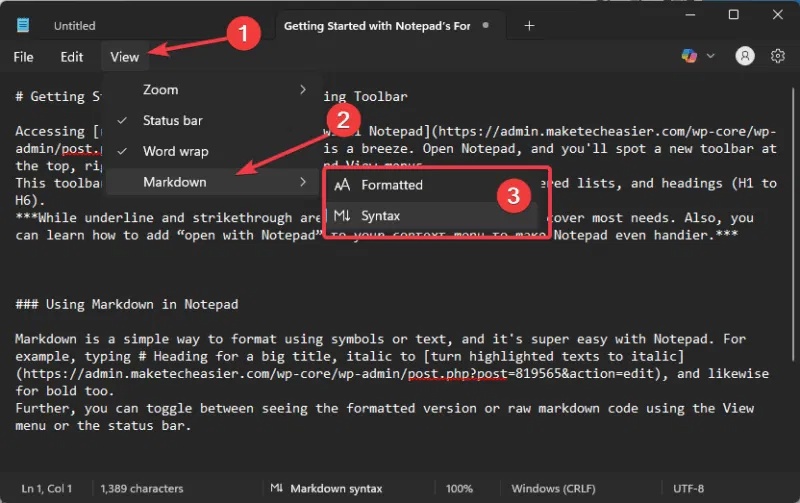
For other markup, see the Markdown syntax guide. Formatting capabilities depend on the Notepad version. Some versions also support Markdown tables.
Save as Markdown or return to plain text
Use File > Save as and save the filename with .md. If Notepad adds .txt, select All files in the save dialog if available and check the full extension in File Explorer. For plain text, save a separate copy and use the clear formatting command if you want to strip markup. You can also disable Notepad formatting in the app settings.
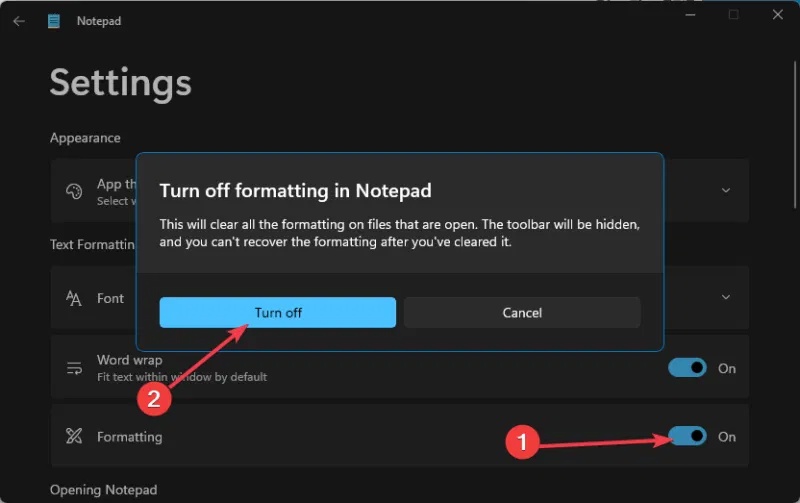
If you do not see the toolbar, check for a Notepad update in Microsoft Store and look for formatting in Notepad’s settings. Availability can vary by app version and PC policy. The Microsoft rollout notes explain the two views and how to switch between them.
Related Articles
 Instructions to enable text formatting in Notepad Windows 11
 What is Markdown and why should you learn it today?
 Steps to find and replace text in Notepad on Windows 10
 How to change the text zoom level in Notepad Windows 10
 Instructions for creating text using AI on Notepad Windows 11
 How to replace Notepad with another text editor on Windows
Reader Comments 0
Sign in with email or Google to join the discussion.