Table of Contents
This guide explains how to delete Photos on the Fastest iPhone, with clear steps, practical tips, and important checks before you begin.

1. Delete photos quickly on iPhone in Photo Album
Step 1: Go to the Photos application (1) => touch the Select button (2) in the Photo Album.
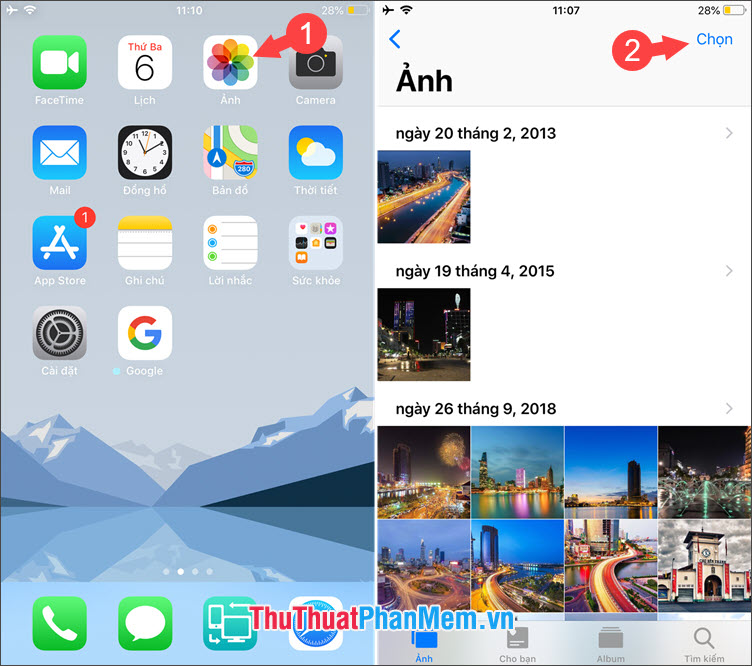
Step 2: You touch each photo you want to delete or you can swipe from left to right or right to left to quickly select multiple photos ( Note: the image selection feature is only available on iOS 9.0 or later versions ). Then you touch the trash icon (2) to delete and click on the Confirm delete. photo (3) .
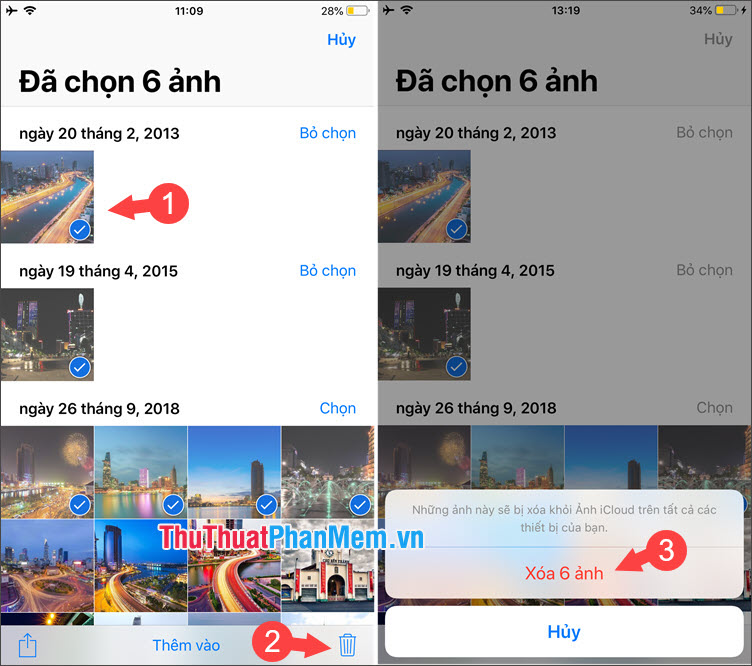
Note: After deleting photos in this way, deleted photos will be in the trash and after 30 days, they will be permanently deleted. To quickly delete photos permanently, follow the next instructions.
Step 3: Go back and select the Album item (1) => select Recently Deleted (2) => click Select (3) => Delete all (4) .
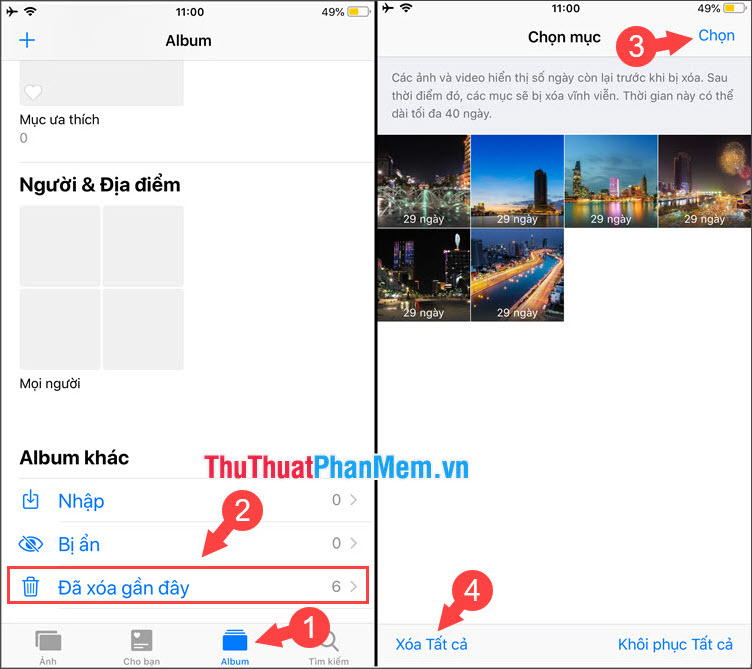
Step 4: You continue to click Delete. Image is done.

2. Quickly delete photos on iPhone using a computer
Step 1: You connect the iPhone to the computer with a USB cable and grant access to video photos from iPhone. Then open My Computer / This PC => click on the iPhone icon (1) => Internal Storage (2) .
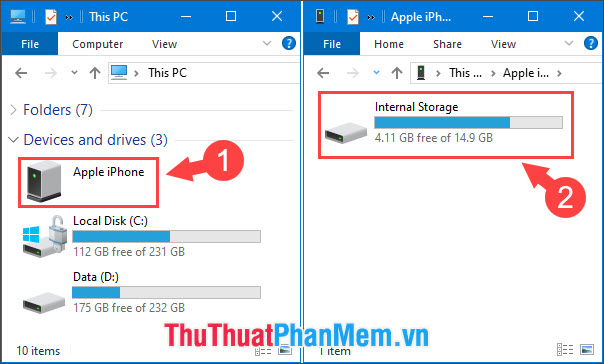
Step 2: Select DCIM (1) => here you select the image to be deleted and right-click and select Delete (2) .
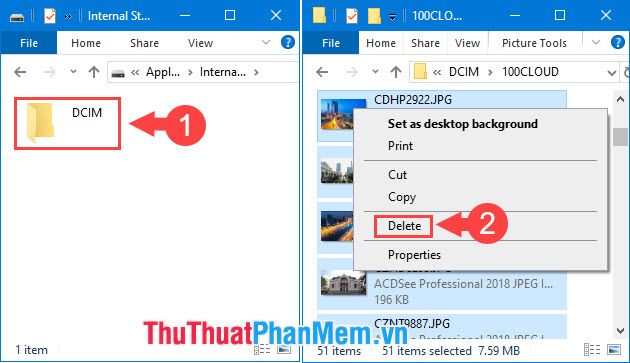
Note: Photos you delete on your computer will be permanently deleted and cannot be restored. Please consider before deleting this way.
With the procedure to quickly delete photos on iPhone, we can easily clean up unnecessary photos and videos on iPhone quickly and easily. Good luck!
FAQ
What should I know about Delete Photos on the Fastest iPhone?
Focus on the key features, requirements, limitations, and practical use cases explained in this guide.
How do I get the best results with Delete Photos on the Fastest iPhone?
Follow the recommended steps, use current software or information, confirm compatibility, and review settings before major changes.
Are there any risks or limitations?
Potential limitations depend on compatibility, data quality, cost, privacy, support, and how the product or method is used.
Related Articles
 How to Delete Multiple Photos Saved on iPhone for a While7 minutes read
 How to Delete, Restore Photos and Videos on iPhone and iPad5 minutes read
 How to Delete All Photos on iPhone: Clear Instructions7 minutes read
 How to Delete Photos Permanently on ICloud Fastest3 minutes read
 How to Delete Photos Sent in Imessage iPhone3 minutes read
 How to Delete All Photos Stored on iPhone5 minutes read
Reader Comments 0
Sign in with email or Google to join the discussion.