Table of Contents
To convert an audio file without installing an app, open a browser-based converter, select the original, choose the output format, and download the result. Pick the format based on where you need to play or edit the file.
Convert and check your file
- Choose a converter that supports both formats. The TipsMake tools directory lists options by conversion, including WAV to MP3. For other format pairs, use a service such as the CloudConvert audio converter.
- Select the source and choose the target format. For confidential recordings, check whether the tool uploads files before selecting one. Use a local converter if the recording must stay on your device.
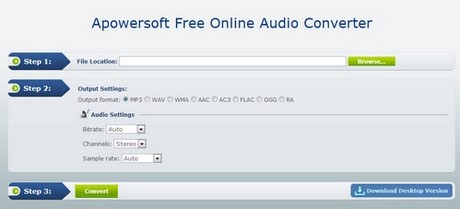
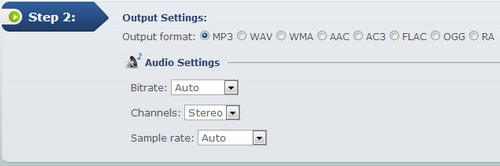
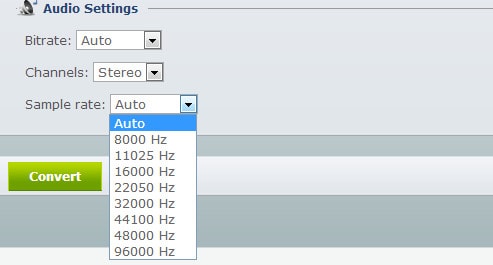
- Leave bitrate, sample rate, and channel settings at their defaults unless the receiving app or device specifies values. Keep stereo if you want to retain separate left and right channels from a stereo source.
- Convert and download the result. Play part of it and check the duration and sound before discarding the original.
Which format should you choose?
- MP3 is practical for a smaller file that plays on many devices. Lower bitrates save space but can introduce audible artifacts.
- WAV is useful when an editor requests uncompressed PCM audio. See how WAV files are used.
- FLAC compresses audio without losing information and works well for archiving a lossless source. Converting an MP3 to FLAC or WAV cannot recover detail that MP3 encoding removed.
The screenshots below show a former Apowersoft interface, including examples of bitrate, channel, and sample-rate controls. Button names and layout vary by converter.
Older Apowersoft converter screenshots




Related Articles
 Top 10 best audio and audio converter software available today
 How to Convert YouTube to WAV with Free Software on Windows?
 5 free audio editing software
 How to convert audio formats with Online Audio Converter
 How to Convert Document Files to Speech with Gemini
 How to convert Audio with Format Factory quickly and simply
Reader Comments 0
Sign in with email or Google to join the discussion.