Table of Contents
Start with Settings → Apps → Installed apps and Task Manager → Startup apps. Those controls let you remove software you recognize and turn off programs that launch with Windows. A cleanup helps most when an app is actually using storage or running in the background.
Uninstall apps you recognize and don’t use
- Open Settings → Apps → Installed apps. Identify trial software, games, or other apps you know you do not need.
- Open the app’s menu and choose Uninstall if available. Back up app data if you may need it later.
- Leave unfamiliar drivers, runtimes, and manufacturer tools alone until you know their role. Some control fan modes, battery charging limits, keyboard shortcuts, or device updates.
See Microsoft’s app removal instructions if an app needs Control Panel or does not offer the usual button.
Reduce startup clutter without uninstalling
In Task Manager, check Startup apps. Disable startup for a nonessential program you only open occasionally. Restart and confirm the device still behaves as expected. You can re-enable startup if you miss a feature.
When a debloat utility is a poor fit
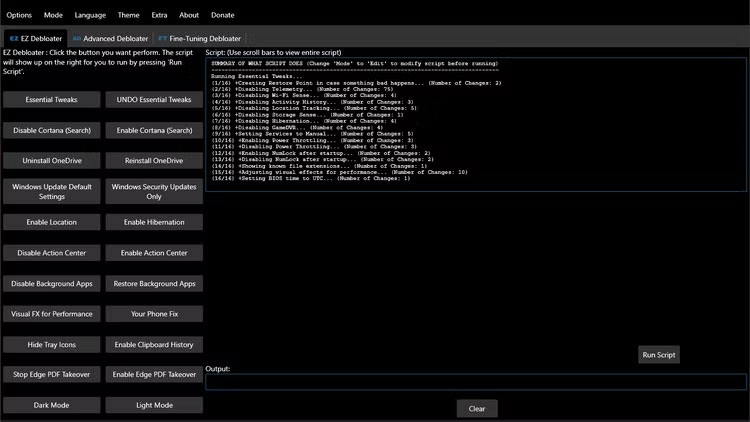
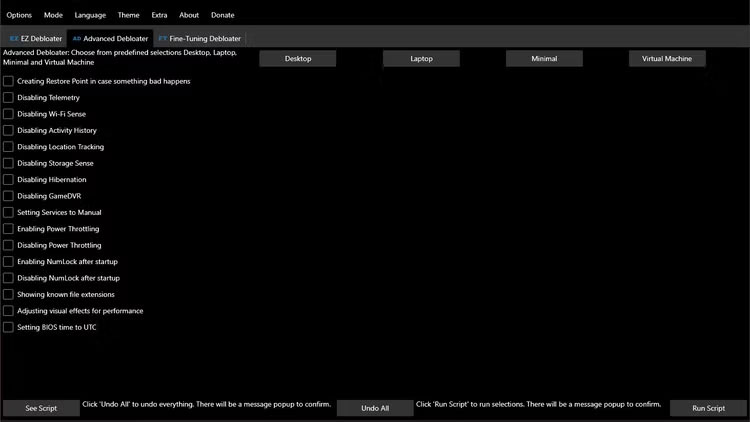
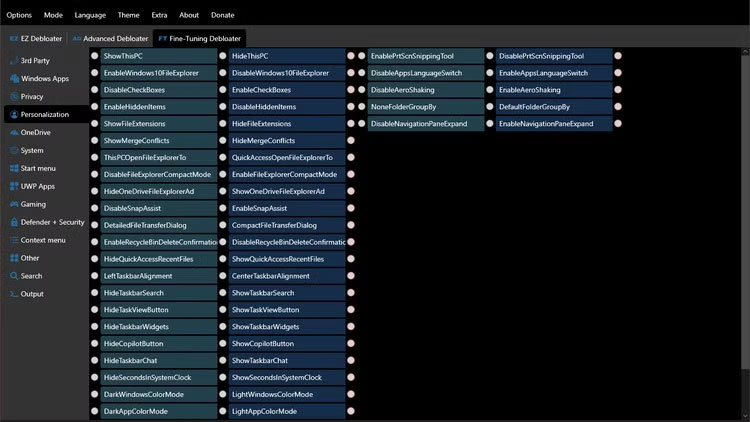
The screenshots show a third-party Windows 11 Debloater utility that groups PowerShell changes into presets. A preset can change multiple settings at once, which makes problems harder to trace. If you evaluate a script, read each change and make a backup first. Avoid settings that disable Windows Update, antivirus, or security features.
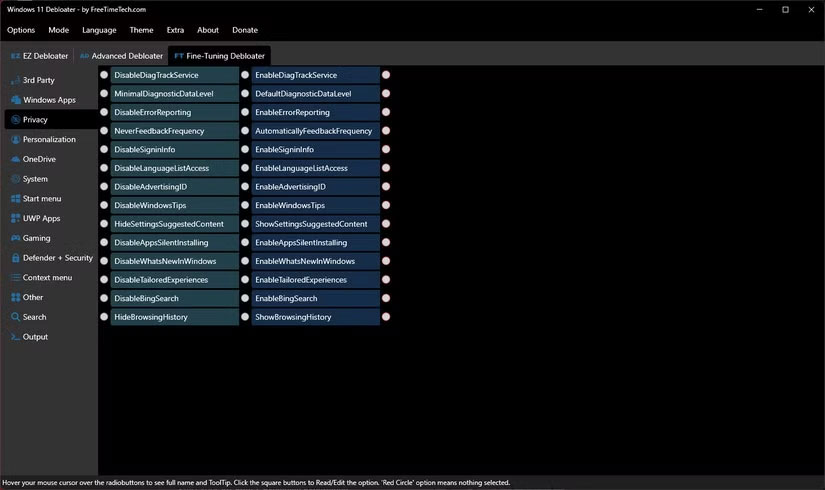
Check whether cleanup helped
Compare available storage, startup time, or idle CPU usage before and after. If Windows still runs slowly with few apps open, check what Task Manager shows under CPU, Memory, and Disk before removing more components.
Related Articles
 Smart vacuum cleaner any kind of good Xiaomi, Philips, Medion?
 Homemade portable vacuum cleaner is easy to imagine
 How to use Cleaner for PC Pro to delete cache, Windows junk files automatically
 Which model industrial vacuum cleaner is best?
 Is it safe to use a vacuum cleaner to suck water?
 Top 8 best garbage cleaning apps on Android
Reader Comments 0
Sign in with email or Google to join the discussion.