Table of Contents
This guide provides a practical overview of Microsoft Word Already Has the Feature to Convert Audio Files to Text, including its main features, benefits, limitations, and important considerations.
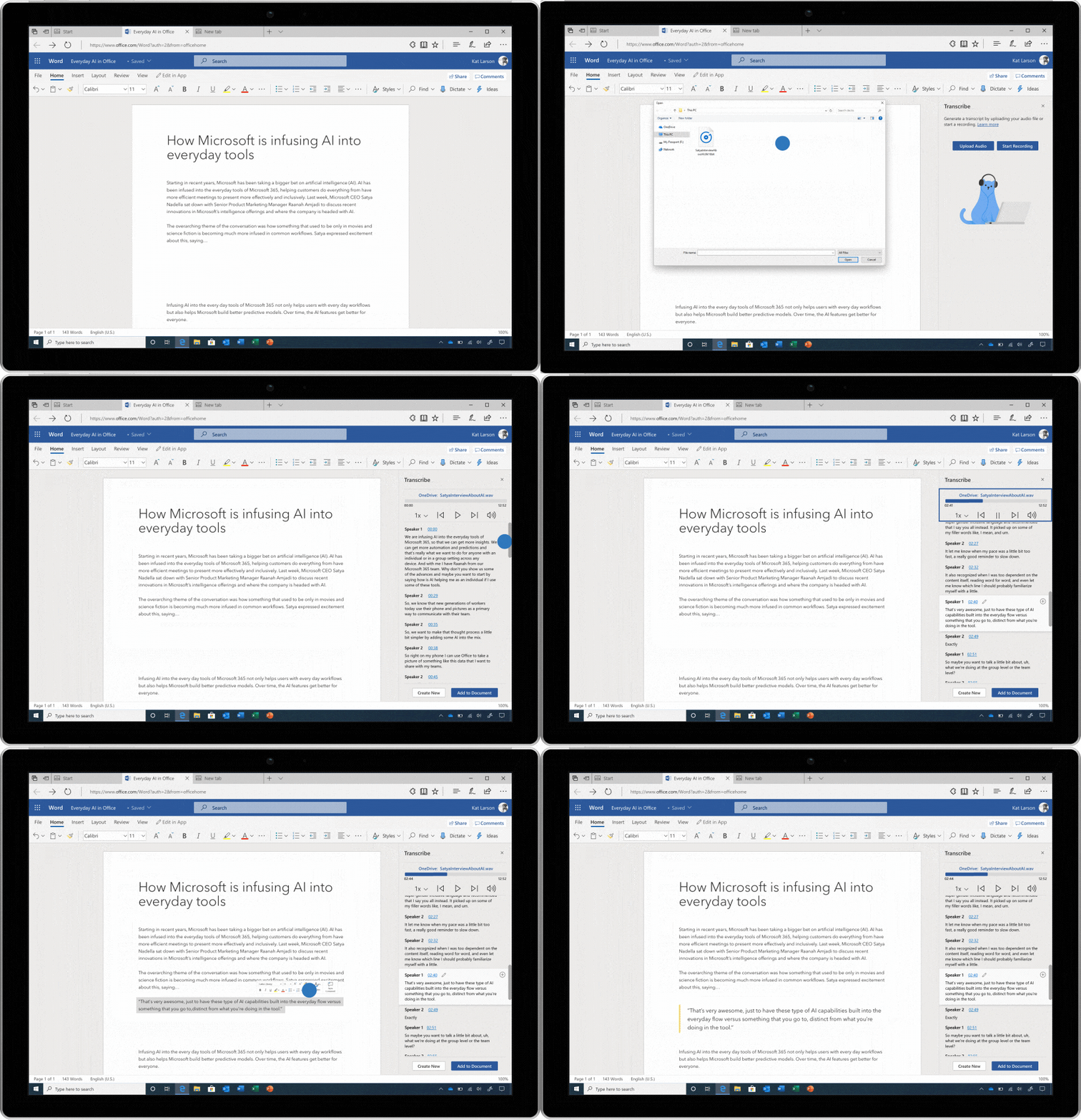
Just like the Dictation feature that turns speech into text in Word, the new phonetic function has the same purpose, but works in a more seamless way. With the first feature, Microsoft 365 subscribers can record interviews or presentations directly through Word on the Web and receive converted text. You can download audio files in MP3 MP4 M4a or WAV format and limit the file size to 200MB for conversion.
Microsoft's AI is so smart that it separates one's own words if there is more than one speaker in the conversation. Processing time depends on the size of the audio file, but the initial test was quite fast, about a few seconds for short conversations.
If you record live conversation, this feature will record any ambient sound, perfect for use in meetings, lessons, class discussion. It can even transcribe even in YouTube videos.
The feature will also appear on the Android and iOS versions of Word later this year, and Microsoft is also considering bringing it to the Word PC software. English is the only language supported right now but will soon expand to other languages. Premium Microsoft 365 users can experience this feature, but it's limited to 5 hours per month.
There are also a few software that can do the same thing right now, most famously Otter, which offers twice the monthly free time. But testing shows Microsoft's transcription feature records audio at a higher quality than Otter, which sounds easier.
Microsoft does not compress audio but records in high-quality WAV format and is uploaded directly to the 'Transcribed Files' folder in user's OneDrive storage. This can be said to be a feature worth waiting for those who need to take really thoughtful notes.
FAQ
What should I know about Microsoft Word Already Has the Feature to Convert Audio Files to Text?
Focus on the key features, requirements, limitations, and practical use cases explained in this guide.
How do I get the best results with Microsoft Word Already Has the Feature to Convert Audio Files to Text?
Follow the recommended steps, use current software or information, confirm compatibility, and review settings before major changes.
Are there any risks or limitations?
Potential limitations depend on compatibility, data quality, cost, privacy, support, and how the product or method is used.
Related Articles
 How to Convert Document Files to Speech with Gemini6 minutes read
 Convert PDF to Word, Convert PDF Files for Free12 minutes read
 Tools for Converting PDF to Word8 minutes read
 How to Convert Docx Files to Doc: Practical Guide6 minutes read
 6 Ways to Convert Audio to Text without Installing an Application5 minutes read
 How to Convert Powerpoint to Word4 minutes read
Reader Comments 0
Sign in with email or Google to join the discussion.