Table of Contents
Explore the invention of liquid Windows allows for light control.
Accordingly, researchers from Nanyang Technological University (NTU) in Singapore have created a highly unique type of window, made from two ordinary panes of glass bonded together with a solution consisting of a mixture of micro-hydrogel, water, and several other optically stabilizing compounds. This liquid layer between the two panes can flexibly change its properties based on ambient temperature and the amount of light entering. Specifically, it can turn opaque and act as an insulator on hot days, then return to transparency when temperatures are lower. In addition, this liquid layer significantly increases sound insulation (up to 15%) compared to existing double-glazed windows, which already offer excellent sound insulation.
Describing the product's operation in more detail, the research team stated that this type of glass has high thermal sensitivity, meaning it absorbs heat during the day and dissipates it at night. Therefore, when sunlight passes through the window, the liquid layer between the glass panes absorbs and stores a certain amount of thermal energy, helping to regulate the room's temperature and reduce the need for intensive air conditioning use.
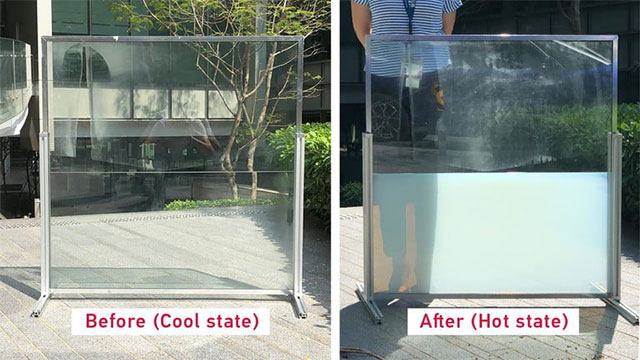
In addition, once it has absorbed a sufficient amount of thermal energy, this liquid layer will gradually change from transparent to opaque, thereby reducing the amount of harmful UV rays to nearby objects.
At night, when the sunlight is gone, the liquid layer will return to its normal solidified and transparent state. At the same time, it releases heat energy that radiates back into the room, creating a warmer feeling.
Real-world testing has shown that a room fitted with this type of smart window uses 11% less energy to maintain the same temperature as a room with a conventional glass window. Therefore, this type of window would be most effective in office buildings, where people work primarily during the day.
This type of window is relatively easy to manufacture, can be made into any required shape, and is extremely affordable. Therefore, its widespread application in the near future is entirely feasible.
Final Thoughts
Understanding the invention of liquid windows allows for light control, heat absorption, and excellent sound insulation makes it easier to evaluate the information and apply the most relevant recommendations. Focus on the key points above and verify details that may change over time.
FAQ
What is the invention of liquid windows allows for light control, heat absorption, and excellent sound insulation?
Explore the invention of liquid Windows allows for light control.
What key points does this article cover?
The article explains the core concept, important considerations, and practical details readers should understand.
How can you use this information in practice?
Use the explanations to compare options, verify important details, and make a more informed decision. Apply the recommendations that best match your goals and situation.
Related Articles
 Liquid Heat Sink7 minutes read
 Scientists Have Found a Way to Create Liquid Light Easily3 minutes read
 New Invention: Light-printed Paper, Renewed by Temperature and Reuse 80 Times4 minutes read
 Top 5 Best Heat Sinks 201911 minutes read
 The Sound System on Windows 11 Is Tweaked to Be Softer, Less4 minutes read
 Why Does TV Sound So Bad? How to Prepare?: Causes, Tips, and6 minutes read
Reader Comments 0
Sign in with email or Google to join the discussion.