Table of Contents
Learn how to use fruit peels to turn old batteries into new ones with clear steps, practical tips, and troubleshooting guidance for a reliable result.
In a practical experiment, scientists used extracts from orange peels to efficiently recover precious metals from battery waste. They then manufactured new batteries from these recovered metals. This approach, which transforms waste into a resource, would simultaneously address two problems: food waste and electronic waste, while supporting the development of a less wasteful circular economy where resources are used for as long as possible. It is estimated that approximately 1.3 billion tons of food waste and 50 million tons of electronic waste are generated globally each year, placing a huge burden on the environment and requiring extensive cleanup and disposal efforts.
Used batteries are often processed at high temperatures (above 500°C) to melt down valuable metals. This process releases dangerous toxic gases and secondary pollutants that pose risks to human health and the environment. This is why scientists are driven to find biodegradable materials that are both safe and sustainable.
"In Singapore, a resource-scarce country, the process of extracting precious metals from all kinds of discarded electronic devices is extremely important. With this method, we not only address the issue of resource depletion by keeping as many precious metals reusable as possible, but also the problem of accumulating electronic waste and food waste," said Professor Dalton Tay, a member of the research team.
Sustainable, low-cost approach
The 'hydraulic metallurgy' method—using water as a solvent for extraction—is increasingly being studied as a viable alternative to current, costly, and highly toxic battery waste recycling processes. This method involves shredding and grinding used batteries to form a pulped material known as 'black mass.' Researchers then extract valuable metals from the black mass by dissolving it in a mixture of strong or weak acids plus other chemicals such as hydrogen peroxide under heat, before allowing the metals to precipitate. However, while relatively more environmentally friendly than conventional methods, the industrial-scale use of such strong chemicals can still generate significant amounts of secondary pollutants, posing safety and health risks.
The NTU research team discovered that a combination of dried, powdered orange peel and citric acid, a weak organic acid found in citrus fruits, can achieve a similar goal, but in a much safer way.
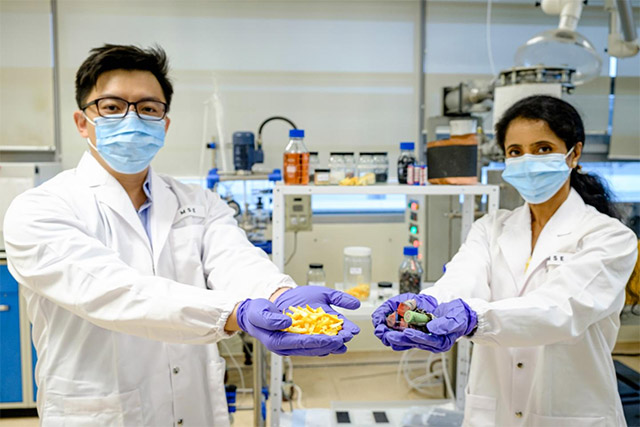
In practical experiments, the research team found that their method successfully extracted approximately 90% of cobalt, lithium, nickel, and manganese from used lithium-ion batteries, achieving an efficiency comparable to the method using hydrogen peroxide.
"The key lies in the cellulose found in orange peels, which is converted into sugars by the heat generated during the extraction process. These sugars help enhance the recovery of metals from battery waste. In addition, some of the natural antioxidants in orange peels, such as flavonoids and phenolic acids, may also contribute to this process ," Professor Dalton Tay said.
More importantly, the solid residues generated from this process are considered non-toxic, indicating that this is truly an ideal method in every respect.
Using the recovered metal, scientists are continuing to create new lithium-ion batteries with similar charging capabilities to commercial batteries. Further research is underway to optimize the charge-discharge cycle performance of this new type of battery.
In addition, the research team is currently seeking to further improve the performance of batteries created from processed waste, as well as optimize conditions for scaling up production and explore the possibility of eliminating the use of acid in the process.
- Transforming bricks into batteries: A miraculous achievement by scientists.
Final Thoughts
Use this guide as a practical checklist for how to use fruit peels to turn old batteries into new ones. Work through the steps in order, verify each result, and adjust the options to match your needs.
FAQ
What do you need before following this How to Use Fruit Peels to Turn Old Batteries into New Ones guide?
Review the required tools, accounts, settings, or materials mentioned in the article. Learn how to use fruit peels to turn old batteries into new ones with clear steps, practical tips, and troubleshooting guidance for a reliable result.
What are the main steps for how to use fruit peels to turn old batteries into new ones?
Follow the sections in order, especially Sustainable, low-cost approach. Complete each step before continuing and verify the result as you go.
What should you do if the process does not work as expected?
Recheck the prerequisites, update the relevant app or service, review the settings, and repeat the step that caused the issue. Use any troubleshooting notes included in the guide.
Related Articles
 60+ Fruit Puzzles to Help Children Develop Thinking Skills16 minutes read
 What Is the Best Time to Eat Fruit at the Time of Day5 minutes read
 How to Play Revive Blox Fruit7 minutes read
 Left Tip Blox Fruit Control5 minutes read
 Latest One Fruit Code and Instructions for Entering the Code Explained10 minutes read
 Tips for Using the Ice Fruit in Blox Fruit11 minutes read
Reader Comments 0
Sign in with email or Google to join the discussion.