Table of Contents
Explore this AI device can 'sniff out' poor-quality meat, including the key concepts, practical examples, important considerations, and useful guidance.
This invention sounds miraculous, but in reality, the mechanism is not complicated at all. The system uses a barcode embedded in the food packaging. This barcode automatically changes color when it detects unusual odor molecules emanating from the meat that is no longer fresh. Then, a smartphone application scans the barcode to measure the freshness of the meat within 30 seconds.
In a series of real-world tests on commercially packaged chicken, beef, and fish samples that had been stored for a relatively long time in warehouses, the system was able to predict the freshness of the meat with an accuracy of up to 98.5% - an extremely impressive figure.
Professor Chen Xiaodong, head of the research team, said the app can be easily installed and used on almost any current smartphone model, helping consumers decide whether meat is suitable for purchase and cooking, especially in cases where expiration dates are sometimes printed incorrectly.
"These barcodes help consumers save money and, importantly, ensure food safety and hygiene, benefiting both buyers and sellers. The biodegradable and non-toxic nature of barcodes also means they can be safely used throughout the food supply chain to ensure fresh food reaches consumers."
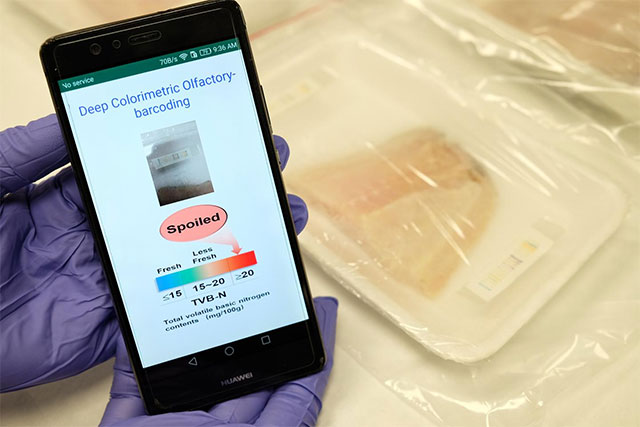
Researchers say their system was developed inspired by a highly instinctive characteristic of mammals in general: assessing the quality of meat by analyzing the odor molecules emitted from it.
In the e-nose system, each barcode contains a color-sensitive substance that changes color after reacting with different types and concentrations of gases (odor molecules). These reactions create a unique color combination for the barcode based on the actual state of decomposition of each piece of meat, similar to a person's unique fingerprint. Deep convolutional neural networks, trained on images of the barcode, then analyze the colors displayed on the barcode to predict the freshness of the meat.
In tests, the algorithm achieved 100% accuracy in detecting spoiled or rotten meat and 96% to 99% accuracy in identifying fresh and less fresh meat.
The patent for this e-nose system has now been granted, and in the near future, the research team will begin working with several Singaporean agricultural companies to widely apply this system not only to meat but also to many other types of food.
Final Thoughts
Understanding this ai device can 'sniff out' poor-quality meat makes it easier to evaluate the information and apply the most relevant recommendations. Focus on the key points above and verify details that may change over time.
FAQ
What is this ai device can 'sniff out' poor-quality meat?
Explore this AI device can 'sniff out' poor-quality meat, including the key concepts, practical examples, important considerations, and useful guidance.
What key points does this article cover?
The article explains the core concept, important considerations, and practical details readers should understand.
How can you use this information in practice?
Use the explanations to compare options, verify important details, and make a more informed decision. Apply the recommendations that best match your goals and situation.
Related Articles
 Top Meat Grinder for Family Best Buy Now5 minutes read
 Why Do Your Panoramas Look So Bad? Here's How to Fix It in Just 2 Minutes!7 minutes read
 Notes When Using Frozen Meat4 minutes read
 Lab-grown Meat Built on Soy Scaffold Tastes and Smells Just4 minutes read
 Eat Healthy Mouse Meat, Is It Good: Rat Meat3 minutes read
 How to Make Braised Meat: How to Make Delicious Meat Stock Ship4 minutes read
Reader Comments 0
Sign in with email or Google to join the discussion.