Table of Contents
This updated guide examines How to Zoom Out on a PC and organizes the essential facts, background, and practical takeaways in clear American English.
Method 1of 6:
Using the Keyboard
 Select the page you want to zoom out of by clicking on it. This method is best for most users. It's the quickest and easiest, especially for laptop users without a mouse.
 Press and hold theCtrlkey.
 Hit the-, at the top of the keyboard between the number zero and the equal sign. Alternatively, press and holdCtrland scroll down.
Method 2of 6:
Using a Mouse or Trackpad
 Select the page you want to zoom out of by clicking on it. This can be more challenging on a laptop's trackpad as it's difficult to control, but mouse users may prefer this method.
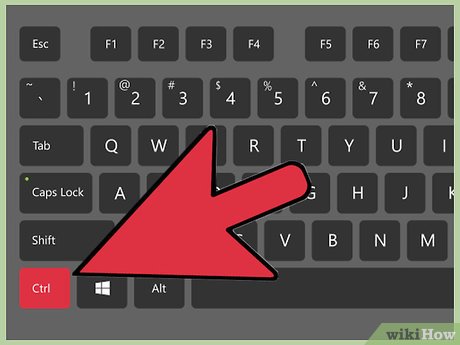 Press and hold theCtrlkey.
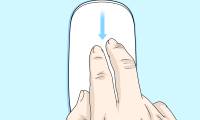
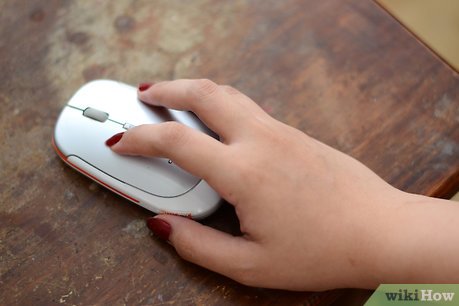 Scroll the mouse wheel or trackpad down.
Method 3of 6:
In Google Chrome
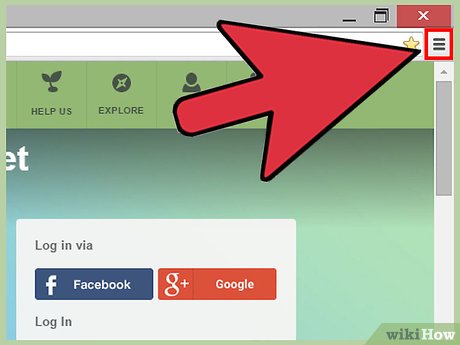 Find the menu icon. [1]It is three horizontal lines in the top right of the window, by default. Unless you've moved it, it should be on the same line as your URL bar.
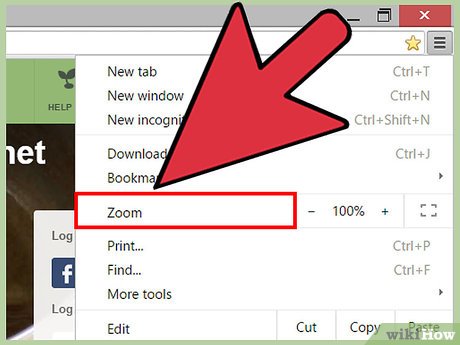 Locate 'Zoom. ' It is halfway down the menu, with a-and a+surrounding the current zoom percentage.
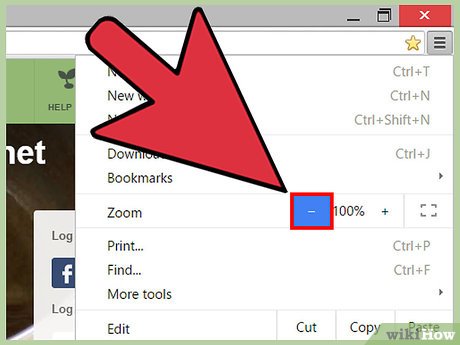 Hit the-until you've zoomed sufficiently.
Method 4of 6:
In Mozilla Firefox
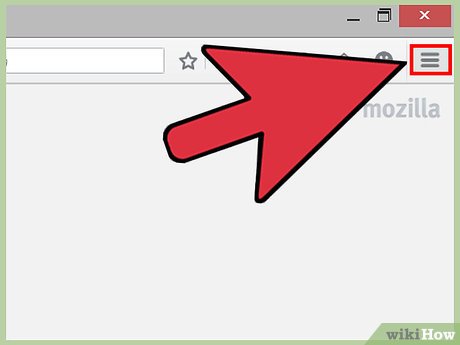 Click on the menu button. [2]It's three horizontal lines on the top right, by default. Unless you've moved anything, it'll be adjacent to your URL bar.
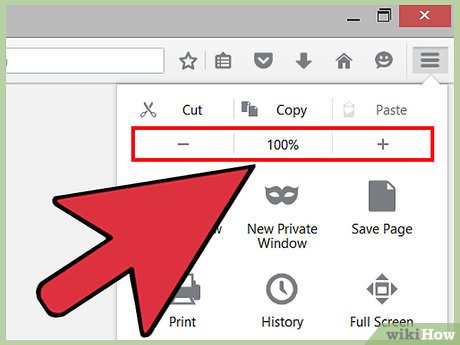 Locate the zoom function. Directly underneath copy, you'll see a percentage amount surrounded by a-and a+sign.
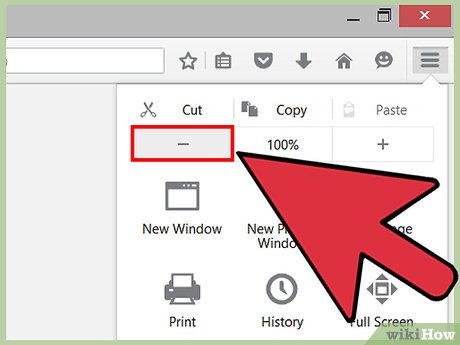 Hit the-sign to zoom out.
Method 5of 6:
Using Microsoft Edge
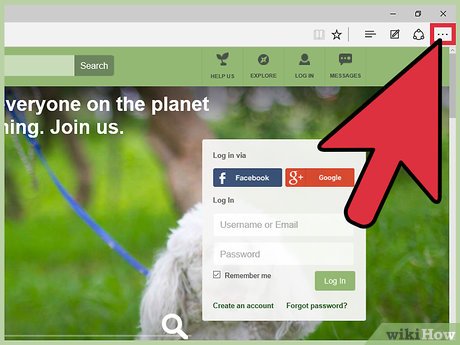 Find the menu icon. By default, it'll be three dots in the top right corner of the screen. Unless you've moved it, it should be parallel to your URL.
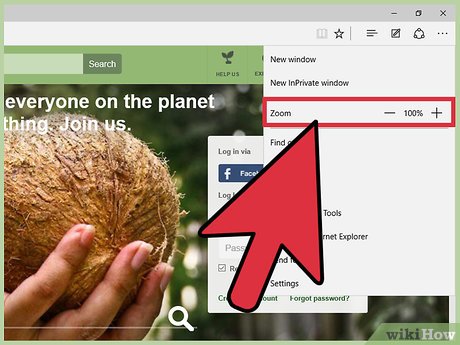 Locate the zoom function. It'll say 'zoom' and will have a+and-sign to the right.
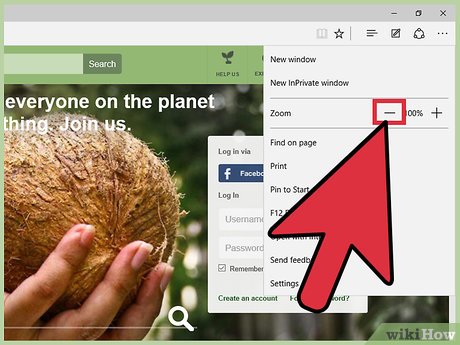 Hit the-button to zoom out until content.
Method 6of 6:
Changing Screen Resolutions
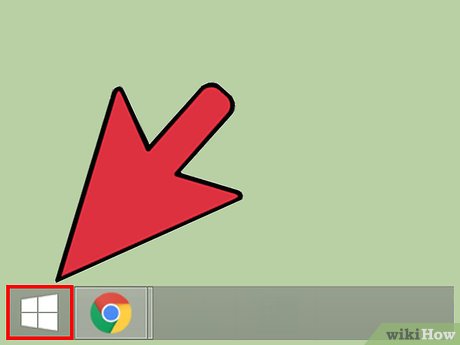 Open your start menu. [3]Click the⊞Winnear the bottom left of your keyboard. This will cause your entire desktop to seem zoomed out, making all the windows appear smaller-scale on a larger working surface. This can seem less crowded.
 Open your settings. Click settings.
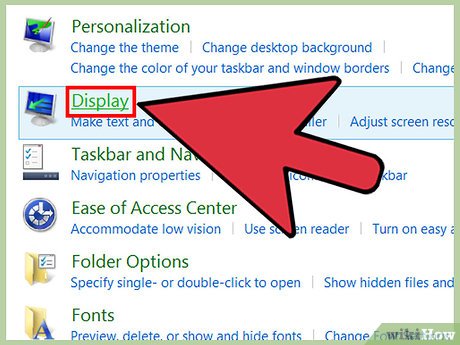 Click System> Display > Advanced Display settings. Advanced Display Settings will be on the bottom of the Display options menu.
 Change your resolution. You can do this by clicking the drop-down arrow under 'Resolution.' The higher you make the numbers, the more 'zoomed out' it will appear. You will have to confirm that you want to keep the settings after they have changed.
FAQ
What is How to Zoom Out on a PC about?
It provides a structured overview of zoom, explains the main context, and highlights practical takeaways for readers.
Why does this topic matter?
Understanding the main concepts helps readers evaluate the issue, avoid common mistakes, and make better-informed decisions.
How should readers use this information?
Use the guidance as a practical starting point, confirm details that may have changed, and follow current product, safety, or security recommendations.
Related Articles
 How to Install Zoom on a Mac4 minutes read
 Why Doesn't Zoom Sound? Zoom Error Has No Sound5 minutes read
 How to Zoom Out on a Mac4 minutes read
 How to Secure Your Zoom Account, Avoid Leaking Personal Data3 minutes read
 How to Zoom Out on Mac: Practical Guide8 minutes read
 Is It Safe to Use Zoom? Things to Know6 minutes read
Reader Comments 0
Sign in with email or Google to join the discussion.