Table of Contents
This guide provides a clear, practical overview of "History Comes to Life in These Photos, Thanks to Google's AI". It organizes the most useful details, explains important considerations, and highlights the steps or choices that matter most.
Inside Moving Archives
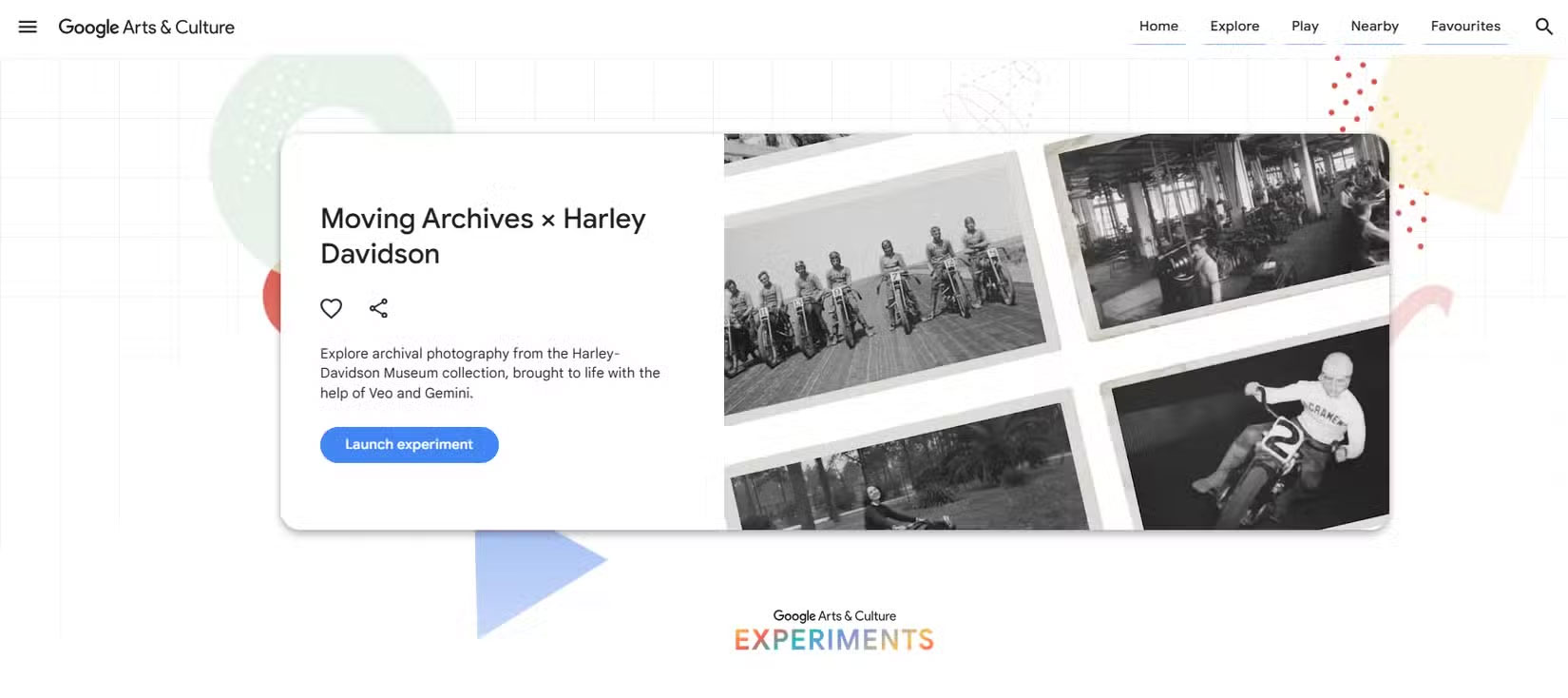
In Moving Archives, Google has applied Veo's animation technology to some of the museum's archived images. You can switch between the original still image and the animated version with a click. In one scene, you might see a 1920s factory floor gently come to life or racers zoom across the screen. Meanwhile, Google's Gemini model provides short audio clips in the style of old radio broadcasts and text snippets explaining what you're seeing, whether it's the evolution of motorcycle design or the adventurous spirit of early riders.
This is the first of a broader series of programs under Google Arts & Culture's Artists in Residence program, which invites museums, artists, and developers to experiment with Google 's AI tools.
In Google's The Keyword, Bill Jackson, Director of Archives and Heritage Services at the Harley-Davidson Museum, said:
Stock photos convey a lot about people, their attitude, their determination, and their energy. When we see people in motion, it creates more emotion and connection. We may never know some of these people in real life, but these moving images help us feel one step closer.
Is AI Redefining Historical Storytelling?
By animating still images, Moving Archives redefines how we interact with cultural heritage online. Movement adds emotional depth: Watching a factory worker move or a race car driver lean into a corner creates a connection between us and those who have made history. For museums facing declining attendance, these digital experiences can reach a global audience without the risk of damaging fragile artifacts.
Generative AI is also playing a role in preservation. Instead of restoring or touching original prints, institutions can safely 'bring them to life' using advanced AI video LLMs like Veo. It's a form of storytelling that's gaining popularity.
With an additional layer of AI video animation, Google ensures that unedited photos remain accessible and that any AI-generated captions are clearly labeled. This is a good time to test for signs that a video is AI-generated.
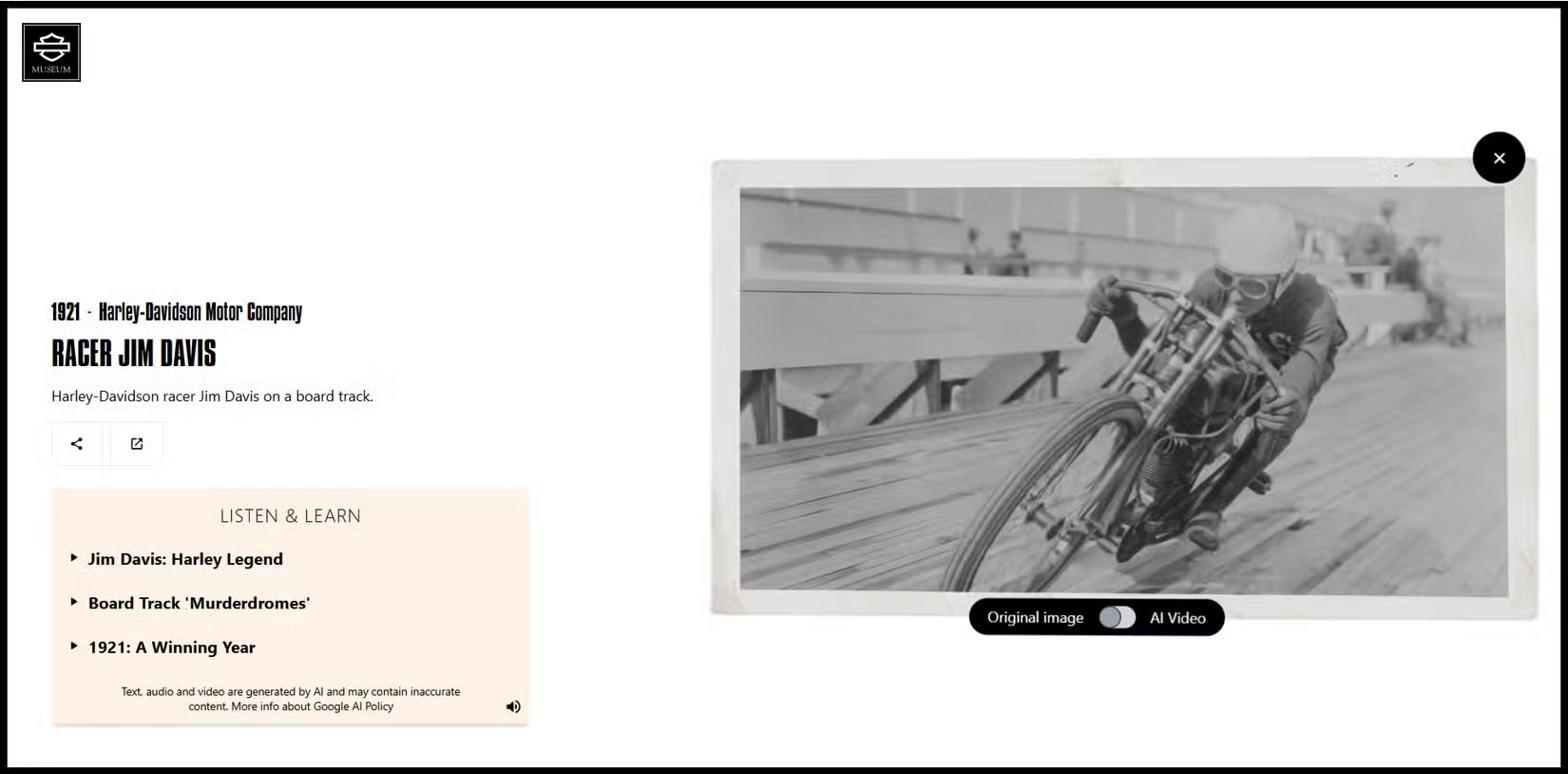
You can watch these animations and find out if static motorbikes shifting gears are powerful. Perhaps this Google experiment will show that history doesn't have to be sepia-toned photos on a page.
Moving Archives also hints at where AI is headed in the arts. As models like Gemini (and Veo) mature, we'll likely see more immersive storytelling tools across museums, galleries, and libraries. Flat exhibits will transform into interactive journeys, drawing in younger, tech-savvy visitors to explore the past in a more immersive way.
Google Arts & Culture now shares exquisite collections from museums around the world without endangering their collections. Plus, you can enjoy even more great experiences on Google Arts & Culture.
Of course, organizations must balance innovation with integrity. Curators need to guide AI's creativity so that history isn't distorted. Moving Archives strikes that balance with original images alongside AI-added content.
FAQ
What should you know about inside Moving Archives?
In Moving Archives, Google has applied Veo's animation technology to some of the museum's archived images. You can switch between the original still image and the animated version with a click. In one scene, you might see a 1920s factory floor gently come to life or racers zoom across the screen. Meanwhile, Google's Gemini.
Is AI Redefining Historical Storytelling?
By animating still images, Moving Archives redefines how we interact with cultural heritage online. Movement adds emotional depth: Watching a factory worker move or a race car driver lean into a corner creates a connection between us and those who have made history. For museums facing declining attendance, these digital.
What does this guide cover?
This guide explains history comes to life in these photos, thanks to Google's AI, including the main steps, important details, and practical considerations.
Related Articles
 25 Meaningful Photos of Life Make You Think4 minutes read
 Look Back at Google's 21-year History Through 33 Interesting Photos13 minutes read
 12 Interesting Photos to Help You Open Your Mind3 minutes read
 History of Earth Formation and 25 Milestones (part I)10 minutes read
 Silly Mistakes That Changed World History: Complete Guide9 minutes read
 30 Magical Moments of Life That the Naked Eye Can Hardly See4 minutes read
Reader Comments 0
Sign in with email or Google to join the discussion.