Table of Contents
Explore Google confirms gemini will completely replace assistant on phones by 2026.
Earlier this spring, Google outlined a rather bold vision for how we interact with smartphones. Instead of a simple voice assistant that only listens to commands and executes them, Google wants to move towards an AI capable of reasoning, understanding deep context, and communicating more naturally with users.
Initial announcements in March suggested Gemini would see rapid 'upgrades' on mobile devices, with Google Assistant gradually disappearing from new Android phone models and app stores in the following months. However, reality proved to be far more complex than anticipated.
It's not just about changing the name
Gemini on mobile is not simply a rebranded version of Google Assistant. Google sees it as a fundamental shift towards a personalized AI assistant capable of understanding natural conversations and interacting directly with apps on your phone.
Built on the latest generative AI technologies, Gemini supports many features that the old Assistant couldn't, such as free-form conversations with Gemini Live, or providing complex answers based on research and information synthesis. These points demonstrate Google's ambition to make Gemini the 'central intelligence' on mobile devices.
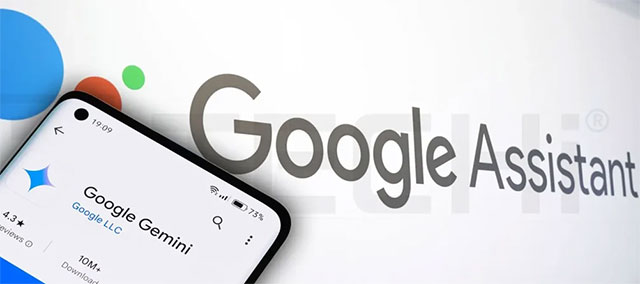
Despite initial rollout steps on Wear OS and Android Auto, Google has decided to slow down. The company's goal is to ensure a seamless transition before Google Assistant is officially discontinued.
A quiet update on Google's support page confirms that the migration of mobile users to Gemini will continue throughout 2026, instead of ending in 2025 as previously planned. The roadmap on other platforms, such as cars, is likely to follow a similar slow pace.
For current Android users, this means you won't lose Google Assistant immediately. The old assistant can still handle familiar tasks like setting timers, making calls, or quickly answering basic questions.
For early access, users can proactively download the Gemini app to try out new features. In the long term, Gemini will become the default assistant, handling daily tasks and simultaneously leveraging data from various applications to provide more intelligent support.
A cautious but necessary step
This delay suggests Google is taking a safe approach with a change of enormous scale. Replacing a system that has been the backbone of Android for nearly a decade is no simple task. It requires rigorous testing and gradual improvements to ensure stable operation across billions of devices.
Google's ultimate goal remains unchanged: to eliminate Assistant and integrate Gemini into everything – from tablets and headphones to smart home devices and cars. It's likely that the first half of 2026 will see a more significant transition, as Gemini becomes increasingly intelligent and deeply integrated into the Google ecosystem.
Final Thoughts
Understanding google confirms gemini will completely replace assistant on phones by 2026 makes it easier to evaluate the information and apply the most relevant recommendations. Focus on the key points above and verify details that may change over time.
FAQ
What is google confirms gemini will completely replace assistant on phones by 2026?
Explore Google confirms gemini will completely replace assistant on phones by 2026.
What key points does this article cover?
The article focuses on It's not just about changing the name, A cautious but necessary step, with practical explanations and examples.
How can you use this information in practice?
Use the explanations to compare options, verify important details, and make a more informed decision. Apply the recommendations that best match your goals and situation.
Related Articles
 Gemini Is No Longer as Useless as It Was Two Years Ago7 minutes read
 Google Assistant Is Disappearing from Your Smartwatch4 minutes read
 How to Use Gemini AI as a Virtual Assistant on Android to Replace Google4 minutes read
 How to Create Your Own AI Assistant with Google Gemini?5 minutes read
 How to Turn Off Gemini in Google Docs10 minutes read
 Guide to Sharing Your Personal AI Assistant on Gemini4 minutes read
Reader Comments 0
Sign in with email or Google to join the discussion.