Table of Contents
This article examines Google Announced Three New Chrome Security Features. It presents the main facts, practical implications, and key points in a clearer, easier-to-follow format.
These features are part of long-term efforts including tools like its SafeBrowsing API.
Simple Alerts When Extensions Enter
The first feature is the ability to detect each extension that changes the user's default settings. They include settings for search engines, home pages or proxy settings.
- Put Google as the homepage on Google Chrome.
When this happens, Chrome will display a warning as shown below, allowing the user to restore the previous settings.
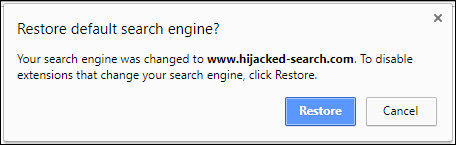
If the user accidentally misses an alert window or extension that has taken control of multiple settings at the same time, Google has also added access to the settings page and resets the entire profile only by one select. Website address:
chrome://settings/resetProfileSettingsGoogle Embeds the Chrome Cleanup Tool in the Browser for Windows
Chrome's second security feature is a well-known tool called the Chrome Cleanup Tool, which was previously provided as a standalone application.
The Chrome Cleanup Tool is currently integrated by default in Chrome for Windows and runs automatically to detect when users install intrusion software that affects Chrome installation and operation.
Google said: The Chrome Cleanup Tool will warn users when it detects unwanted software and quickly provides a way to remove the software and return Chrome to the default settings.
Google also said: Recently, the company has completed the redesign of the entire tool and the use of it is now simpler through clear pop-up notifications when Chrome discovers something it's correct.
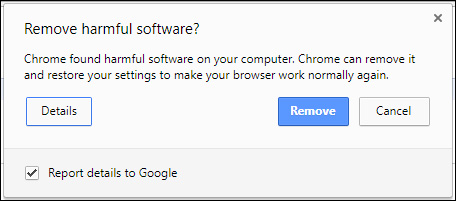
Chrome Embedded ESET's Detection Tool
How does Chrome discover something wrong? This is Google's third security feature - the integration of ESET's detection tool with Chrome's sandbox technology.
Director of Chrome Cleanup products - Mr. Philippe Rivard said: Note that this new sandbox tool is not a popular antivirus program. It only removes software that does not comply with its unwanted software policy.
Other Google Chrome security features added recently also include the ability to detect a number of browser Man-in-the-Middle attacks.
As such, we can see that Chrome is working hard to secure its browser to maintain its leading position in the browser world.
FAQ
What is the main point of Google Announced Three New Chrome Security Features?
These features are part of long-term efforts including tools like its SafeBrowsing API. The first feature is the ability to detect each extension that changes the user's default settings.
Why is Google Announced Three New Chrome Security Features important?
Google Announced Three New Chrome Security Features matters because it can affect how readers understand, choose, use, or respond to the subject discussed in the article.
What should readers verify about Google Announced Three New Chrome Security Features?
Check the date, product or software version, compatibility, and any current guidance before acting, especially when technology, security, health, or pricing is involved.
Related Articles
 How to Enable Site Isolation Security Feature on Chrome4 minutes read
 3 Features Less Known in Google Chrome5 minutes read
 Please Download Google Chrome 62 for Windows, Mac and Linux5 minutes read
 Google Launched Chrome 33, Patched 7 New Security Bugs3 minutes read
 Chrome 16 Launches with 'Standalone' Feature8 minutes read
 Add 3 Useful Features for Chrome: Google Chrome4 minutes read
Reader Comments 0
Sign in with email or Google to join the discussion.