Table of Contents
During the search, many people come across a Linux distribution called Winux that is getting a lot of attention.
There has been many talk lately about switching to Linux after Windows 10 support ends. Many people want something familiar that looks and works like Windows. In their search, many people have come across a Linux distribution called Winux that is getting many attention.
At first glance, it seems like a perfect fit, but after taking the time to dig deeper, there are some worrying issues that make people wonder if it is really a safe and reliable option.
Winux wants to give Linux a Windows-like feel
A familiar look on a different operating system
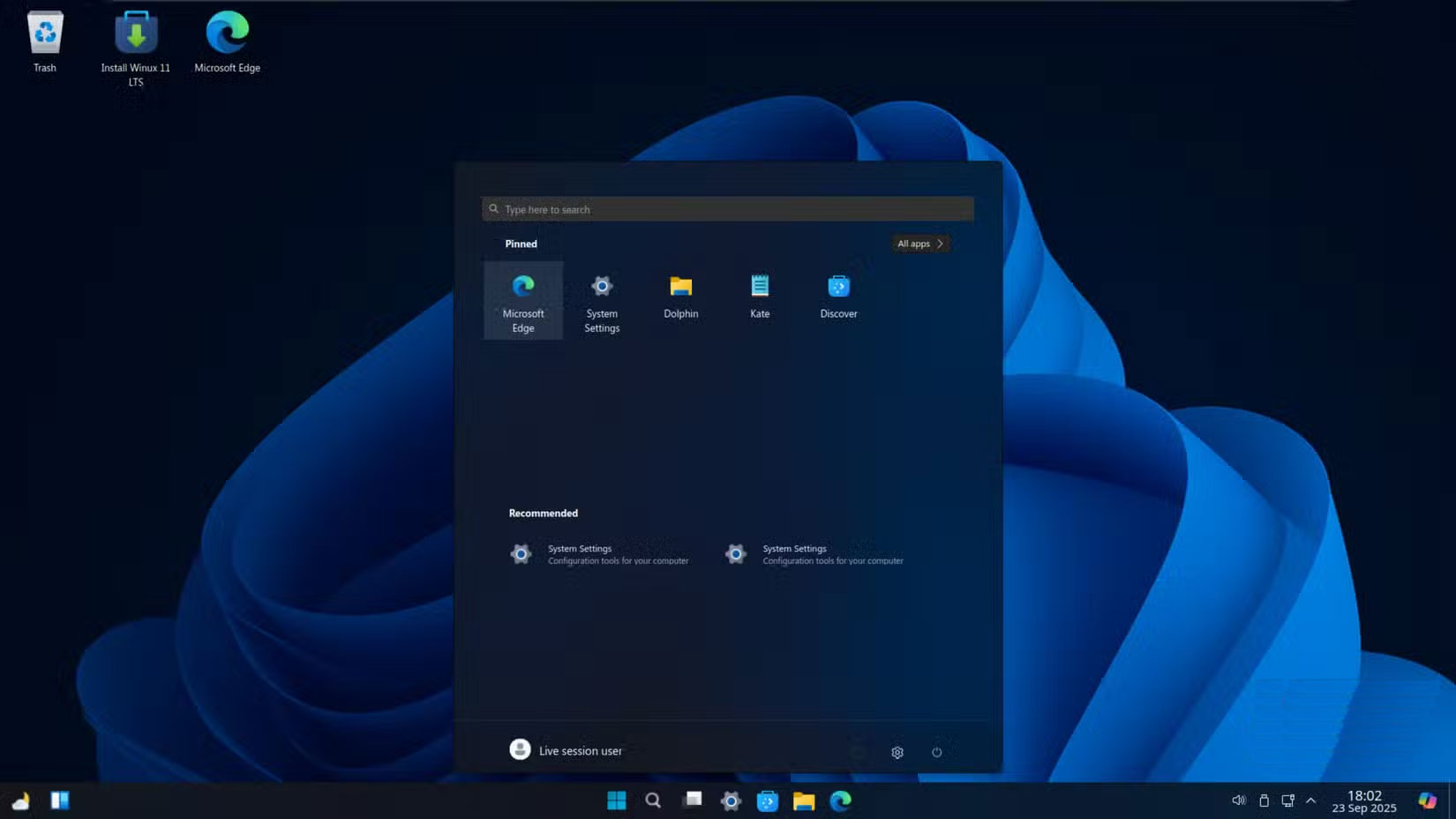
Winux is a Linux distribution designed to make the transition easier for users accustomed to Windows. Its interface closely resembles Windows 11, with the taskbar, Start menu, and system tray being nearly indistinguishable from their Windows counterparts. This design choice is intended to provide a familiar environment for those switching to Linux.
It even comes with built-in apps that mimic what you'd expect from Windows. The file manager looks like Explorer, the settings app is basically a clone of Windows Settings, and the system monitor is basically a disguised version of Task Manager. At first glance, you can't tell if it's a Linux or Windows installation.
But when you start digging deeper, there are some things that are not right. There are many issues here that you cannot ignore if you look closely.
Winux is not as reliable as it looks
Distribution with a shady past
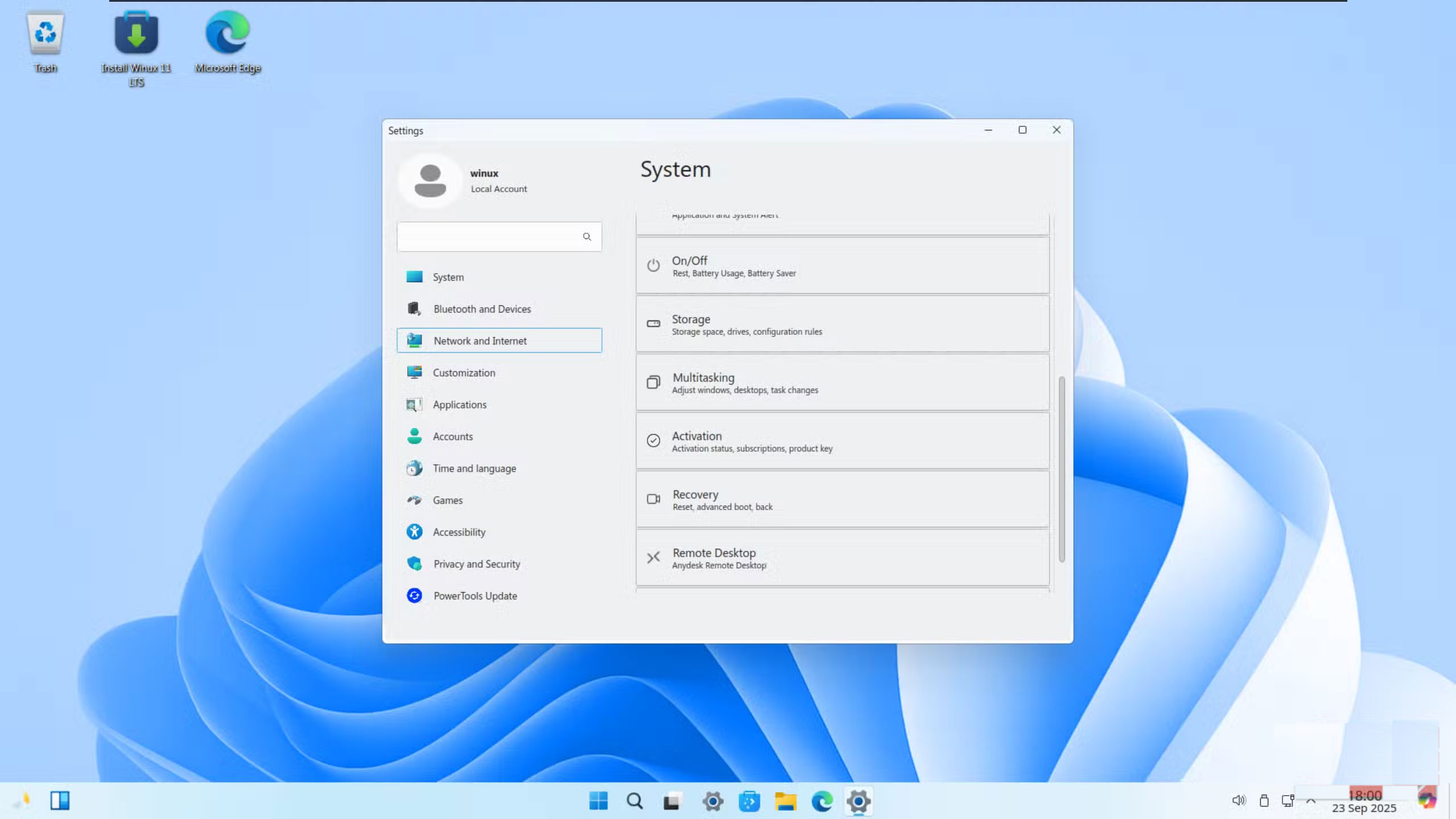
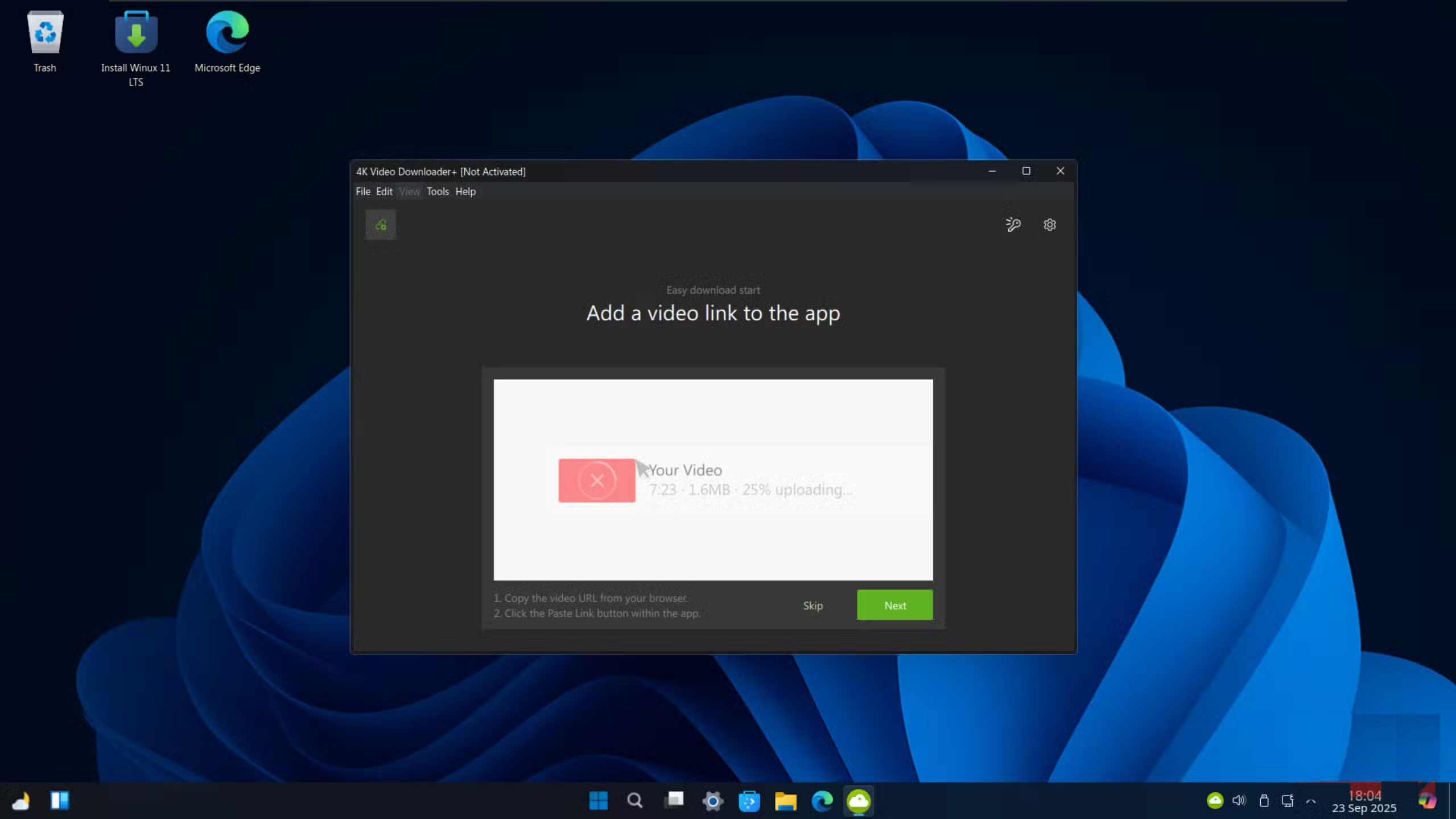
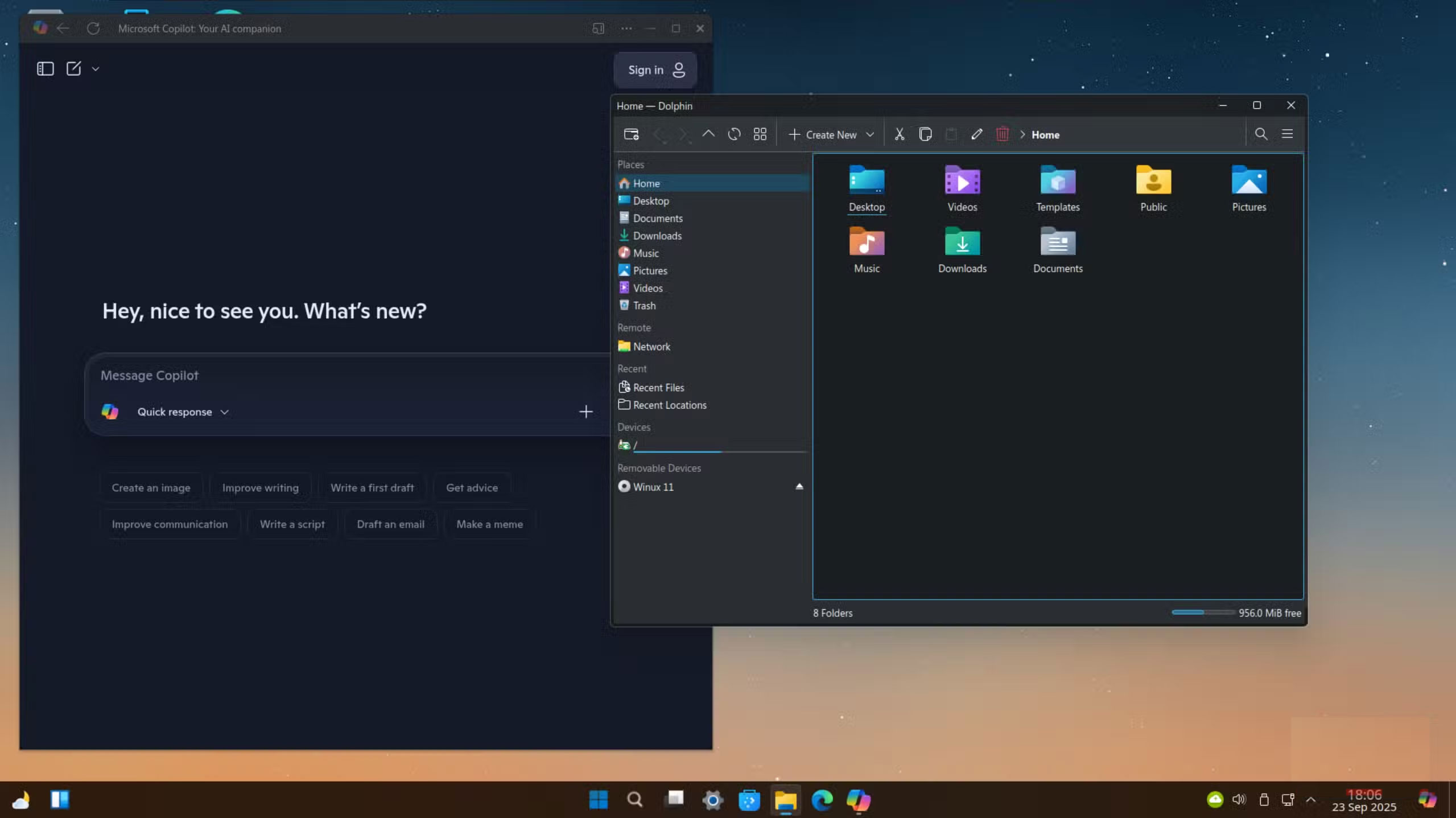
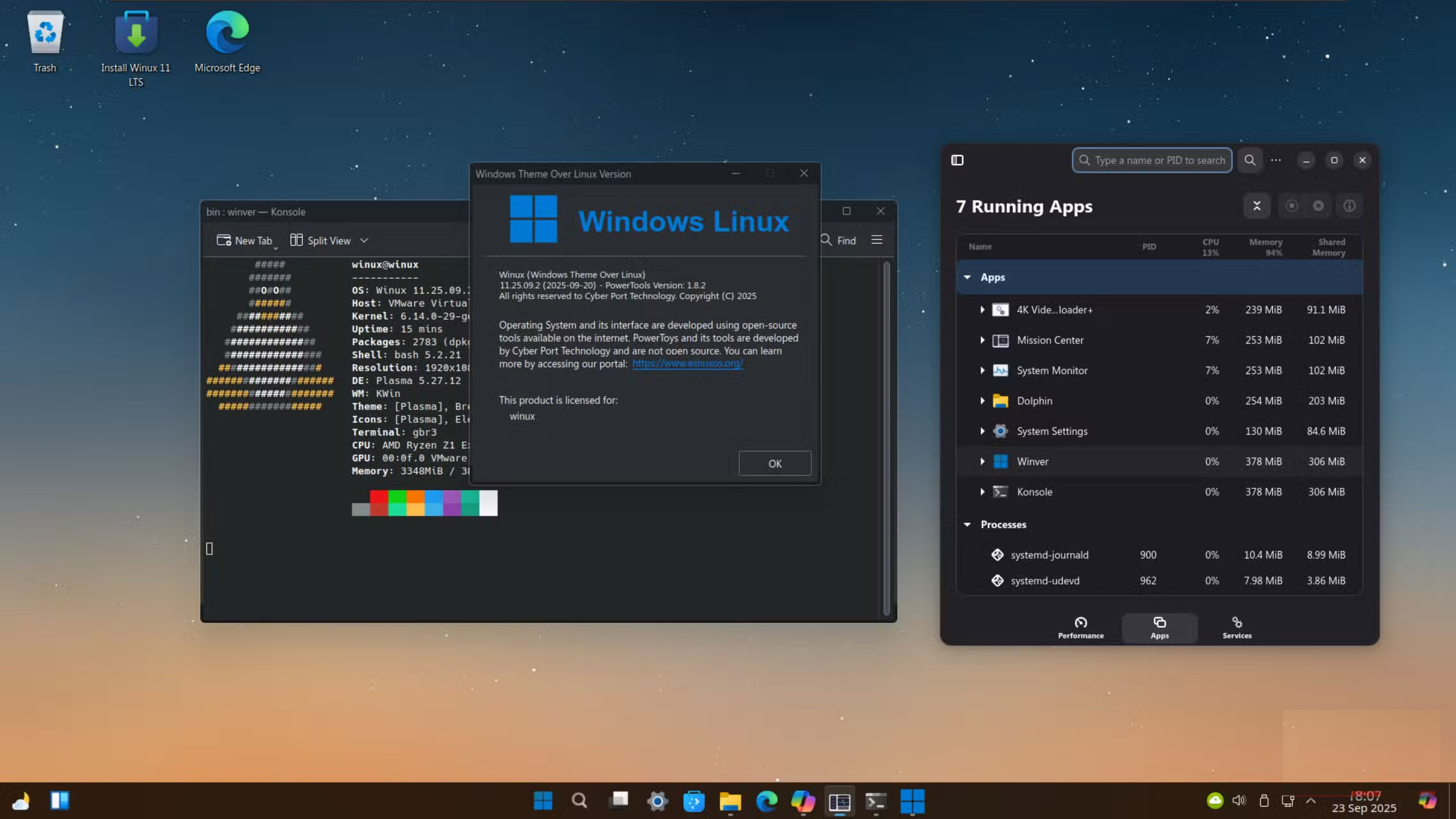
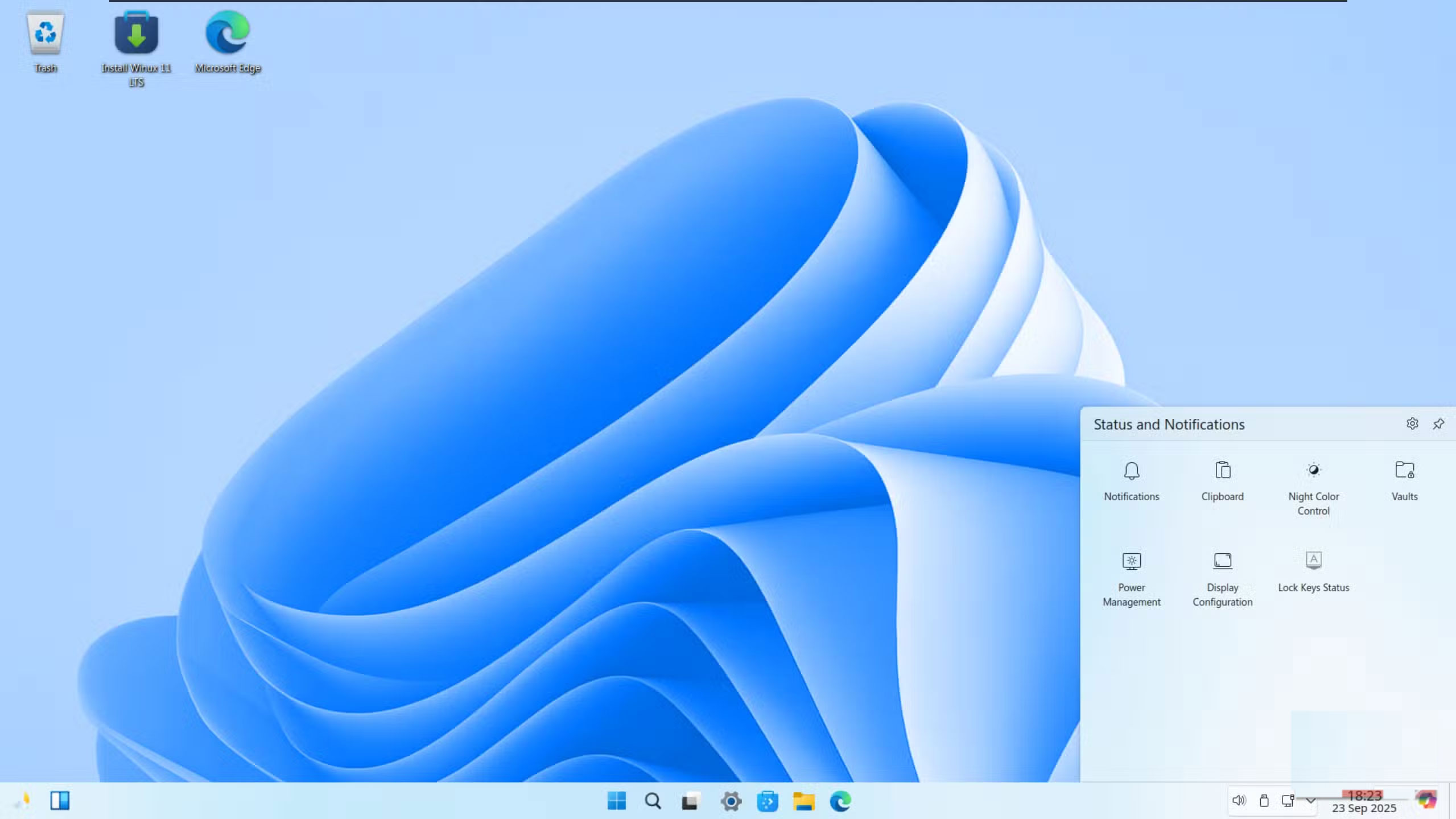
When you first boot up Winux, you'll get an odd sense of familiarity. It reminds you of Wubuntu, a distribution that came out a while ago. After digging deeper, you'll understand why. Winux has gone through several rebrands – it was previously called Wubuntu, and before that, Linuxfx. That immediately raises a red flag. It seems like the developers are trying to distance themselves from the past, and rightly so.
In 2022, while still known as Linuxfx, the distribution suffered a serious security issue. An online registration and activation database was exposed, leaking users' IP addresses, license keys, and emails. Instead of properly fixing the issue, the developers made little effort to fix it and even mocked Kernal, who first reported the issue. That alone made many people seriously doubt the credibility of the project.
The distribution is also heavily commercialized. Winux includes PowerTools, a $35 suite that promises Windows-like interfaces, Android support, ChatGPT integration, and more. Most of these features are just skins and minor tweaks to Ubuntu —things you can do yourself for free. Worse, the constant pop-ups urge you to buy a Pro license. The ads are what drive many people away from Windows. For a Linux distribution, this is completely antithetical to the spirit of open source.
You should use some other version instead.
Use the more reliable Linux Mint version!
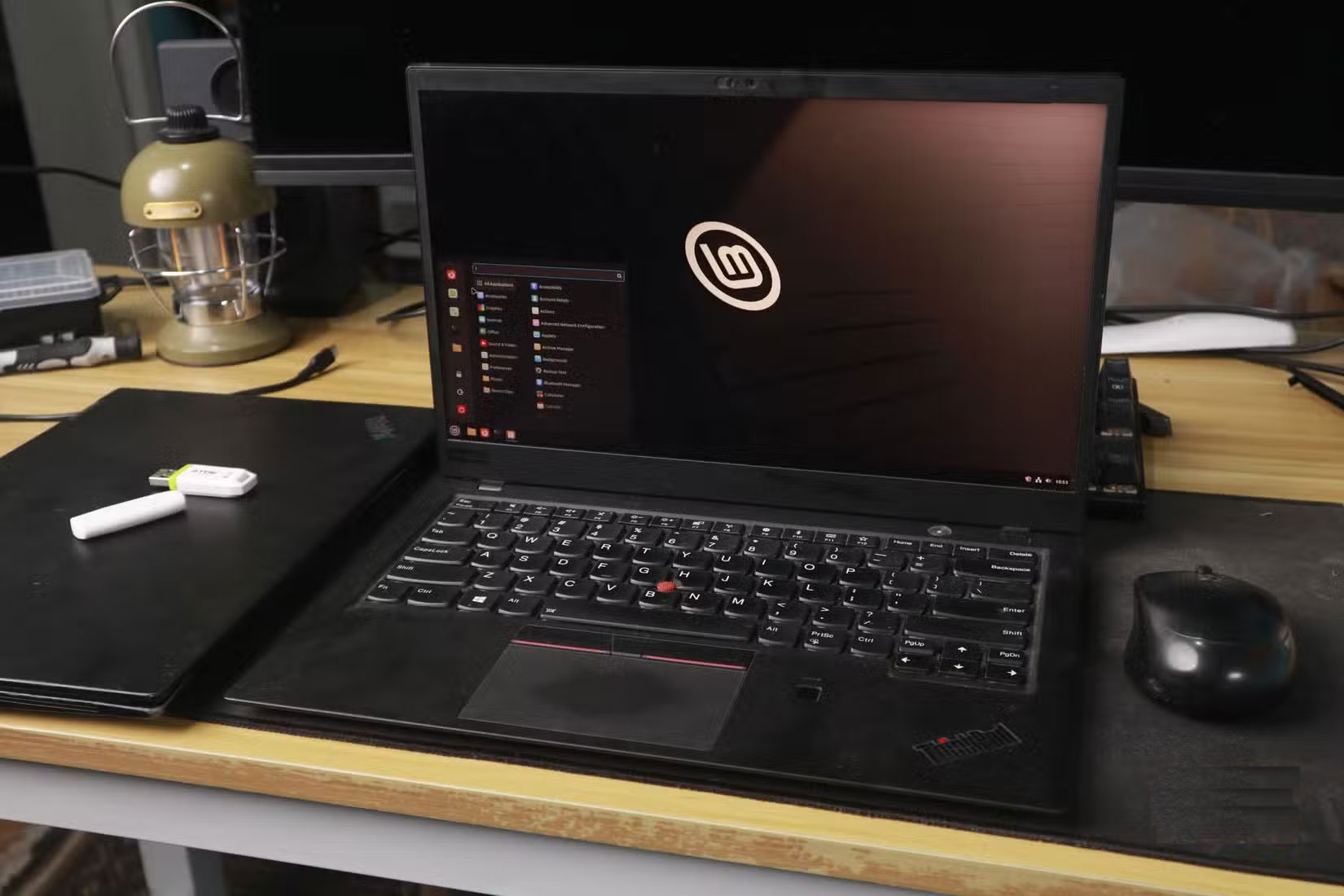
You can find plenty of Linux distributions to try instead of Winux when switching from Windows. Linux Mint is a popular choice. It is by far the easiest to use, especially for those who are not tech-savvy. It also works well on older systems, and while the user interface isn't an exact replica of Windows like Winux, it still feels familiar.
If you really want a Windows-like user interface, you can also use any distribution that has KDE built in, such as Fedora KDE. From there, you can install one of the many Windows skins from the KDE Store. Honestly, many of these skins are even better looking than Winux, and you get the flexibility of a full open source Linux system without the need for bloated and cumbersome applications.
FAQ
Why Winux Is the 'Windows-friendly' Distribution You Should Stay Away?
In practical terms, during the search, many people come across a Linux distribution called Winux that is getting a lot of attention.
What factors are most important?
The article highlights that winux wants to give Linux a Windows-like feel A familiar look on a different operating system Winux is a Linux distribution designed to make the transition easier for users accustomed to Windows.
What is the main takeaway?
The main takeaway is that winux is not as reliable as it looks Distribution with a shady past When you first boot up Winux, you'll get an odd sense of familiarity.
Related Articles
 These 4 Linux Distributions Are a Bad Idea: Avoid Them at All Costs7 minutes read
 Friendly Rivalry: a Story of Ambition and Obsession: Explained8 minutes read
 How to Enable Friendly Dates in Windows 10 File Explorer4 minutes read
 Essential Features to Help You Stay Focused and Productive on Windows9 minutes read
 Create Your Own Linux Distribution with Ubuntu Imager7 minutes read
 How to Stay Awake in Class: Step-by-Step Guide5 minutes read
Reader Comments 0
Sign in with email or Google to join the discussion.