Table of Contents
The iPhone 17 is equipped with Apple's first square sensor front camera, 18MP resolution, supporting 4K HDR recording and Cinematic Mode, helping to take selfies and video calls much better than Android.
While all the attention has been on the new iPhone's 48MP rear camera, the new front-facing camera is a real game changer – even if you're not a selfie fanatic.
Let's see why this aspect is so important.
Square sensor first appeared
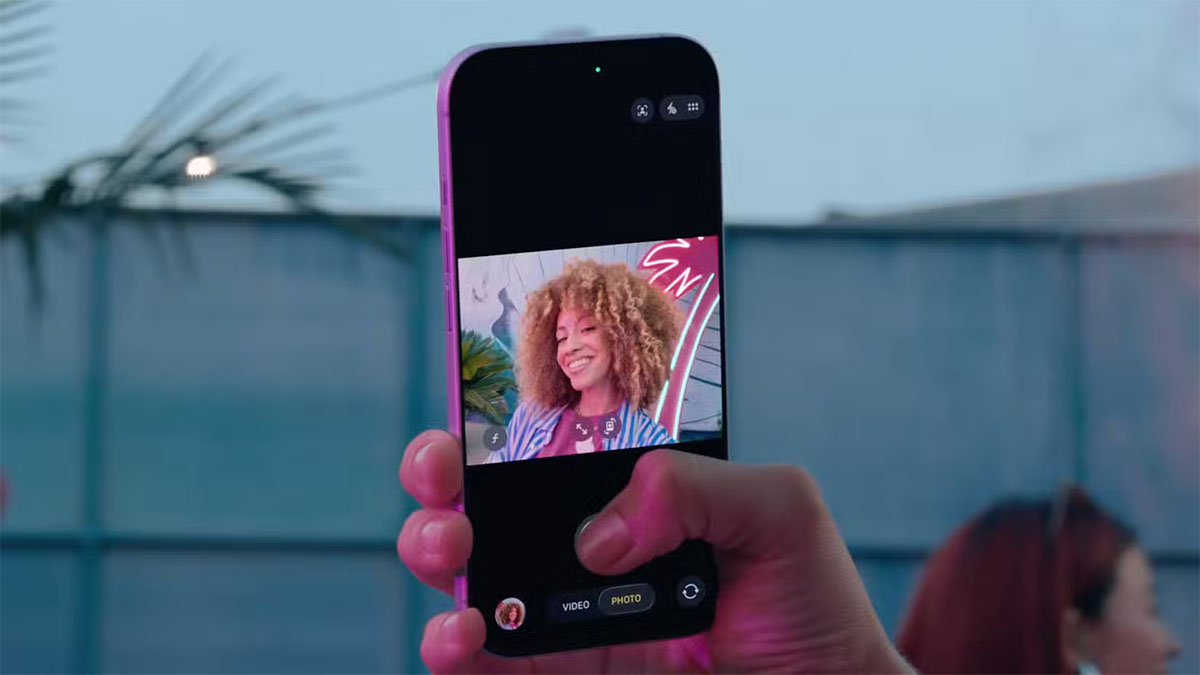
Apple calls this new front camera Center Stage, using a square sensor – the largest ever on an iPhone. This is also the first time a smartphone has a 1:1 front sensor, instead of the previous 4:3 rectangular sensor mounted vertically.
Thanks to this design, the front camera captures the same amount of information whether you hold the iPhone horizontally or vertically. It then automatically crops the photo based on the context. For example, if there are more people in the frame, the iPhone will automatically widen the angle to capture all the faces.
You can also manually rotate the frame using the on-screen button, instead of having to rotate the entire device. Apple doesn't yet support large 1:1 selfies, but it's likely that third-party apps will support it in the future.
In practice, you no longer have to rotate your iPhone to take group shots. Holding the phone vertically is easier and more secure, and the only downside is that the preview is a little smaller – which is totally acceptable.
Additionally, the camera being placed right in the middle means that horizontal shots no longer look skewed or 'weird' like before when the lens was off to the side.

Sharper selfies and video calls on every iPhone
Apple also upgraded the hardware: the new front camera has a resolution of 18MP (up from 12MP), with a 6-element lens (compared to 5 before), making images sharper and clearer.
Not only selfies, video calls are also smoother. True to its name, Center Stage, the camera is capable of 'tracking' people in the frame by intelligently cropping. The new front camera also supports dual recording, allowing simultaneous recording of both the front and rear cameras.
Notably, this feature is not limited to the Pro version. Even the iPhone 17 and iPhone Air are equipped with a Center Stage front camera, supporting 4K HDR Dolby Vision video recording with the front camera.
That said, only the iPhone 17 has Cinematic Mode 4K HDR, while the Air does not. And only the iPhone 17 Pro supports ProRes 4K60 recording with the front camera.
That said, this difference is not too big. More importantly, Apple has brought this feature to all iPhone 17 models, including the thin and light version like iPhone Air. It is likely that the iPhone 17e version launched in 2026 will also inherit this upgrade.
It's been a while since iPhone users have seen a feature that's 'ahead of Android'. While Apple has focused on improving performance and stability in recent years, the Center Stage front camera shows that the company still knows how to create innovations that make users nod their heads in agreement.
FAQ
What should you know about iPhone 17 selfie?
In practical terms, the iPhone 17 is equipped with Apple's first square sensor front camera, 18MP resolution, supporting 4K HDR recording and Cinematic Mode, helping to take selfies and video calls much better than Android.
Why does iPhone 17 selfie matter?
The article highlights that however, only the iPhone 17 has Cinematic Mode 4K HDR, while the Air does not.
What is the main takeaway?
The main takeaway is that and only the iPhone 17 Pro supports ProRes 4K60 recording with the front camera.
Related Articles
 How to Use Palm Timer to Take Selfies on Android7 minutes read
 Instructions for Using Faceu to Take Unique Selfies5 minutes read
 How to Prevent Selfies from Appearing in Selfies Albums on Iphone7 minutes read
 How to Download Tik Tok for iPhone and Android Phones4 minutes read
 Let's Look Back at All the Iphone Generations Apple Has Launched8 minutes read
 5 Android Camera Features Only Available on Foldable Phones6 minutes read
Reader Comments 0
Sign in with email or Google to join the discussion.