Table of Contents
Many people have recently realized that, unlike a few years ago, they can now enjoy YouTube content without having to wonder whether they should or not. It's a small change, but it has changed the way users interact with the platform in ways that most people didn't expect.
The subtle psychology of dislikes
When YouTube announced that it would be removing public dislike counts by the end of 2021, the online community reacted as it always does, splitting into different camps and arguing over the issue. Some saw it as a way to protect creators from harassment. Others believed it was simply a way to shield big brands and corporations from public humiliation. And then there were those who preferred to put the number first, because, otherwise, how would you know if a video was worth your time?
Many people never think of the number of dislikes as just a statistic; instead, it's more like a preface to the story they're about to watch. When you select a video and see a stack of dislikes next to the likes, your brain immediately starts filling in the blanks: Maybe this video sucks, or everyone hates it, so you'll hate it, too. It's like glancing at a movie's Rotten Tomatoes score before hitting play, changing your expectations before the first line is even spoken.
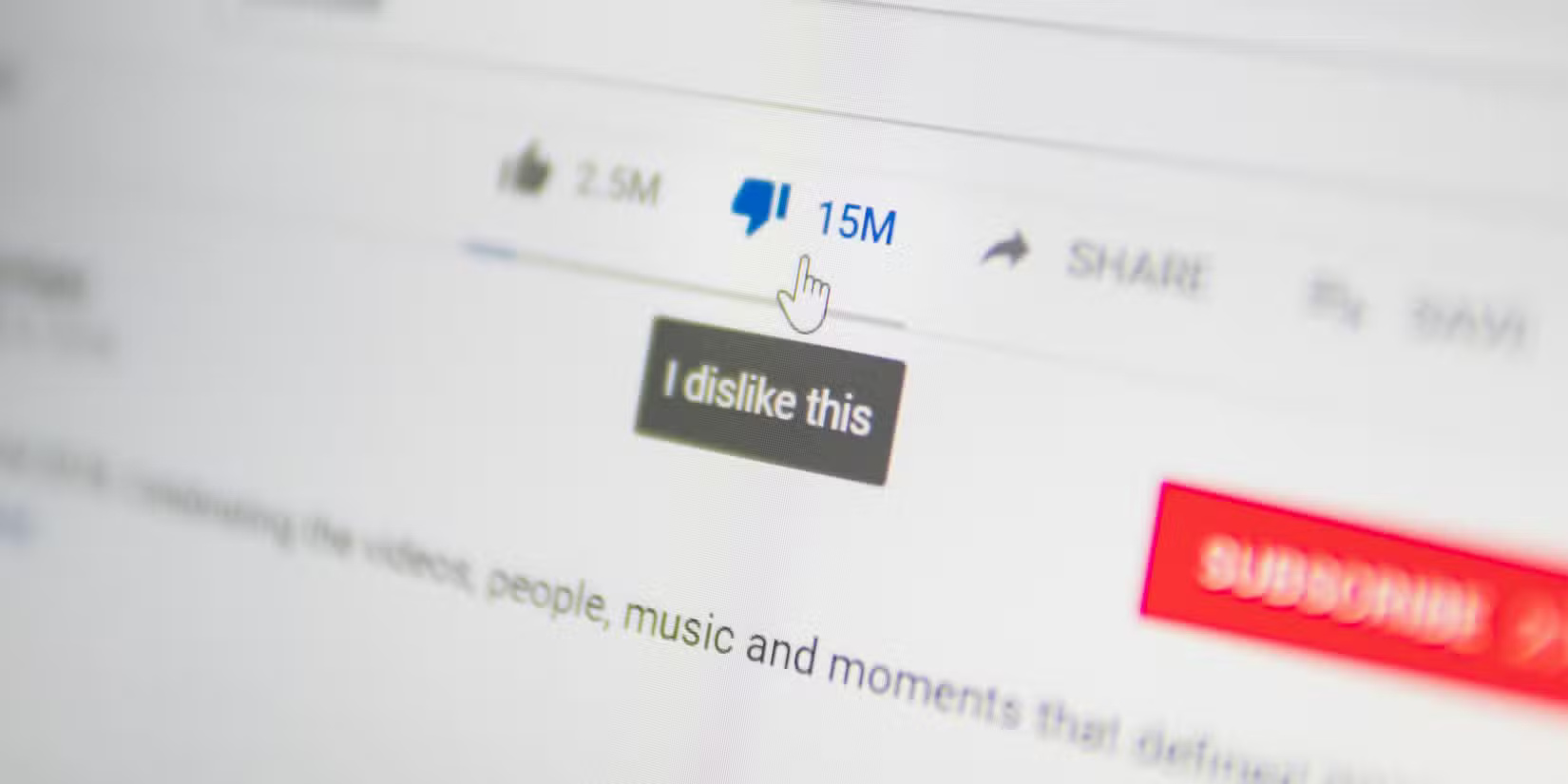
This is called herd mentality. Humans like to agree with the majority, even when we don't realize we're doing it. And on YouTube, the number of dislikes displayed is one of the clearest signs of group opinion. Sometimes that's useful, like when a tutorial is wildly inaccurate or a product review is sponsored nonsense. But sometimes it means good content can get buried under a cloud of negativity for reasons that have nothing to do with quality.
Maybe the creator had a bad week and got caught up in an unrelated controversy. Maybe a fanbase from another channel decided to dislike a bunch of videos. Or maybe it was a video in a small community with strong opinions, where dissenters expressed their displeasure through the dislike button rather than discussion. Whatever the cause, that number has impressive power before the creator even says hello.
Users' viewing habits before and after seeing dislikes
Once YouTube hid view counts, that fixation disappeared. Users no longer had a quick gauge to gauge what they were about to see. That forced them to actually watch it.
For instance, let's say I was looking for tips on how to do a difficult bass guitar part and stumbled across a little channel I'd never seen before. The videos were modestly produced, the lighting was a little harsh, and the delivery had that hesitant energy you get when someone is trying to find their footing in front of the camera. Back in the day, that might have been enough to get a viewer to hit the dislike button, and enough for me to quietly let it slide.
But since I didn't see any dislikes, I gave it a chance. I watched the whole video and found the advice to be absolutely correct. I actually learned a sharp technique and had a better impression during the creation process.
It's Not Perfect - And That's Okay!
Of course, hiding the public dislike count isn't without its drawbacks. Admittedly, there are times when people wish it was still there, especially when searching for something where accuracy really matters, like a how-to video or a product review. In the past, a high dislike count could immediately signal to users that the content was outdated, misleading, or just plain bad.
These days, this information can be offset in other ways. You can scroll through the comments to see if people are saying it didn't work for them or if it's just clickbait. Check the description, look at the creator's bio, and note how quickly they get to the point. And if that's a waste of time, you can still hit a private dislike button, which remains a private response to the creator. You can also use the Chrome extension TDLR to figure out whether a YouTube video is worth your time.
Does this take a little more effort? Yes. But it also forces you to be more proactive about watching videos, rather than just being a passive consumer who relies on data to make decisions.
Final Thoughts
The key takeaway is that Why Would It Be Better If YouTube Didn't Show Dislikes is easier to evaluate when its benefits, limitations, and real-world use are considered together. Review the details above before applying the information to a specific situation.
FAQ
What is the main point of Why Would It Be Better If YouTube Didn't Show Dislikes?
Many people have recently realized that, unlike a few years ago, they can now enjoy YouTube content without having to wonder whether they should or not.
What should you know about The subtle psychology of dislikes?
When YouTube announced that it would be removing public dislike counts by the end of 2021, the online community reacted as it always does, splitting into different camps and arguing over the issue. Some saw it as a way to protect creators from harassment.
What limitations should readers keep in mind?
The answer can depend on the product version, source, use case, and date of publication. Review the article's context and confirm time-sensitive details before applying the information.
Related Articles
 4 YouTube Add-ons That Make Watching Long Videos More Enjoyable7 minutes read
 YouTube Performs 4K Videos with VP9 Codecs at CES 20144 minutes read
 How to Show 2 Subtitles in Parallel on Youtube Videos4 minutes read
 Guide 3 Ways to Block Ads on YouTube Videos: Turn Off Video Ads4 minutes read
 Here Are 7 Google YouTube Apps and Their Effects5 minutes read
 How to Create a New Channel on YouTube?: Create New YouTube Channel3 minutes read
Reader Comments 0
Sign in with email or Google to join the discussion.