Table of Contents
This article provides a clear overview of Using Liquid Metal Instead of Thermal Paste, Asus Laptops, with the main facts, useful context, and practical details organized for easy reading.
The enormous heat generated by laptop CPUs is a problem not only for Intel processors but also for products from rival AMD.
Ryzen 4900 HS - AMD's leading 7nm laptop CPU, can also make the Asus ROG G14's CPU temperature reach nearly 80 degrees Celsius and cover up to 51 degrees Celsius. last week with a maximum clock of up to 5.3 GHz and 8 CPU cores, this temperature is even higher.
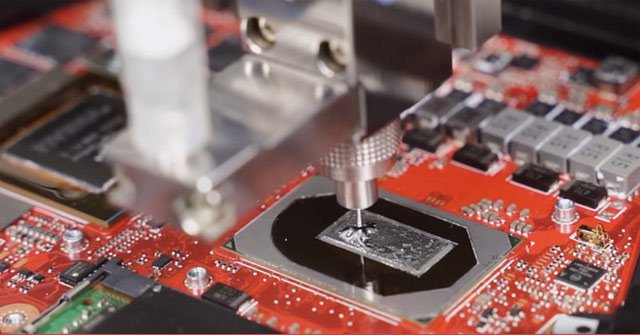
Therefore, Asus has decided to use Conductonaut liquid metal thermal paste on their upcoming laptops. Conductonaut is made of a mixture of tin, indium and gallium. This liquid metal has a thermal conductivity of 73W / mK, 4 times higher than conventional thermal paste.
Conductonaut contains Gallium, a substance that can destroy aluminum and be toxic if exposed directly through the skin, so if you put a little of this liquid on the motherboard, the laptop may be damaged. Therefore, Asus has developed an automated system to safely bring this heatsink to the CPU outer shell. For more details on this process, please watch in the video below.
Asus says that this liquid metal heatsink can help the CPU reduce temperatures by 10 to 20 ° C, and it also helps improve fan noise and laptop battery life. However, currently this heat sink is only used for Intel laptops.
FAQ
What is the main focus of Using Liquid Metal Instead of Thermal Paste, Asus Laptops?
The article explains the most important facts, context, and practical details related to Using Liquid Metal Instead of Thermal Paste, Asus Laptops.
Who may find this information useful?
It is useful for readers who want a clear overview, practical context, and a better understanding of the subject.
What should readers verify before taking action?
Check current product versions, official requirements, regional availability, and any details that may have changed since the original publication.
Related Articles
 Steps to Recheck Thermal Paste for Computer CPU10 minutes read
 What Is Thermal Paste?4 minutes read
 Successfully Formulated, Programmable, Liquid Metal Fabrication3 minutes read
 How to Clean Thermal Paste: Complete Guide9 minutes read
 How to Apply Thermal Paste: Complete Guide8 minutes read
 Scientists Have Created the World's First Liquid Metal Lattice5 minutes read
Reader Comments 0
Sign in with email or Google to join the discussion.