Table of Contents
Lenovo’s ThinkBook Modular AI PC Concept explores a laptop that can change shape instead of forcing users to carry separate screens, docks, and adapters. Shown at MWC 2026, the prototype combines two 14-inch OLED touchscreens, a removable keyboard, and interchangeable port modules.
It is an engineering concept, not a product with a confirmed price or release date. That distinction matters: the design demonstrates what Lenovo can build, but battery life, durability, replacement-part availability, and final specifications would need to be proven in a retail version.
A detachable second screen

The computer has a primary display in the normal laptop position. A second OLED panel can attach to the back of the lid, face outward for a presentation, sit separately on a kickstand as a portable monitor, or move to the keyboard deck for a stacked dual-screen workspace.
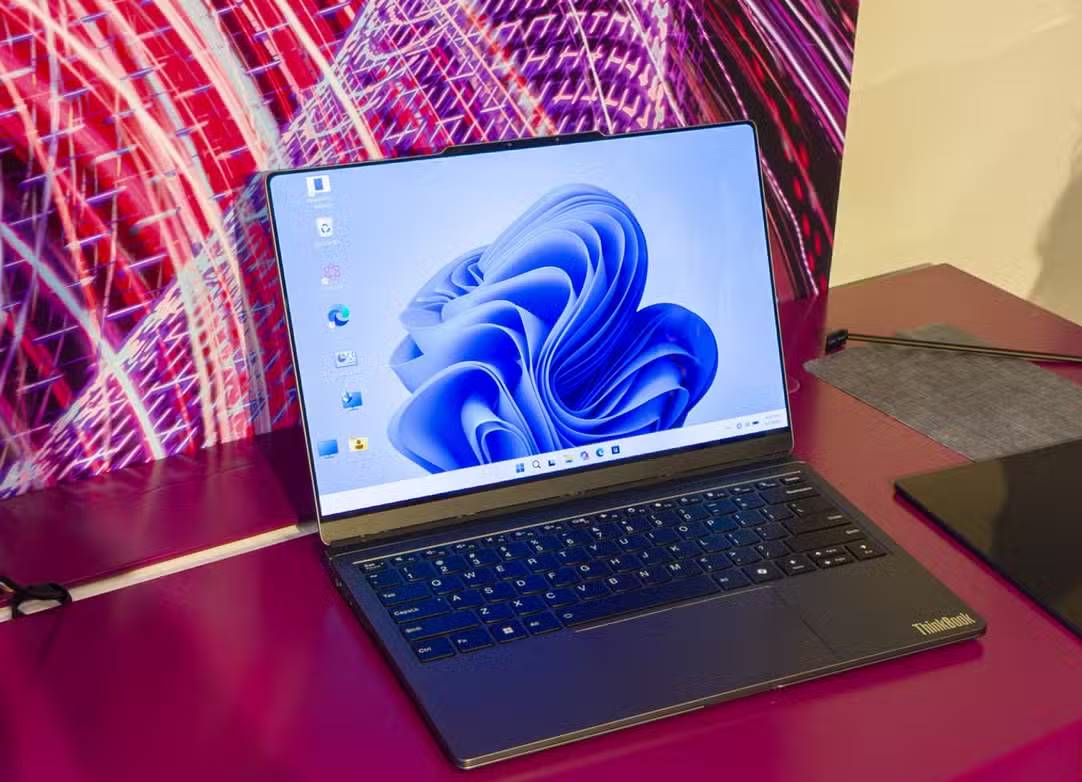
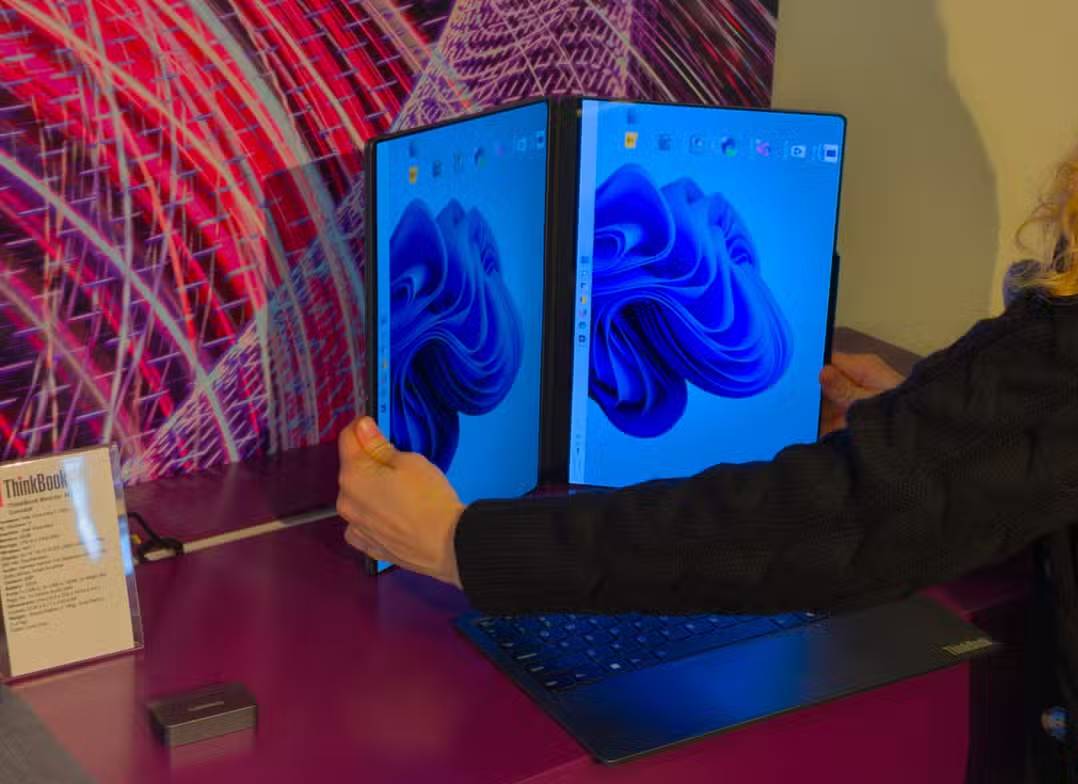
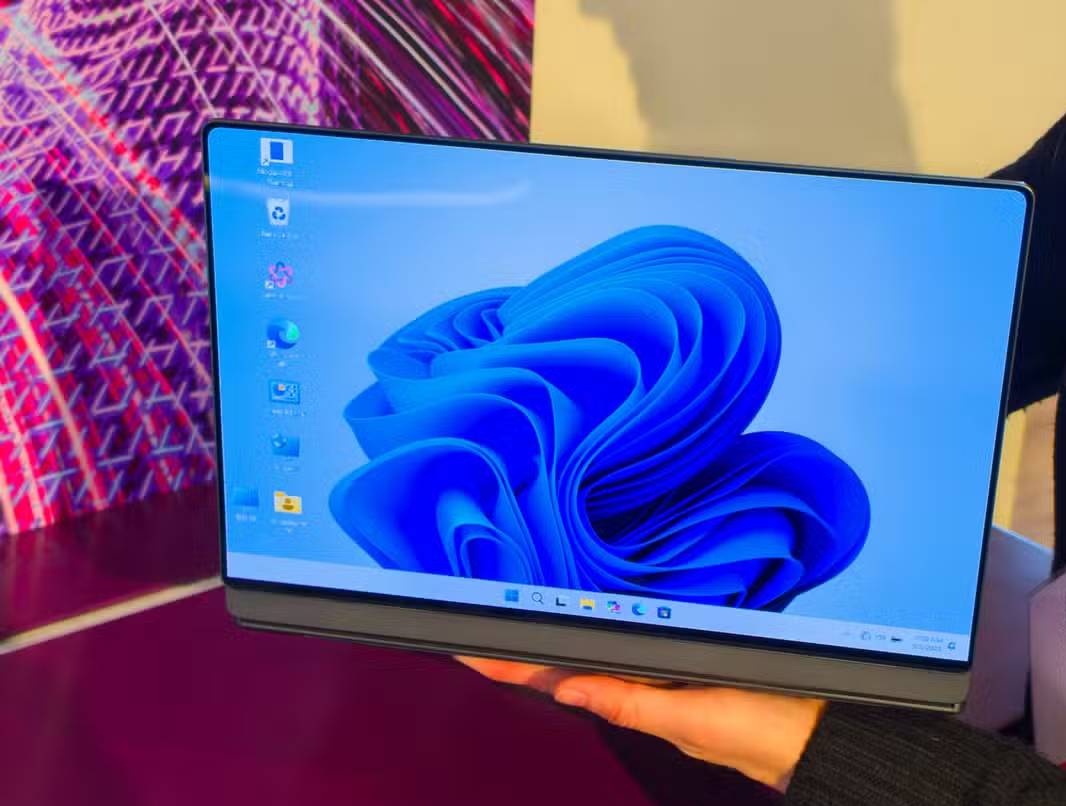
The detachable panel works in landscape or portrait orientation. When used away from the chassis, it connects by cable, so it should be considered an integrated portable-monitor concept rather than a completely wireless display.
The keyboard and touchpad form a removable unit. Taking it off exposes the lower mounting area for the second screen; the keyboard can then be used wirelessly. This arrangement is similar in purpose to existing dual-screen laptops, but the removable rear panel adds more placement options.

Swappable ports reduce the need for adapters
The concept also includes removable input/output modules. A user can exchange modules to add USB-C, USB-A, or HDMI according to the equipment at hand.
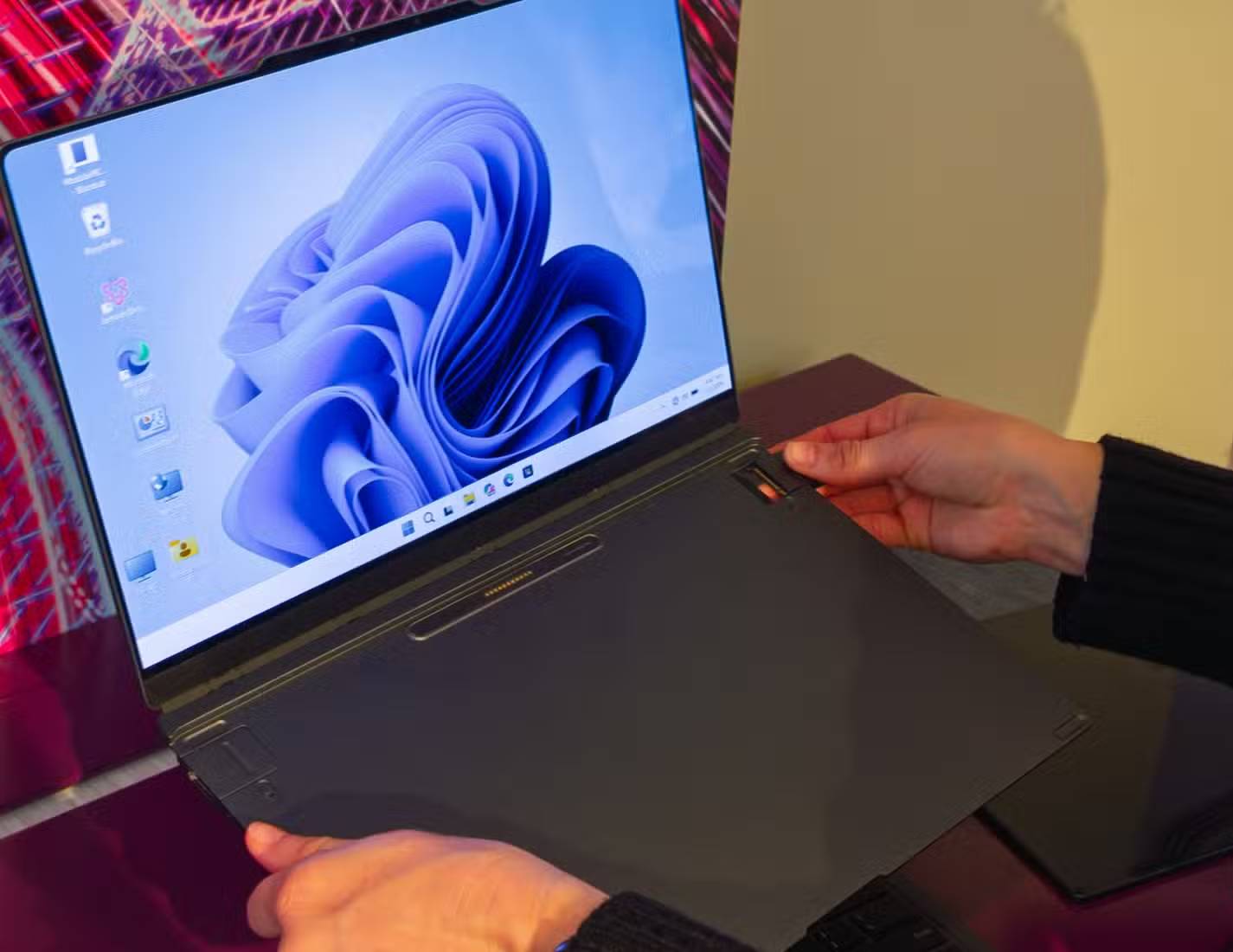
This approach is useful for people who move between modern USB-C accessories and meeting rooms that still rely on USB-A or HDMI. Unlike a loose dongle, a module becomes part of the laptop chassis. A storage pouch keeps unused pieces together.
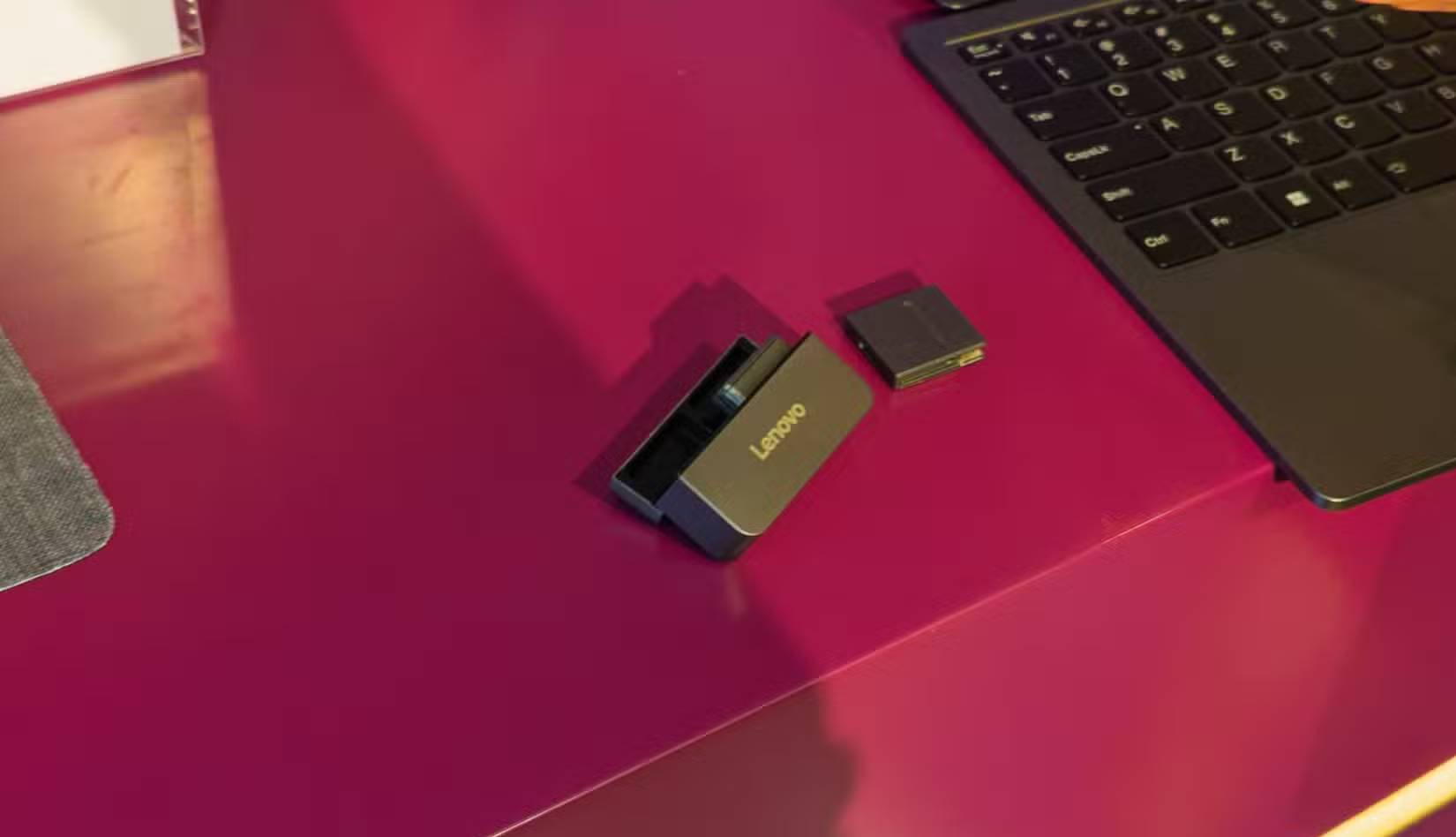
The idea resembles Framework’s expansion-card system, although Lenovo’s prototype combines modular ports with a removable display and keyboard. It does not appear to promise the same degree of internal repairability or upgradeability, so “modular” should not be read as meaning that every component can be replaced.
What looks practical
- Mobile dual-screen work: The second display travels as part of the computer instead of in a separate monitor sleeve.
- Flexible presentations: A rear-facing screen can show content to someone across a table.
- Portrait viewing: The detached panel can suit long documents, code, or vertical layouts.
- Legacy connectivity: Swappable ports can replace a separate adapter for common meeting-room equipment.
- Replaceable accessories: A damaged keyboard, port module, or secondary display could be easier to service if Lenovo sells parts separately.
The questions Lenovo still needs to answer
Two OLED screens and several detachable parts create obvious tradeoffs. A production model would need convincing answers on:
- runtime with one screen and with both displays active;
- the strength and long-term wear of magnetic and pogo-pin connections;
- weight and thickness when all modules are carried;
- the cost of replacement screens, keyboards, and ports;
- compatibility of future modules with the original chassis;
- warranty coverage for the detachable parts;
- whether the stand is stable on small or uneven surfaces.
The ThinkBook Modular AI PC Concept is interesting because its modular pieces solve recognizable travel and office problems. Whether it becomes a compelling product will depend less on the demonstration and more on price, battery life, durability, and Lenovo’s commitment to keeping replacement modules available.
Related Articles
 Is Framework Laptop the Modular Laptop You've Been Waiting6 minutes read
 Asus Dual Touch Screen Laptop3 minutes read
 Laptop Designs of the Future7 minutes read
 Dual Screen Laptop 'Show Off'4 minutes read
 5 Reasons to Buy Modular Laptop: What You Need to Know8 minutes read
 The Dell Optiplex 7070 Ultra, the First All-in-one PC with a3 minutes read
Reader Comments 0
Sign in with email or Google to join the discussion.