Table of Contents
Take a look inside Apple's secret audio lab, where AirPods are tested and fine-tuned. Learn how Apple developed Spatial Audio, active noise cancellation, and studio-quality sound.
As soon as you enter the building housing Apple's audio lab, you'll be greeted by a giant vintage stereo system right behind the reception desk. This deck and accompanying speakers were a gift from Steve Jobs to the engineering team there. For them, it was both a source of inspiration and a reminder of Jobs's undying passion for music and sound.
More importantly, that classic setup emphasized to software, acoustics, and sound design experts that sound is always a core element in every Apple product.
Testing the hearing test feature on AirPods
To calibrate AirPods to the natural differences in the shape of the human ear, the engineering team conducts a series of tests in specialized acoustic chambers. They look like small, windowless offices with soundproofing walls, just a Mac and some audiometry equipment.
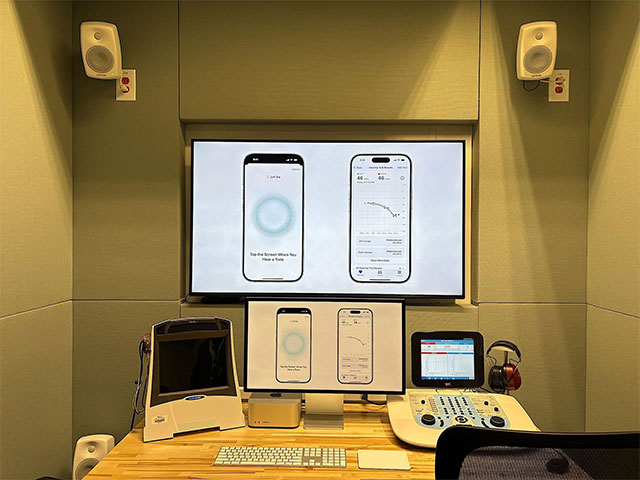
One of Apple's big goals with AirPods is to provide a comprehensive hearing care experience, including A clinical-grade hearing test . So engineers used medical equipment like audiometers to ensure accuracy. There are chambers where this feature alone has been tested thousands of times, to get results as close to what you'd get in a clinic.
This makes it easy for users to set up hearing aids at home if needed, and create personalized sound profiles to listen to music exactly the way the artist intended. It also helps Apple balance the technical and artistic elements of product design.
Standard studio
The lab isn't just about AirPods; it's also responsible for fine-tuning every Apple device that can play music, from the iPhone, Mac, and iPad. The team comes from a wide range of backgrounds: from concert sound engineers to Broadway sound designers to traditional acousticians.
The tuning rooms are designed like mini-studios, complete with instruments, standard listening seats, and control desks. They're named after legendary studios like Abbey Road. Here, engineers compare the original recording to the sound on AirPods, ensuring the artist's intentions are preserved.
Thanks to the combination of noise-canceling ear cushions and computational audio technology, AirPods Pro 3 are considered Apple's most realistic headphones ever.
During development, the tuning team listened to thousands of hours of music, movies, podcasts, and YouTube videos in a variety of formats, from mono to stereo to Dolby Atmos. The goal was to ensure that every user heard the same sound, regardless of ear shape.
In addition to speakers and headphones, microphones are also rigorously tested. Recordings from AirPods are compared to professional recording microphones, helping Apple bring studio technology to consumer devices. As a result, with just AirPods Pro, you can record iPhone videos with near-studio quality audio.
The room was 'completely silent'
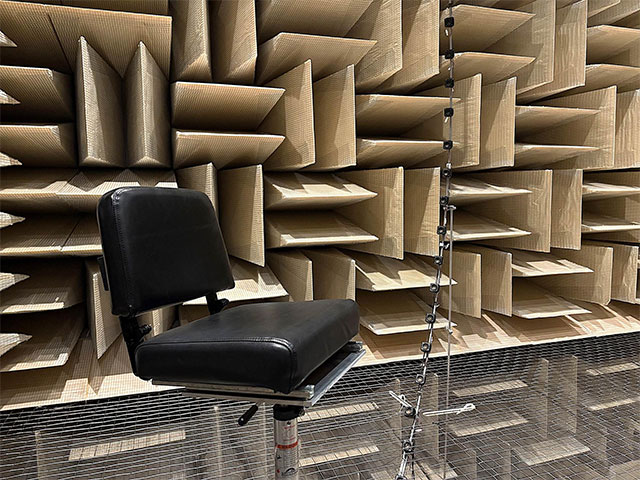
An integral part of the development process is The anechoic chamber . This is a separate room, the walls, floor and ceiling are covered with sound-absorbing foam, making all emitted sounds disappear and not echo.
When you enter, you walk on a suspended mesh floor, which is also covered in thick foam wedges to absorb reflected sound. This strange space helps engineers detect 'accidental' sounds coming from the product. It also played a key role in the development of Personalized Spatial Audio , where Apple studies how sound bounces around each person's ears to create the most realistic 3D experience.
Fantasia Lab – where AirPods Pro 3 is completed
The final stop is Fantasia Lab , named after the first movie to use surround sound. Here, Apple can simulate any sound with a spherical speaker system.
The team uses this room to test features on AirPods Pro 3 such as: Active noise cancellation (ANC) , Transparency mode (Transparency) And Spatial audio . Dozens of speakers are arranged around to test accuracy, noise cancellation and 3D sound effects.
When sitting inside, the reporter described that the music was coming from all directions, including the audience singing along, making you feel like you were at a real concert.
With these 'secret labs', Apple is not just producing headphones, but is also taking the personalized audio experience to a new level.
FAQ
What should you know about apple audio lab?
In practical terms, take a look inside Apple's secret audio lab, where AirPods are tested and fine-tuned. Learn how Apple developed Spatial Audio, active noise cancellation, and studio-quality sound.
Why does apple audio lab matter?
The article highlights that standard studio The lab isn't just about AirPods; it's also responsible for fine-tuning every Apple device that can play music, from the iPhone, Mac, and iPad.
What is the main takeaway?
The main takeaway is that it also played a key role in the development of Personalized Spatial Audio , where Apple studies how sound bounces around each person's ears to create the most realistic 3D experience.
Related Articles
 Why Do Many People Think Spatial Audio Is Completely Meaningless?5 minutes read
 Fix Error of Not Enabling Spatial Audio on AirPods Pro: Main Insights7 minutes read
 Spatial Audio: Complete Guide and Key Details7 minutes read
 How Many Red Apples Should You Eat a Day: Main Insights4 minutes read
 How to Connect Airpods to Apple TV5 minutes read
 How to Set up Spatial Sound with Dolby Atmos on Windows 103 minutes read
Reader Comments 0
Sign in with email or Google to join the discussion.