Table of Contents
To protect a folder with a password on Windows, create an encrypted .7z archive. You can open it with the password when you need the files. The original folder stays where it was and remains unencrypted unless you protect it separately.
Create and test an encrypted archive
- Install 7-Zip. In File Explorer, right-click the folder and choose 7-Zip > Add to archive. On Windows 11, you may need Show more options.
- Set Archive format to 7z. Under Encryption, choose AES-256, enter a strong password twice, and select Encrypt file names if you want to hide the list of files until the archive is unlocked.
- Create the archive. Test it by opening it with the password and checking that you can extract a sample file. Keep the password somewhere you can recover it.
For a detailed walkthrough, see how to encrypt files and folders with 7-Zip.
Choose protection based on how you use the folder
An archive works well for a copy you rarely edit or need to move. On a shared PC, separate Windows user accounts and folder permissions can be more convenient for files you use daily. Disk encryption helps protect data when a device is lost or powered off.
What the original Folder Lock screens show
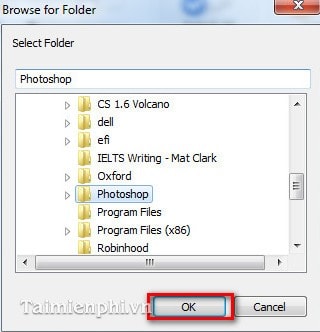
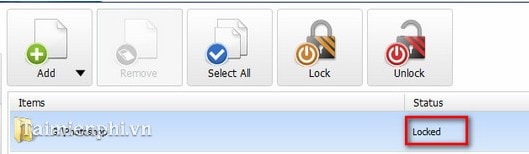
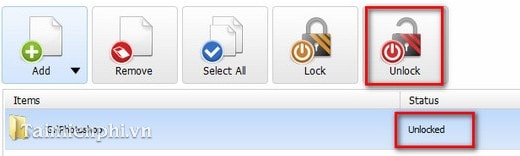
These screenshots show the add, lock, and unlock controls in an older version of Folder Lock. Check whether the feature you choose encrypts the data or only restricts access within the app before relying on it for sensitive files.


Related Articles
 How to Set Password for Folder and File in Windows
 Set a password for the folder, set a password for the folder or folder using Folder Guard
 Hide and protect data in Windows
 How to set a password, password for the folder using Lim Block Folder software
 How to set a password and password for the folder using Anvide Seal Folder software
 How to set a folder password with Wise Folder Hider
Reader Comments 0
Sign in with email or Google to join the discussion.