Table of Contents
This guide organizes the entries in "10 Highly Anticipated Features That Turned Out to Be Duds on Windows 10" and explains what each option, idea, or example offers. It also highlights practical details that matter when comparing the choices.
Cortana
Let's start with the most obvious: Cortana. The virtual assistant—named after a popular AI character in the Halo series —has been rumored since 2013, and while it originally appeared on the now-defunct Windows Phone 8.1 in 2014, Windows 10 was the first desktop operating system to integrate Cortana in 2015.

Despite Microsoft's aggressive promotion of Cortana as a personal assistant that could compete with Siri, users at the time were not very interested in chatting with AI on their computers. Coupled with Cortana's limited capabilities (especially its focus on the US market and ignoring other regions) and Microsoft's constant strategy changes, interest in Cortana gradually faded in 2019 and was officially 'killed' in 2023.
Groove Music
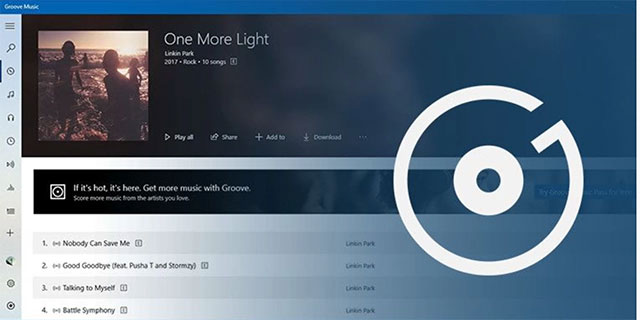
Microsoft launched Groove Music on Windows 10 as a competitor to iTunes and Spotify, and as a replacement for Xbox Music. The app basically worked as described, but it failed because it lacked differentiation. Users who were used to other music platforms were reluctant to switch to a new service just because Microsoft kept promoting it. Groove Music was eventually shut down at the end of 2017.
Sets
This is an interesting feature. In 2017, Microsoft revealed that Sets would be coming to Windows 10. It was designed as a new interface for UWP apps (initially), allowing multiple app windows to open in the same interface, similar to a web browser. Microsoft started testing it on Insider builds but couldn't perfect it. Eventually, the project was quietly canceled without ever being officially released. However, some of the idea lives on in the tabbed File Explorer feature on Windows 11.
Windows Timeline
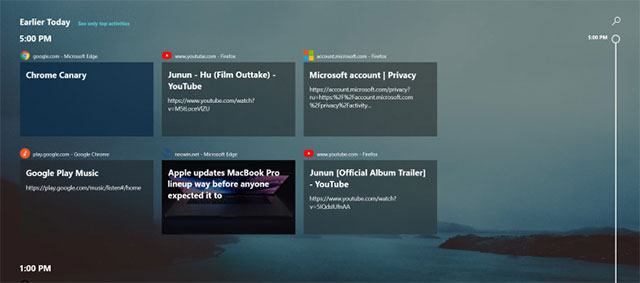
Windows Timeline was touted as a groundbreaking feature in 2017. The idea was that Windows would keep a history of a user's activities, allowing for two functions: "rewinding time" to review past activities and syncing across devices to pick up where you left off. However, the feature never gained the popularity it was hoped for, and Microsoft disabled the syncing capability. Today, Timeline still exists on Windows 10 (opened with Win + Tab), but only stores history locally.
Live Tiles in Start Menu
Live Tiles have always been a divisive topic – some love them, some hate them. In fact, Live Tiles aren't a new concept to Windows 10; they first appeared on Windows Phone 7, then spread to Windows Phone 8, Windows 8, and Windows 10.
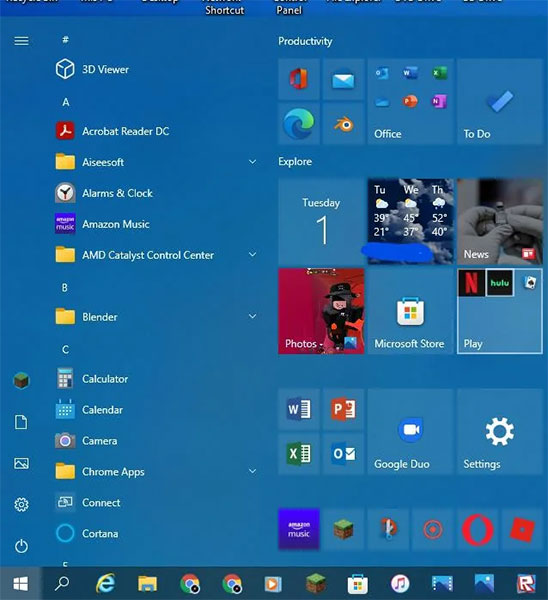
However, Windows 10's version of Live Tiles in the Start Menu was a mix of the classic menu and the dynamic interface that satisfied both groups of users. The problem was that developers didn't support Live Tiles, and most apps ignored the feature. While some users still loved it, Microsoft has completely removed Live Tiles in Windows 11.
Paint 3D
Before diving into AI, Microsoft was passionate about 3D and Mixed Reality. Paint 3D was created with the hope of providing an interesting 3D drawing experience, but the response was lukewarm. There are no exact statistics on the number of users, but it seems to have been very few, leading Microsoft to stop supporting the app last year.
Windows 10 in S Mode
This is a random feature that came to mind last week, and it's why I'm writing this. Windows 10 S was announced at an education event in 2017, and later came in Enterprise and Pro versions. It's a locked-down version of Windows 10 that focuses on productivity: it only downloads apps from the Microsoft Store and only uses Edge with Bing as its search engine.
Microsoft hoped Windows 10 S would compete with Google's ChromeOS, but it was largely forgotten due to its confusing name, high upgrade costs from S mode, and too many limitations. Today, Windows in S mode still exists (including on Windows 11), but no one talks about it anymore.
Microsoft Edge Early
Microsoft Edge today is a far cry from the original Windows 10 version. Edge initially used Microsoft's own EdgeHTML rendering engine, but in 2018, the company decided to switch to Google's Chromium. The decision was controversial, but it shows that Microsoft has failed to dominate the market despite its best efforts.
The Chromium-based version of Edge was officially launched in 2020 and is still maintained today, proving that this was the right choice.
Continuum
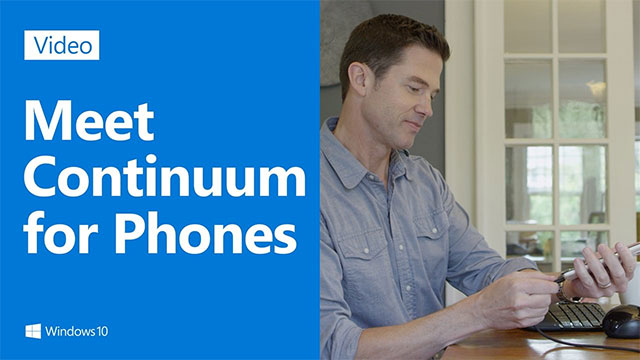
Continuum was a big part of Microsoft's marketing during the Windows Phone era. It was a feature that turned a Windows phone into a desktop computer via a physical dock. Microsoft used to offer the Lumia 950/950 XL with a free Continuum dock in India in partnership with HP, but due to low Windows Phone market share, the service slowly disappeared along with Microsoft's mobile ambitions.
Universal Windows Platform (UWP)
In 2014, before Windows 10 launched, Microsoft had a vision of allowing developers to build apps once and run them across multiple platforms (Windows, Windows Phone, Xbox). The company made some progress when it announced Windows 10 and a single app store for all its products, based on UWP.
However, Microsoft failed to convince the majority of developers. Over time, UWP lost more and more interest because building cross-platform apps was not as easy as advertised. By 2021, Microsoft had instructed to switch from UWP to Windows App SDK. Currently, UWP is almost no longer used, and as recently discovered, even WhatsApp has abandoned UWP in favor of Progressive Web Apps (PWA).
Windows 10 is nearing the end of its decade-long journey, but these "failed" features are still an interesting part of Microsoft's development history.
FAQ
What should you know about cortana?
Let's start with the most obvious: Cortana. The virtual assistant—named after a popular AI character in the Halo series —has been rumored since 2013, and while it originally appeared on the now-defunct Windows Phone 8.1 in 2014, Windows 10 was the first desktop operating system to integrate Cortana in 2015.
What should you know about groove Music?
Microsoft launched Groove Music on Windows 10 as a competitor to iTunes and Spotify, and as a replacement for Xbox Music. The app basically worked as described, but it failed because it lacked differentiation. Users who were used to other music platforms were reluctant to switch to a new service just because Microsoft kept.
What should you know about sets?
This is an interesting feature. In 2017, Microsoft revealed that Sets would be coming to Windows 10. It was designed as a new interface for UWP apps (initially), allowing multiple app windows to open in the same interface, similar to a web browser. Microsoft started testing it on Insider builds but couldn't perfect it.
What should you know about windows Timeline?
Windows Timeline was touted as a groundbreaking feature in 2017. The idea was that Windows would keep a history of a user's activities, allowing for two functions: "rewinding time" to review past activities and syncing across devices to pick up where you left off. However, the feature never gained the popularity it was hoped.
Related Articles
 How the Corona Virus Turned Mwc 2020 into a Nightmare14 minutes read
 Highly Anticipated Features on iOS 18.44 minutes read
 Arc Browser Is Available on Windows 10, the Upcoming ARM Version6 minutes read
 The Announcement Date of Windows Phone 8.1 Has Come Very Close4 minutes read
 Microsoft Confirmed Windows 10X Will Be Available on a3 minutes read
 What's New in Blender 3.04 minutes read
Reader Comments 0
Sign in with email or Google to join the discussion.