Table of Contents
New Study Finds Gold Can Significantly Improve Eyesight is easier to approach with a clear overview and reliable steps. This guide organizes the essential information, highlights practical details, and explains what to check along the way.
Key Takeaways
- Follow the recommended steps in order to avoid common mistakes with new study finds gold can significantly improve eyesight.
- Review compatibility, settings, or requirements before making changes.
- Use the troubleshooting notes to confirm the final result.
Macular degeneration is a condition in which the central part of the retina (the macula) deteriorates over time, usually as people age. Meanwhile, retinitis pigmentosa is a rare genetic disorder that leads to the gradual loss of photoreceptor cells (rods and cones) in the retina - the cells responsible for capturing light.
The team demonstrated that injecting gold nanoparticles into the retina and stimulating them with infrared laser light can activate other retinal cells such as bipolar cells and ganglion cells. These cells process visual signals and send them to the brain, bypassing photoreceptor cells that have been damaged by eye diseases.
Compared to existing treatments such as surgical electrode implants, the nanoparticle technique is less invasive and simpler. As lead researcher Jiarui Nie explains, ' This is a new type of retinal implant that has the potential to restore vision lost due to retinal degeneration without the need for complex surgery or genetic modification.' The scientists also point out that the injection procedure (called an intravitreal injection) is one of the simplest procedures in eye care.
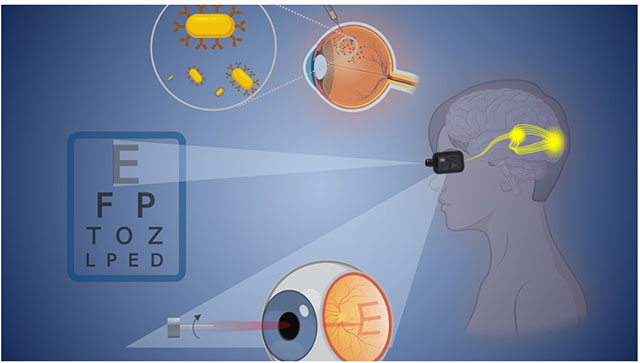
The approach could also improve the patient's quality of vision. Surgical implants are often limited in their resolution, but the nanoparticle solution can be evenly distributed across the retina and cover the entire visual field. Furthermore, because the nanoparticles respond to infrared light rather than visible light, the system could preserve the patient's remaining vision.
Researchers tested the technique on mice and found positive results. They observed increased activity in the visual processing area of the brain, indicating improved vision. No toxic side effects were detected, even months after the procedure.
In the future, scientists hope to incorporate this technology into wearable devices such as glasses or goggles equipped with cameras and lasers. Although more research is needed before testing in humans, this new method promises to be a safe and effective treatment for retinal diseases.
Final Thoughts
The most reliable way to handle new study finds gold can significantly improve eyesight is to follow the process in order, verify each important setting, and test the result before moving on. Use the guidance above as a practical reference, then adjust the details for your device, software version, or specific goal.
FAQ
What should I know first about New Study Finds Gold Can Significantly Improve Eyesight?
Scientists at Brown University (USA) have developed a new method that could help treat eye diseases such as macular degeneration and retinitis pigmentosa using tiny gold particles called plasmonic gold nanorods (AuNRs).
How do I get the best results with New Study Finds Gold Can Significantly Improve Eyesight?
Use current software or equipment, follow the steps in order, review the recommended settings, and test one change at a time so you can identify what improves the result.
What should I do if New Study Finds Gold Can Significantly Improve Eyesight doesn't work as expected?
Check compatibility, permissions, connectivity, and version-specific settings. Restart the relevant device or app, then repeat the process carefully before trying a more advanced fix.
Related Articles
 10 Ways of Eye Muscle Training and Vision Enhancement Are Not to Be4 minutes read
 How Much Does 1 Tael of Gold Weigh in Kilograms?7 minutes read
 Did You Know: How Many Kilograms Does a Gold Tree (gold) Weigh2 minutes read
 Eating an Avocado a Day Can Improve Sleep Quality4 minutes read
 3 Natural Ways to Enhance Your Vision Effectively: Train Eyes9 minutes read
 How Much Gold Can I Get from Old Computer Components?5 minutes read
Reader Comments 0
Sign in with email or Google to join the discussion.