Table of Contents
Explore using magnets to control cells.
1. Quantum technology within living cells
Green fluorescent proteins ( GFP ) have long been essential tools for observing the inner workings of cells. However, a new study published in the journal Nature has taken this technology to the next level: Researchers have successfully engineered magnetically controlled fluorescent proteins , allowing them to dim or brighten even when located deep within the bodies of living animals.
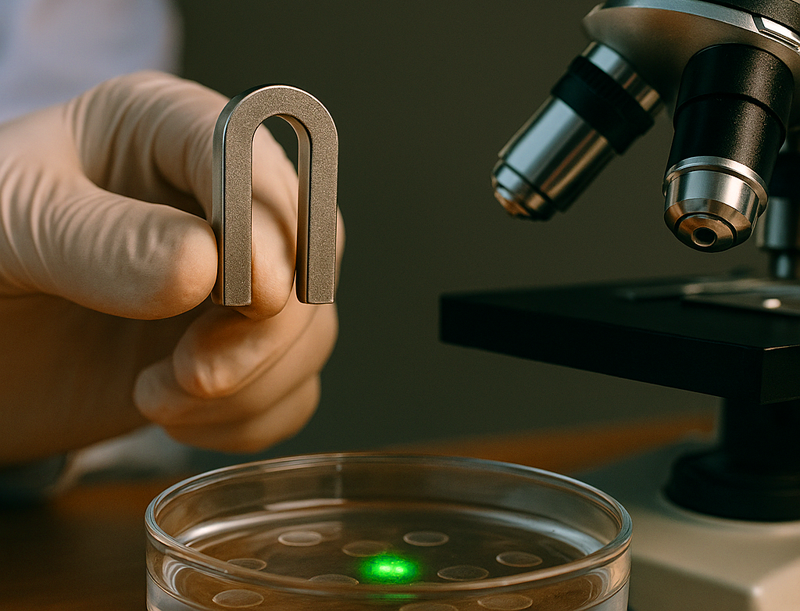
The greatest hope now lies in leveraging magnetic sensitivity – a quantum physical effect – to develop remotely controlled biosensors , or even therapies capable of being precisely activated when needed.
"We wanted to create a 'toolbox' of protein functions that could be remotely controlled using magnetic fields," said Andrew York , a physicist at the Chan Zuckerberg Biohub (San Francisco) and co-author of the study.
2. From physical phenomena to practical applications
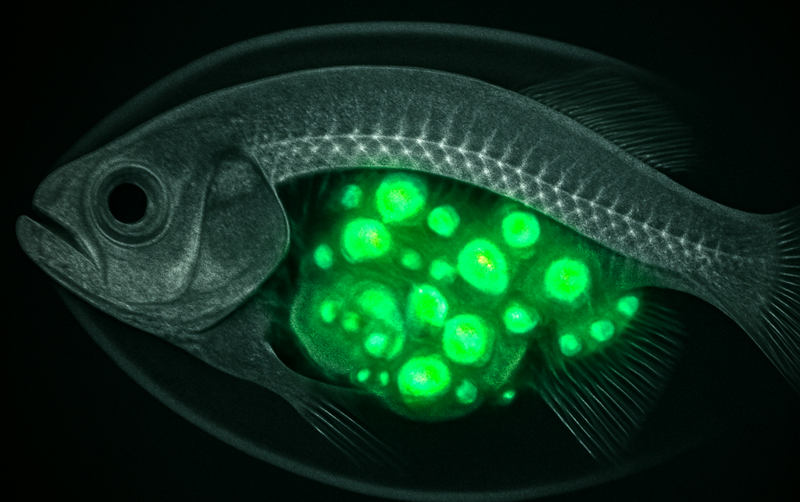
Two years ago, Andrew York and his colleague Maria Ingaramo discovered that GFP would dim when exposed to a weak magnet. However, the initial effect was only about 1%.
To optimize performance, the research team engineered a more sensitive protein called MagLOV . The results were impressive: MagLOV's brightness could be reduced by half or more under the influence of a magnetic field.
How MagLOV works
- Magnetic resonance effect: A magnetic field alters the quantum properties of electron pairs within a protein.
- Precise control: By combining magnetic fields and radio waves, scientists can adjust the fluorescence intensity of Escherichia coli bacteria containing MagLOV.
3. Tissue penetration and biochemical mapping
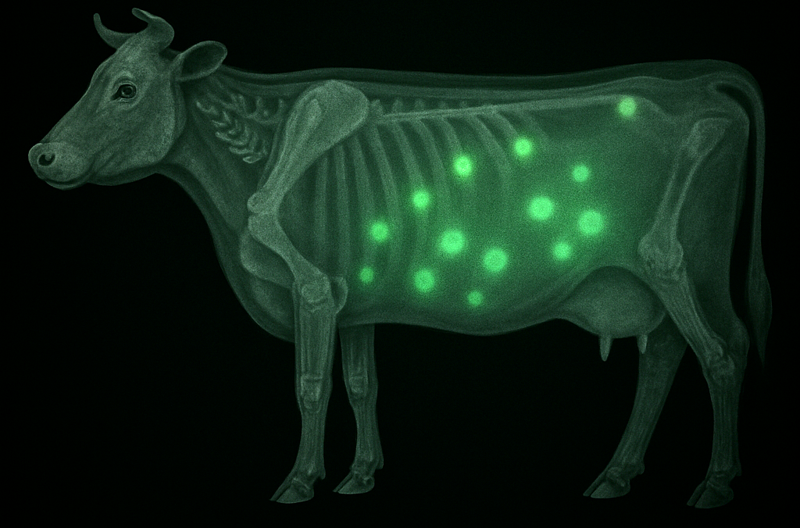
A research team at the University of Oxford, led by Gabriel Abrahams and Harrison Steel, tested the ability to locate bacterial cells containing MagLOV deep within silicon blocks.
Because magnetic fields can easily penetrate body tissues and MagLOV is encoded by genes, this technology promises to:
- Remotely monitor molecular processes without invasive intervention.
- Mapping the cells inside the body of a living animal.
- Control the activity of drugs at specific locations in the body using external magnets.
The discovery of the MagLOV protein is not merely a bioengineering achievement, but also proof that humanity is gradually mastering the most complex laws of the quantum world for the benefit of medicine.
While there's still a long way to go from the lab to clinical application, the prospect of non-invasive treatments for cancer and other serious illnesses, where doctors can manipulate medication using magnetic fields from outside the body, is becoming closer than ever. This truly marks a new era of 'precision medicine' – where fluorescent light and magnetic power work together to illuminate the deepest mysteries within living cells.
Final Thoughts
Understanding using magnets to control cells makes it easier to evaluate the information and apply the most relevant recommendations. Focus on the key points above and verify details that may change over time.
FAQ
What is using magnets to control cells?
Explore using magnets to control cells.
What key points does this article cover?
The article focuses on 1. Quantum technology within living cells, 2. From physical phenomena to practical applications, How MagLOV works, with practical explanations and examples.
How can you use this information in practice?
Use the explanations to compare options, verify important details, and make a more informed decision. Apply the recommendations that best match your goals and situation.
Related Articles
 If Giving Two Neo-magnet Magnets with a Pulling Capacity of 300 Kg3 minutes read
 4 Magnet Experiments Are More Interesting Than Magic Tricks That4 minutes read
 Does the Magnet Erase the Hard Drive Data?4 minutes read
 Two New Types of Blood Cells Were Discovered4 minutes read
 Human Blood Successfully Created in Lab Opens New Era for Regenerative5 minutes read
 Can Magnets Really Damage Your Phone or Computer?6 minutes read
Reader Comments 0
Sign in with email or Google to join the discussion.