Table of Contents
Australian tech startup Cortical Labs has made headlines with the launch of CL1, described as the world's first code-deployable biological computer. The company is working to build a new form of sustainable artificial intelligence called Synthetic Biological Intelligence (SBI).
Computers run on… human neurons
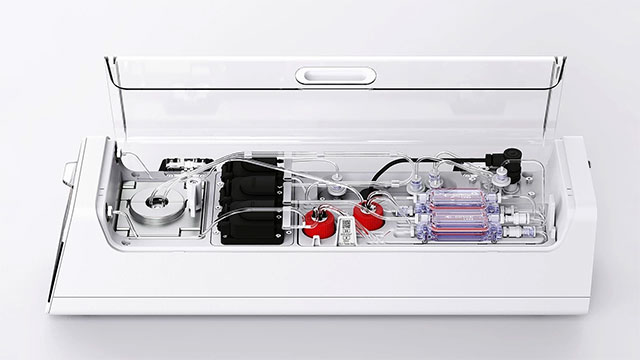
The most unique aspect of the device is that it integrates 800,000 lab-grown human neurons with a silicon chip, allowing for sub-millisecond, two-way communication between living cells and software. The CL1 is designed for neuroscience and biotechnology research, giving scientists a new way to observe how neurons adapt and respond to signals in real time.
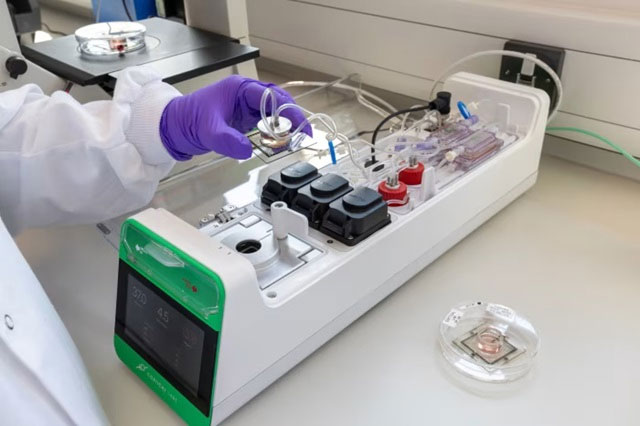
Neurons, reprogrammed from adult skin or blood cells, can survive for up to six months thanks to an internal support module that provides nutrients, regulates temperature, filters waste, and maintains fluid balance. They grow on silicon chips, exchanging electrical signals through a biOS (Biological Intelligence Operating System), which simulates the environment and communicates directly with the cells.
Standalone operation, low power consumption
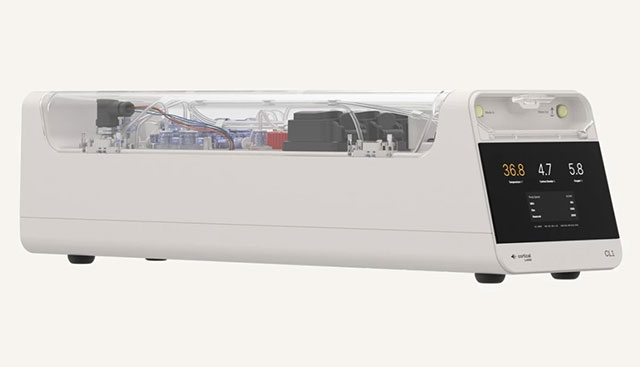
CL1 operates without external computer hardware, has a USB port, supports connecting cameras, sensors, peripherals, and a touchscreen for monitoring and data collection. Power consumption is only 850 – 1000 watts for a 30-unit rack, much lower than AI workloads in today's data centers.
Cortical Labs positions the CL1 as a self-contained, plug-and-play platform that can be connected to other systems to expand testing. The device provides a programming interface for stimulating and reading neural signals, and is touted as a more ethical alternative to animal testing, thanks to its more realistic human neuron data.
Biomedical research applications
CL1 can simulate conditions such as epilepsy and Alzheimer's by using neurons from different donors or cell lines to detect genetic links and individual differences. Many neuropharmacological drugs fail in clinical trials because current models do not replicate how human neurons process live data; CL1 allows for parallel testing of both computation and cellular function.
In an in vitro epilepsy model study, CL1 restored learning ability in cells that had been impaired after treatment with anti-seizure drugs. The device also builds on the DishBrain prototype that trained neurons to play Pong, but has been upgraded from 8 to 59 input channels and reduced latency from 5 ms to less than 1 ms.
Previous experiments have shown that neurons can learn in minutes, sometimes more efficiently than AI algorithms. The work applies Karl Friston's 'free energy' principle to study how neural circuits learn and adapt. Friston describes CL1 as a 'key' tool for studying biological brains in simulated environments, a 'brain in a jar' that once existed only in theory.
Price and future direction
Cortical Labs says neuron production can scale to hundreds of millions of units without changing its process, but to scale to billions requires different technology. Customers must have ethical clearances and the appropriate lab environment.
The CL1 will start shipping this summer for $35,000 per device, or $20,000 per device when purchased in racks of 30. The Cortical Cloud service – a 'wetware-as-a-service' model – costs $300 per week per device, allowing remote access to neuron samples in the lab.
The company's long-term goal is to develop hybrid biointelligence that combines the adaptability, regeneration, and efficiency of biology with the control and safety of technology, potentially surpassing both traditional silicon systems and the natural brain.
Final Thoughts
The development covered in this article is worth following, but specifications, dates, and feature details may change until the relevant company or organization publishes an official confirmation.
FAQ
What is the main development covered in this article?
Australian tech startup Cortical Labs has made headlines with the launch of CL1, described as the world's first code-deployable biological computer.
What should you know about Computers run on… human neurons?
The most unique aspect of the device is that it integrates 800,000 lab-grown human neurons with a silicon chip, allowing for sub-millisecond, two-way communication between living cells and software.
Is every reported detail officially confirmed?
Not necessarily. Product leaks, preview builds, research reports, and early announcements can change. Confirm important specifications, dates, and availability through an official source before making a decision.
Related Articles
 Chinese Robot Has a Brain Made From Human Cells3 minutes read
 Deciphering the Mystery of Consciousness, the Human Brain6 minutes read
 Interesting Discovery: Human Brain Is More Flexible Than Chimp Brain3 minutes read
 Transplanting a Mini-human Brain into Mice Causes Concern About3 minutes read
 Breaking into the Bank Holds 1,000 Human Brains in the UK3 minutes read
 For the First Time in History, Scientists Successfully Connected the Human Brain to the Internet4 minutes read
Reader Comments 0
Sign in with email or Google to join the discussion.