Table of Contents
Microsoft has officially announced the open source of one of its oldest products: 6502 BASIC. The source code for Microsoft BASIC version 1.1 for the 6502 microprocessor is now posted on Microsoft's GitHub, with a total of 6,955 lines of code.
6502 BASIC is considered one of Microsoft's historic software in the early days of personal computers, even before MS-DOS and Windows - the platforms that later made the company's name.
Microsoft had previously open-sourced GW-BASIC (released in 1983). However, for many years, only fragmentary, unofficial copies appeared on retro-computing websites or were kept in museums.
6502 BASIC was developed for the MOS Technology 6502 (8-bit) microprocessor, based on the BASIC-80 interpreter that Microsoft wrote for the Intel 8080. The language fully supports floating-point numbers, arrays, string processing, and input/output operations.
The 6502 BASIC introduced millions of people to personal computing, becoming the default standard for many years. Its design patterns and conventions also greatly influenced later programming languages and development tools.
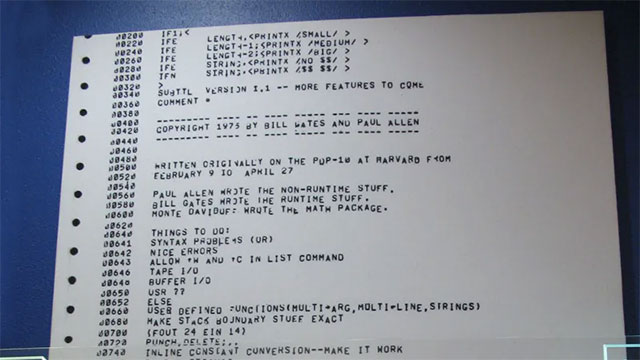
In 1976, Bill Gates and Ric Weiland completed a port of 6502 BASIC, then sold the rights to Commodore for $25,000 in 1977. This deal paved the way for Commodore BASIC on 8-bit computers such as the PET, VIC-20, and Commodore 64. 6502 BASIC was also included in the Apple II by Apple under the name Applesoft BASIC.
Microsoft says the open source release includes a garbage collector patch that Commodore engineer John Feagans and Bill Gates worked on together in 1978. There's also a Gates 'easter egg' hidden in the STORDO and STORD0 labels – a detail he confirmed in 2010.
Historically, 6502 BASIC has run on a wide range of hardware, from the Atari 2600 to the Nintendo Entertainment System (NES). The open source release is expected to attract interest from retro enthusiasts, collectors, and programmers looking to experiment with modern hardware, given the growing popularity of retro-computing and FPGA emulation.
Final Thoughts
The development covered in this article is worth following, but specifications, dates, and feature details may change until the relevant company or organization publishes an official confirmation.
FAQ
What is the main development covered in this article?
Microsoft has officially announced the open source of one of its oldest products: 6502 BASIC. The source code for Microsoft BASIC version 1.1 for the 6502 microprocessor is now posted on Microsoft's GitHub, with a total of 6,955 lines of code.
What should you know about the key details?
6502 BASIC is considered one of Microsoft's historic software in the early days of personal computers, even before MS-DOS and Windows - the platforms that later made the company's name.
Is every reported detail officially confirmed?
Not necessarily. Product leaks, preview builds, research reports, and early announcements can change. Confirm important specifications, dates, and availability through an official source before making a decision.
Related Articles
 BASIC: Features and Overview6 minutes read
 Intel Unexpectedly Revives Core I5-10400 as Core I5-110 After 53 minutes read
 16 Programming Languages Will Change Your Luck8 minutes read
 Openoffice.org Calc Adds Excel VBA Support9 minutes read
 Open 100 Microsoft Edge Tabs on Android, You Will Get Interesting Surprises2 minutes read
 How to Protect Vba Code5 minutes read
Reader Comments 0
Sign in with email or Google to join the discussion.