Table of Contents
This guide explains how to delete Personal User Data in Windows 10, with clear steps, practical tips, and important checks before you begin.

1. Delete all data on Windows 10
Step 1: You proceed to open Settings by pressing Windows + I and select Update & Security .

Step 2: Continue to select Recovery and select Get Started . This is the step where you restore all your Windows to the factory default.

Step 3: Next, here you have two options as follows:
+ Keep my files: Delete all applications, settings and retain user data.
+ Remove everything: Delete all user data, applications, settings.
In this article, Software Tips guide you how to delete user data, so you proceed to Remove Everything .
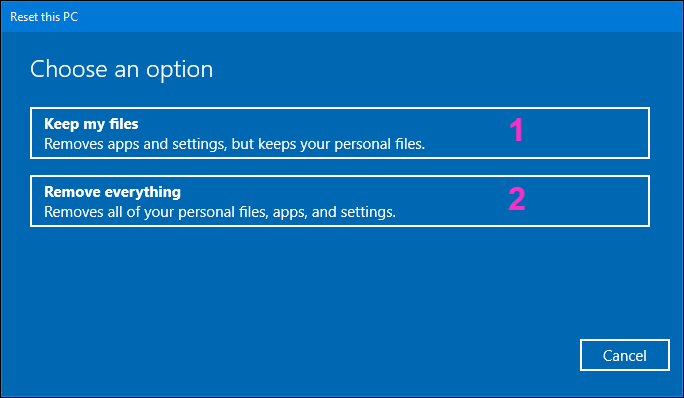
Step 4: At this point your data has been checked and prepared to proceed with deletion. The software requires you to confirm this information:
Reset will delete:
+ All personal data, accounts on this PC.
+ All applications and programs.
+ All settings.

Step 5: At this time, your computer will run a while to delete all the data. The time it takes to reset depends on the speed of your hard drive and the data on your computer.
After installation is complete, you select Continue to proceed to reinstall Windows from the beginning.

2. Delete personal account data
Windows supports users to create different sub-accounts to use without overwriting data on their main account. With your own personal account, the deletion of personal account is the data also disappears.
(Only applicable PC with multiple accounts sharing)
Step 1: Open Settings by clicking Ctrl + I and then Accounts .
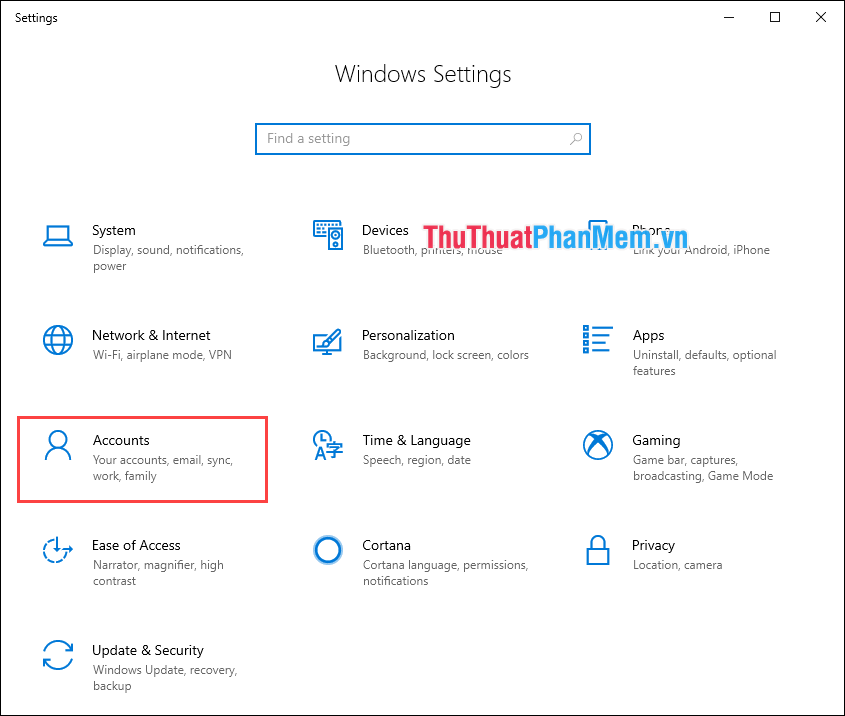
Step 2: At Accounts, select Family & other users . You find the account you need to delete data and select Remove .

Thus, Software Tips guide you how to delete personal user data in Windows 10 fastest and simplest. Good luck!
FAQ
What should I know about Delete Personal User Data in Windows 10?
Focus on the key features, requirements, limitations, and practical use cases explained in this guide.
How do I get the best results with Delete Personal User Data in Windows 10?
Follow the recommended steps, use current software or information, confirm compatibility, and review settings before major changes.
Are there any risks or limitations?
Potential limitations depend on compatibility, data quality, cost, privacy, support, and how the product or method is used.
Related Articles
 Why Is Your Data Worthwhile?9 minutes read
 Instructions for Deleting Personal Data on iPhone4 minutes read
 How Valuable Is the User's Personal Data?4 minutes read
 Instructions on How to Create, Delete User Accounts on Windows4 minutes read
 Google Will Allow Users to Automatically Delete Location Tracking Data4 minutes read
 Guide 5 Ways to Delete User Accounts on Windows 106 minutes read
Reader Comments 0
Sign in with email or Google to join the discussion.