Table of Contents
Communication is extremely important in the office or any other working environment. Here are some simple tips to help you communicate or express yourself better at work.
Communication is extremely important in the office or any other working environment. Here are some simple tips to help you communicate or express yourself better at work.

Presenting yourself well at work can have many benefits – for example, getting more time to complete work on time, or getting proposals implemented.
According to software company Workday, good communication helps people focus on goals, builds trust, and makes the workplace more enjoyable. While there are rules for expressing yourself via email, follow These tips to improve your verbal communication of thoughts, ideas, and opinions at work:
How to communicate needs to superiors
Making a request or asking for help from a superior can be a difficult task. Fear of rejection or being seen as incompetent are some of the 'barriers' that employees may have to overcome.
But doing so can help you complete tasks faster and be more productive. In the process, you may also learn something from your superiors, such as valuable experience or knowledge that can help your career.
How to do:
- Plan ahead. Think about what you need by defining as much as possible the problem, what helps you overcome it, and whether you have tried all other possible solutions.
- Prepare a list of options or solutions . This helps you prepare better and show your boss that you have considered the problem carefully before asking for help.
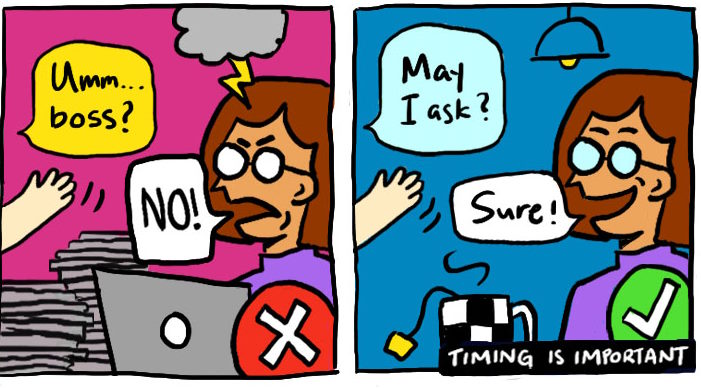
- Timing is important. Ask your boss when they are available to talk. Coming to them when they are too busy or stressed may hinder your chances of getting what you need.
- Get to the point. Your boss is usually very busy, so be clear, specific, and direct with them.
How to assign work to employees or team members
Effective delegation frees up leaders' time to work on tasks that are of higher value to the team or organization. Their teams remain cohesive but have more autonomy, which builds trust among all members.
According to leadership expert Jesse Sostrin, the head of an organization, department, or team should shape the thoughts and ideas of the group rather than imposing them. Otherwise, they may feel overwhelmed and overwhelmed with work.
Suggestions for effective work assignment:
- Start with why. Explain the risks involved, why the project is important, and how it fits with the team. This helps everyone work toward the same goal.
- Define the desired outcome. Establish the scope of work, deadlines, and how you will measure the success of the task.
- Hand over and ask for feedback at the end of the project. Give constructive criticism where necessary and acknowledge good work when you see it, but also ask the team if your instructions were clear and if there is anything you could do to improve the assignment of tasks.
Resolve disagreements based on respect
Respect in communication, even when there is disagreement, helps the conversation move forward and, in the best case, can even steer the discussion in a positive direction, even leading to new creative solutions.
- Identify a common goal. In a discussion, you will likely disagree with others about what you think is best for the project or team. Stating this goal and connecting your ideas to a larger common purpose will help the other person understand you better.
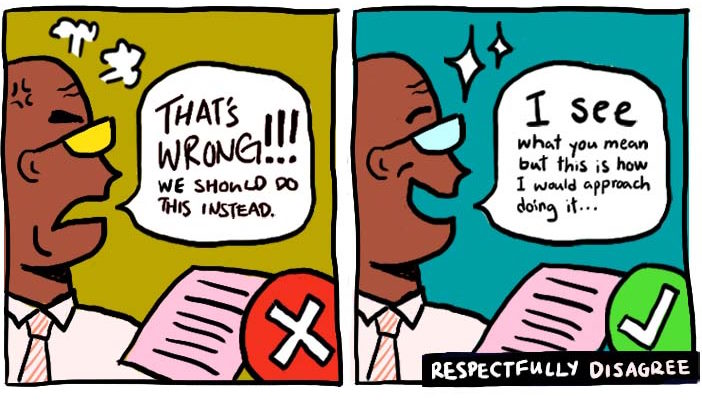
- Validate every opinion. Disagreements are less likely to turn into arguments if each party respects the other's opinion. One way to do this is to avoid making absolute statements, and start by acknowledging the other person's point of view.
- Avoid judgmental language. Harsh words (e.g., 'shortsighted,' 'naive') can make the other person feel hurt or angry. Try to avoid adjectives like these altogether, as they can be misinterpreted. Instead, put your opinion into factual context, says Joseph Grenny, co-author of Crucial Conversations. For example, instead of saying 'this is shortsighted ,' say 'I think this won't benefit us in the long run because…'
- Maintain a normal speed and volume. Even if you find yourself getting angry or panicking, it is important to keep your tone neutral. People tend to speak louder or faster when they are emotionally charged, and this can detract from your message or cause mixed signals.
- Listen. Listening is simple, but it is difficult when we disagree. Instead of actively listening to the other person's explanation, we wait for an opportunity to jump in and respond. This can escalate the situation and is not something that should be done in the workplace, especially when working in a team towards a common goal. Try to listen and work together to find the best solution.
FAQ
How do you communicate and express yourself better at work: step-by-step guide?
In practical terms, communication is extremely important in the office or any other working environment. Here are some simple tips to help you communicate or express yourself better at work.
What should you check before getting started?
Review the requirements, compatible device or software version, and any warnings described in the guide before making changes.
What should you do if the steps do not work?
Repeat the steps in order, confirm that your app or system is up to date, and review the troubleshooting details provided above.
Related Articles
 Decipher the Strange Behavior Often Seen in Dogs4 minutes read
 Things You Need to Know About NVMe SSDs: Main Insights8 minutes read
 What Would Users Like to Change on Adobe Express Mobile?4 minutes read
 How to Animate Photos, Text, and Graphics in Adobe Express6 minutes read
 Link Download Adobe Photoshop Express for Windows 109 minutes read
 Adobe Creative Cloud Express Launched: Software to Support4 minutes read
Reader Comments 0
Sign in with email or Google to join the discussion.