Table of Contents
Winning consistently in Dota Auto Chess is less about forcing one perfect lineup and more about spending gold at the right time. Strong players judge three things every round: the strength of their current board, the health and economy they can afford to trade, and what the other players are building. The best decision may be to save, level, reroll, or change direction.
This guide focuses on durable high-rank principles rather than a fixed meta list. Unit balance and popular compositions change, but economy, tempo, scouting, and positioning remain central to good play.
Build the strongest board available

Early in a match, upgraded units usually matter more than an incomplete synergy. Play the two-star pieces that give you the best immediate board, then add complementary alliances as your shop and bench create a clear direction.
- Use pairs as information, not a promise. Holding several pairs increases your chance of an upgrade, but a crowded bench can also cost interest and flexibility.
- Keep a front line and a damage source. A composition that activates several labels but cannot survive or finish enemies is not functional.
- Add control for late rounds. Stuns, silences, displacement, and other disruption can be more valuable than a small synergy bonus.
- Do not force a contested carry. If several opponents are buying the same key unit, switching to an open line can produce faster upgrades.
For composition planning, see how to build teams through each stage and the broader Dota Auto Chess strategy collection.
Protect a streak without spending blindly

When you are winning
A win streak has value because it adds income and preserves health. Spending a small amount to keep a clearly winnable streak can be correct, especially when a level-up adds a meaningful unit or a few rerolls are likely to complete multiple pairs. It is not correct to empty your bank for one low-probability upgrade while the board is already strong.
Before spending, ask:
- Will leveling let me field an important synergy, tank, or control unit?
- Do I have several realistic upgrades, or am I rolling for one exact piece?
- How strong are the two opponents I may face next?
- Can I spend without falling far below the next interest threshold?
When you are losing
A controlled loss streak can convert health into economy, but it is not permission to field a board that takes maximum damage. Keep the loss narrow when possible, retain useful pairs, and watch how much health disappears each round. If the lobby’s boards are improving faster than yours, the streak may become unrecoverable.
End the streak when health is no longer a safe resource, when several upgrades are ready to be completed, or when one level creates a major power spike. The correct timing depends on damage taken and opponent strength, not a rigid round number.
Choose between saving, leveling, and rerolling
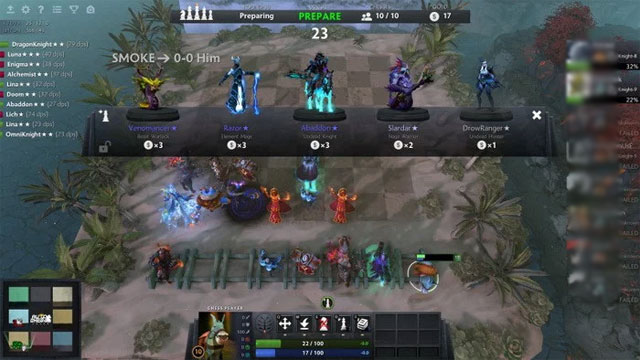
Interest compounds, so preserving gold is the default when your board is stable. However, health is also a resource. Saving to a large bank while losing heavily can leave too little time to use the money.
| Situation | Usually favor | Reason |
|---|---|---|
| Strong board, high health | Save | Interest grows without sacrificing much health. |
| One level adds a major unit or synergy | Level | The immediate power spike can protect a streak or stop heavy losses. |
| Several pairs can upgrade at the current shop odds | Reroll selectively | Each roll has multiple useful outcomes. |
| Key pieces become more common at the next level | Level before rolling | Better shop odds improve the value of later rerolls. |
| Low health and repeated heavy losses | Spend decisively | Unused gold has no value after elimination. |
Avoid mixing an expensive level-up with a full reroll unless the situation is urgent. If leveling leaves no gold to buy the units you are seeking, wait for a better breakpoint or commit only when survival requires it. TipsMake’s dedicated economy guide explains interest and spending in more detail.
Scout before every major commitment
Cycle through opponent boards before choosing a final composition or spending a large bank. Scouting tells you:
- which units are heavily contested;
- whether the lobby deals mostly physical or magical damage;
- which side opposing carries and assassins occupy;
- how many players are likely to level or reroll soon; and
- whether a temporary streak is actually safe.
This information can change the value of a unit. A strong carry may be a poor target when three other players are holding copies, while an uncontested alternative can reach two stars quickly.
Improve positioning in the late game
Once only a few opponents remain, stop using one fixed formation. Put durable units where they absorb the opening attacks, protect fragile damage dealers from assassins, and spread units when the opponent relies on large area effects. If your control unit must cast early, place it where it can gain mana without dying before the cast.
Small movements can decide a round: changing corners, moving a bait unit, or placing a secondary carry away from the main group. Re-scout after every opponent repositions.
Use a simple round-by-round decision loop
- Compare your board with the strongest and weakest opponents.
- Check health, streak, current interest threshold, and bench value.
- Identify every useful shop outcome before rerolling.
- Decide on one purpose for the round: save, level, roll, or transition.
- Buy and sell with enough time left to position the final board.
High-rank consistency comes from repeating this process, not from copying a single composition. Spend for a clear power spike, preserve economy when the board can afford it, and change plans when the shop or lobby gives better information.
Related Articles
 Dota Auto Chess: Rank the up Line Combo Currently the Most Meta6 minutes read
 Dota Auto Chess: Combine More Than 10 Tactics to Help You Get into the Top 38 minutes read
 Dota Auto Chess: How to Build Teams According to Each Stage of the Most Effective7 minutes read
 Dota Auto Chess: Synthesize Assassins to Be Strengthened in This Update4 minutes read
 How to Installing and Playing Dota Auto Chess for Newbies7 minutes read
 Top the Strongest Generals Dota Auto Chess After the March 5 Update5 minutes read
Reader Comments 0
Sign in with email or Google to join the discussion.