Table of Contents
Marathon Fusion, a California startup, has announced a plan to use a fusion reactor to turn mercury into real gold.
Marathon Fusion Overview
Marathon Fusion, a California-based startup, has come up with a bold idea: using a fusion reactor to turn mercury into gold. The idea is based on 'transmutation' – the process of converting one element into another. This has been a dream for centuries, but never achieved on a practical scale.
Marathon Fusion's technology relies on the deuterium–tritium fusion reaction, which produces extremely high-energy neutrons (~14 million electron volts). Normally, these neutrons are used to regenerate tritium fuel, keeping the fusion reaction going. But according to the company, they can be 'double-used': when fired at the mercury-198 isotope, these neutrons trigger an (n, 2n) reaction, turning Hg-198 into Hg-197. In just a few days, Hg-197 decays into Au-197 – the stable gold we know.
What is special is that this process can be integrated right into the 'blanket' surrounding the plasma of the reactor. This blanket is responsible for capturing neutrons to generate heat, so adding a conversion mechanism does not hinder the electricity production process. On the contrary, the (n, 2n) reaction also multiplies the number of neutrons, both meeting the requirements of fuel regeneration and producing gold.
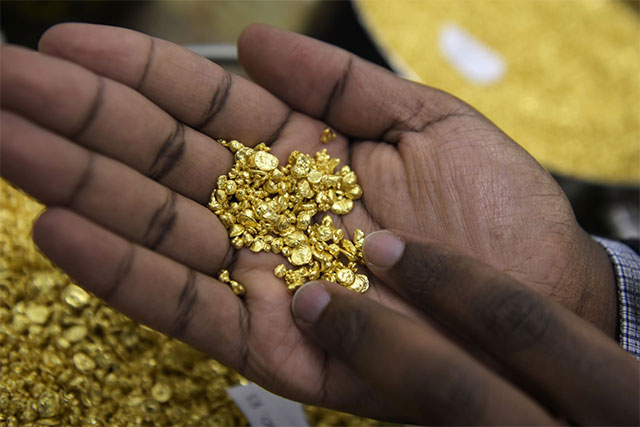
According to the paper's neutronics simulations, a tokamak reactor could produce about 2 tons of gold per year for every GW of heat. Marathon Fusion's estimate is even higher: up to 5,000 kg of gold per year for every GW of electricity (equivalent to about 2.5 GW of heat). In practice, a fusion plant could be worth double the price – both selling electricity and 'minting gold'.
In addition to gold, the company also hopes that this technology can create other rare materials such as palladium, a medical isotope, or components for nuclear batteries.
But the road to realisation is fraught with hurdles. Commercial fusion reactors do not yet exist. Scientists still have to solve a series of difficult problems: maintaining a stable plasma, finding materials that can withstand the harsh environment of the core, and designing a reliable energy recovery system. In addition, the initial gold produced will be radioactive and will need to be safely disposed of before it can be circulated.
In other words, the idea is based on solid physics, but remains purely theoretical until commercial fusion becomes a reality. As it stands, 'modern alchemy' remains an attractive prospect, but it is unlikely to translate into real gold on the market.
FAQ
What should you know about american startup reveals modern 'alchemy' technology?
In practical terms, marathon Fusion, a California startup, has announced a plan to use a fusion reactor to turn mercury into real gold.
Why does american startup reveals modern 'alchemy' technology matter?
The article highlights that marathon Fusion's technology relies on the deuterium–tritium fusion reaction, which produces extremely high-energy neutrons (~14 million electron volts).
What is the main takeaway?
The main takeaway is that as it stands, 'modern alchemy' remains an attractive prospect, but it is unlikely to translate into real gold on the market.
Related Articles
 Mercury Can Create Gold in a Fusion Reactor4 minutes read
 How to Create Life in Little Alchemy4 minutes read
 See Earth Through the Eyes of a Mercury-bound Spacecraft3 minutes read
 Some Lucky Earthlings Should Be Able to See a Mercury-bound3 minutes read
 Decipher the Mystery of the Origin of Billions of Tons of2 minutes read
 How Far Is the Distance from Earth to Mercury7 minutes read
Reader Comments 0
Sign in with email or Google to join the discussion.