Table of Contents
This guide provides a clear, practical overview of "Mercury Can Create Gold in a Fusion Reactor". It organizes the most useful details, explains important considerations, and highlights the steps or choices that matter most.
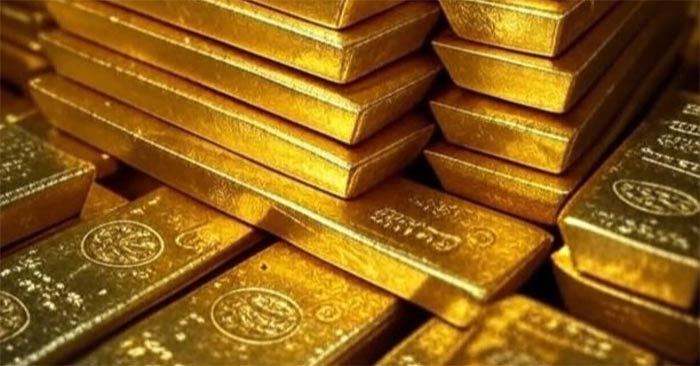
Since the time of ancient Greece, alchemists have pursued the goal of learning how to create the legendary Philosopher's Stone, which would allow them to turn base metals such as lead, tin, iron, copper, and mercury into gold. Using techniques that combined rudimentary chemistry with esoteric metaphysics, it was both a quest for spiritual enlightenment and a get-rich-quick scheme.
Yet, despite their many discoveries and the foundations of modern chemistry, the only gold these alchemists produced was something that the most unscrupulous among them could use to swindle the greedy with dreams of quick riches.
In the 20th century, physicists discovered the secret of transmutation using atomic power, but the amounts of gold produced in the laboratory were so small and the process so expensive that it was hardly worth the effort.
Today, chrysopoeia, the name given to the process of transformation into more refined cycles, may be possible. And like many technological advances today, it is a side effect of another innovation.
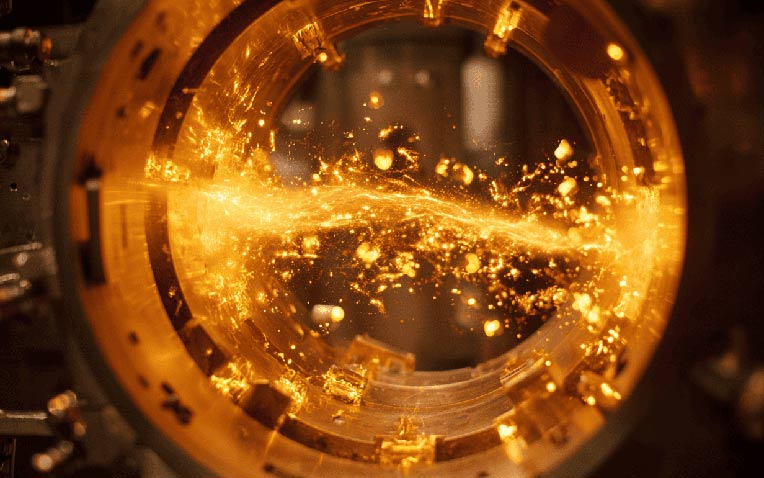
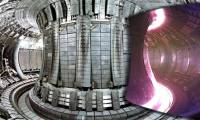
According to Marathon Fusion – a company that develops fusion energy components – a Tokamak fusion reactor could not only produce unlimited clean energy, but could also produce five tons of gold from mercury for every gigawatt (~2.5 GWth) of electricity generated.
In simple terms, the method is similar to the proposed method that allows reactors to produce their own tritium fuel. That method involves lining the reactor vessel with a layer of lithium. When the lithium absorbs a neutron from the fusion reaction, it splits into an alpha particle and a tritium atom. If you replace the lithium with the common isotope mercury-198 (or, better yet, a lithium/mercury alloy), a fast neutron will turn it into unstable mercury-197. It then undergoes electron decay and turns into gold-197.
In a recent preprint paper that is still awaiting peer review, scientists at Marathon propose using mercury enriched to 90% of its isotopes for the best reaction results. Once exposed to the reactor, the mixture can be chemically processed to extract the gold. Since gold is a nearly inert precious element, this is a relatively simple process.
In economic terms, since gold currently sells for VND88,661,797/tael, five tons per year is equivalent to US$14,254,777,833. This would cover a lot of the reactor's operating costs, and still have enough left over for a fancy lunch with a bottle of 1982 Pol Roger Brut champagne.
Thus, the dream of ancient alchemists became a reality. This was an astonishing development, because gold was the core medium of human exchange.
FAQ
What does this guide cover?
This guide explains mercury can create gold in a fusion reactor, including the main steps, important details, and practical considerations.
Who is this guide for?
It is designed for readers who want a clear, practical overview and a reliable process they can follow without unnecessary complexity.
What should you check before getting started?
Review the requirements, confirm that your software or device is up to date, and save any important data before changing settings.
Related Articles
 American Startup Reveals Modern 'Alchemy' Technology4 minutes read
 The World's Largest Fusion Reactor, as Tall as 6 Buildings in Japan Explained4 minutes read
 Thailand Introduces the First ''artificial Sun''3 minutes read
 China's Artificial Sun Will Be Operational by 20203 minutes read
 See Earth Through the Eyes of a Mercury-bound Spacecraft3 minutes read
 World's Strongest Magnet Coil6 minutes read
Reader Comments 0
Sign in with email or Google to join the discussion.