Table of Contents
Most Dota Auto Chess losses are not caused by one unlucky shop. They come from repeating expensive decisions: rerolling without targets, forcing contested units, ignoring trait rules, spending without a recovery plan and leaving the same formation against every opponent.
This guide covers durable decision-making principles for the original custom game; exact costs and trait wording can change. Use the economy guide for saving and spending, the positioning guide for board layouts, and the general strategy guide for scouting and reroll timing.
1. Rerolling without a target list

A reroll is useful when it can complete several pairs, activate a key synergy or stabilize a board that is losing too much health. It is wasteful when the player is searching for one unspecified “better” unit.
Before rolling, identify:
- The exact units that improve the active board.
- How many upgrades are close to completion.
- Whether the desired units are likely at the current player level.
- How much gold must remain after the roll-down.
Stop at the planned limit. Spending the final reserve after several misses usually removes the flexibility needed for the next round.
2. Forcing a composition the shop does not support

A popular composition is not useful when several opponents already hold its key units or the shop repeatedly offers a stronger alternative. Keep flexible early pairs and commit only when the board has a realistic frontline, damage source and upgrade path.
Scout the lobby before investing. If a key carry is heavily contested, pivot to a compatible unit or smaller synergy. A two-star flexible unit can be more valuable than an unupgraded piece that belongs to the ideal final lineup.
3. Adding units without checking trait interactions

The original Demon rules rewarded a board that met specific conditions, and adding a second Demon could remove the expected bonus unless another trait interaction changed the rule. The broader lesson applies to every composition: more units from a category do not always mean a stronger bonus.
Read the live trait panel after changing the board. Confirm which threshold is active, whether a duplicate cancels an effect and what a bridge unit actually contributes. Rules may differ between versions, so do not rely on an old Demon example without checking the current tooltip.
4. Treating gold as either “always save” or “always spend”
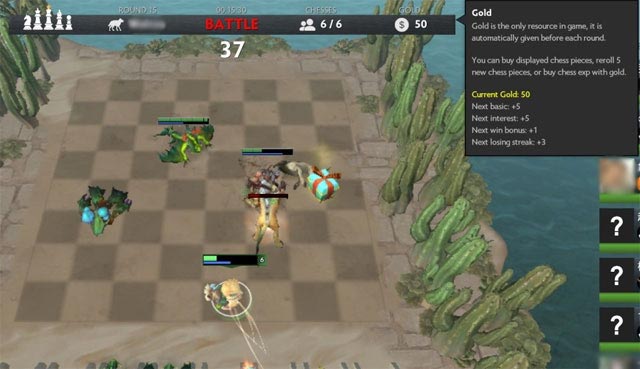
Saving creates interest and future choices, while spending creates immediate board strength. Both can be correct. The mistake is following one rule after the game state has changed.
- Save when the board is stable and the next level offers better unit odds or an important slot.
- Spend when several upgrades are close or repeated losses threaten elimination.
- Protect a valuable streak only when one purchase materially improves the next fight.
- Sell unused bench pieces when doing so reaches a meaningful economy threshold.
Confirm the current interest cap and streak values in the game. Old examples may show costs that no longer match the live build.
5. Using one formation against every opponent
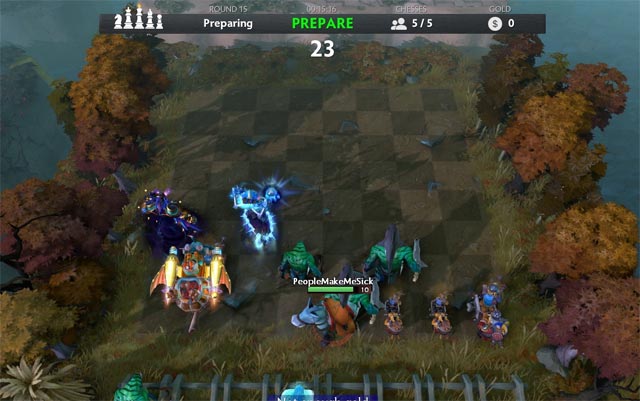
A formation should protect the main damage dealer, let important casters use their abilities and make durable units take first contact. No single layout satisfies those goals against every enemy.
- Front line: useful when melee units need to engage quickly.
- Corner group: protects ranged carries but may be vulnerable to area damage.
- Split formation: reduces the value of one large area attack but can divide friendly focus.
- Backline guard: keeps a durable unit near the carry against assassins.
When only a few opponents remain, scout their boards and move one or two units for the likely matchup. Do not rebuild the entire formation unless you understand which failure the change is solving.
Round-by-round correction checklist
- Did the frontline collapse before the damage dealers acted?
- Did a key unit die before casting?
- Is the main composition contested?
- Will leveling or rolling produce a specific improvement?
- Does the live trait panel show the bonuses you expect?
Correct the first clear failure, then observe the next combat. Small, deliberate changes preserve gold and make it easier to learn which decision actually improved the board.
Related Articles
 Dota Auto Chess: Synthesize Assassins to Be Strengthened in This Update4 minutes read
 How to Installing and Playing Dota Auto Chess for Newbies7 minutes read
 Top the Strongest Generals Dota Auto Chess After the March 5 Update5 minutes read
 Dota Auto Chess: Rank the up Line Combo Currently the Most Meta6 minutes read
 How to Install Vietnamese Dota Auto Chess4 minutes read
 Dota Auto Chess: How to Build Teams According to Each Stage of the Most Effective7 minutes read
Reader Comments 0
Sign in with email or Google to join the discussion.