Table of Contents
Explore 2.4ghz routers will be obsolete by 2025 –– why should you upgrade now.
In reality, 2.4GHz isn't gone. It still has some advantages, such as longer range, greater stability compared to 5GHz and 6GHz, better wall penetration, and compatibility with most older and newer devices. However, the trade-off is very slow speeds, high latency, and significant interference. This is due to the sheer number of devices in a household using the 2.4GHz band—from Bluetooth to microwave ovens. The number of non-overlapping channels is extremely limited, causing congestion to occur almost constantly.
If you're paying for a high-speed internet package but your router only supports 2.4GHz, you're essentially throttling your own network speed. Even using an older 2.4GHz router as an extender will still drag down the overall network speed. Smart devices often prioritize connecting to the stronger, nearest signal, even if that signal comes from a slower router, leading to lag, congestion, and dropped connections even if the main router is working fine.
A router that only has 2.4GHz is usually a sign of outdated technology
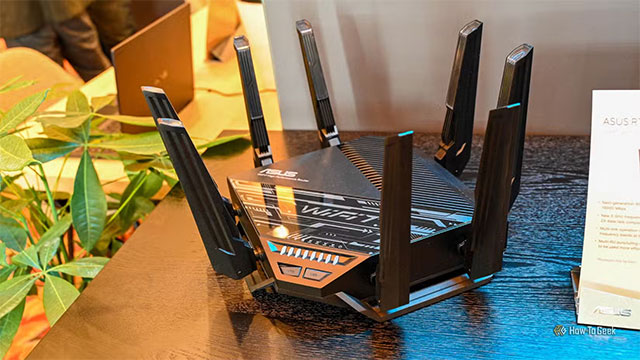
Router technology isn't just about choosing between 2.4GHz or 5GHz. It also involves the generation of Wi-Fi, such as Wi-Fi 6, 6E, or 7. Wi-Fi 6 boosted 5GHz bandwidth to 160MHz, with a theoretical speed of 9.6Gbps, far exceeding Wi-Fi 5. Wi-Fi 6E added a full 6GHz band to reduce congestion, while Wi-Fi 7 pushed capabilities to very high levels with 320MHz bandwidth and a maximum speed of around 23Gbps.
More importantly: next-generation routers not only improve 5GHz or 6GHz, but the overall router performance—including 2.4GHz—is enhanced. Older routers running only 2.4GHz often lack many modern technologies such as OFDMA to reduce latency when multiple devices are accessing simultaneously, or MU-MIMO to enable simultaneous communication with multiple devices. They also lack intelligent QoS to prioritize bandwidth for gaming, online learning, or video conferencing, WPA3 for enhanced security, automatic firmware updates, and weaker hardware, leading to poorer coverage and unstable signals.
If your router only supports 2.4GHz, chances are it's outdated, and upgrading it as soon as possible is the best thing to do.
Which router should I upgrade to in 2025?
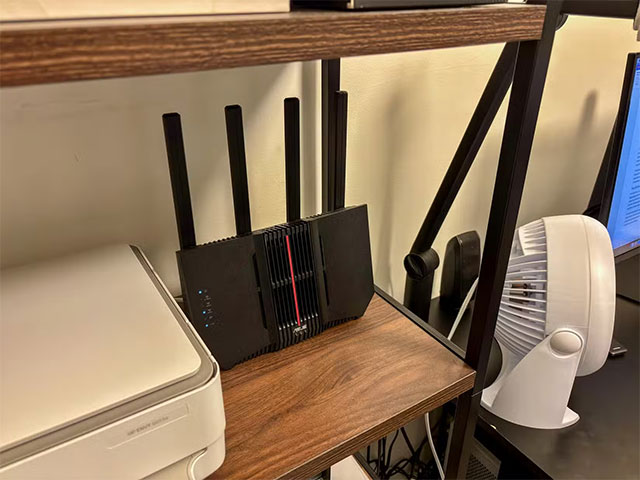
If you're looking to buy a new router, Wi-Fi 7 is definitely the best choice. This standard is becoming increasingly popular and prices have become much more affordable. An accessible yet powerful Wi-Fi 7 router is the TP-Link BE3600 Archer BE230. While it doesn't support the 6GHz band, it still fully meets the needs of users in a next-generation router: high bandwidth, low latency, 2.5Gbps LAN ports, 4K-QAM standard, OFDMA technology, MU-MIMO, and a 2.0GHz quad-core processor capable of handling demanding tasks.
If you want a more premium option with full support for 2.4GHz, 5GHz, and 6GHz, you can consider the GL.iNet GL-BE9300 (Flint 3) with true Wi-Fi 7 power. Alternatively, if you want 6GHz but at a more affordable price, the TP-Link AXE5400 Archer AXE75, running Wi-Fi 6E, is still a very worthwhile choice.
Of course, not everyone needs Wi-Fi 7. Current internet prices can't fully utilize the speeds of this standard, so Wi-Fi 6 and Wi-Fi 6E remain affordable and powerful enough for most users. Popular models like the TP-Link AX1800 Archer AX21 or ASUS RT-AX1800S can take full advantage of current internet speeds without incurring excessive costs.
If you have an even more modest budget, you should at least switch to a router that supports both 2.4GHz and 5GHz. Simply adding the 5GHz band makes the network much faster and more stable. A good, inexpensive model is the TP-Link AC1200 Archer A54.
Routers that only support 2.4GHz will be officially obsolete in 2025. They are not only slow and unstable, but also pose security risks due to their age, lack of WPA3, and absence of updates. Upgrading your router will not only make your network faster and smoother, but also help you better protect your data.
Final Thoughts
Understanding 2.4ghz routers will be obsolete by 2025 –– why should you upgrade now makes it easier to evaluate the information and apply the most relevant recommendations. Focus on the key points above and verify details that may change over time.
FAQ
What is 2.4ghz routers will be obsolete by 2025 –– why should you upgrade now?
Explore 2.4ghz routers will be obsolete by 2025 –– why should you upgrade now.
What key points does this article cover?
The article focuses on A router that only has 2.4GHz is usually a sign of outdated technology, Which router should I upgrade to in 2025?, with practical explanations and examples.
How can you use this information in practice?
Use the explanations to compare options, verify important details, and make a more informed decision. Apply the recommendations that best match your goals and situation.
Related Articles
 Which iPhone Is Supported for the Longest iOS Upgrade? List3 minutes read
 The Best Travel Router You Need to Bring in Your Trip13 minutes read
 Learn About Vue Routers5 minutes read
 3 Ways Hackers Can Attack Home Routers6 minutes read
 Network Basics: Part 2: Understanding the Router17 minutes read
 7 Signs You Need to Upgrade Your Router: Features, Uses, and8 minutes read
Reader Comments 0
Sign in with email or Google to join the discussion.