Table of Contents
Start with GDevelop or Construct 3 if you want an event-based 2D prototype. Try Godot if you want an open-source engine with both 2D and 3D. For a larger 3D project, compare Unity and Unreal Engine. Free access can mean a free license, a restricted tier, or free development with separate commercial terms.

Visual tools for making a first 2D game
1. GDevelop
Build rules with events, behaviors, and conditions. It’s a practical starting point for a one-screen game or a short platformer. The free plan is enough to experiment. Check cloud builds and publishing limits before relying on it for a particular store.
2. Construct 3
Use event sheets to connect actions to conditions in a browser-based editor. Start with Construct 3 for a new project. Older Construct 2 guides can explain the ideas, but menus and exporting options differ. Check the free edition’s event and export limits before committing to a larger project.
3. GameMaker
GameMaker focuses on 2D games. Build logic visually or write it in GML when you need finer control. GameMaker’s free license covers noncommercial use. Check the commercial license and target-platform terms if you plan to sell your game.
Engines for projects that may grow
4. Godot
Godot organizes projects into scenes and reusable nodes. GDScript is a common starting point for scripting. Godot uses the MIT license. Verify target-platform support and keep the required license notices in your release.
5. Unity
Unity supports 2D and 3D and organizes behavior around components, often with C# scripts. It has a large tutorial and asset ecosystem, but check which Unity version a tutorial uses. Unity Personal has eligibility requirements.
6. Unreal Engine
Unreal Engine is a strong candidate for a project that needs advanced 3D rendering. Use Blueprints to prototype logic visually and C++ where it suits the project. Check Epic’s license terms for royalties and release conditions. Start with current Unreal Engine documentation rather than treating older UE4 instructions as interchangeable.
Lightweight engines for people who want to code
7. Defold
Defold uses Lua, reusable components, and dedicated tools for common 2D work. It also supports 3D. The Defold Foundation lists no engine licensing fees or royalties. Check what’s required for the platforms you want to ship on.
8. Cerberus X
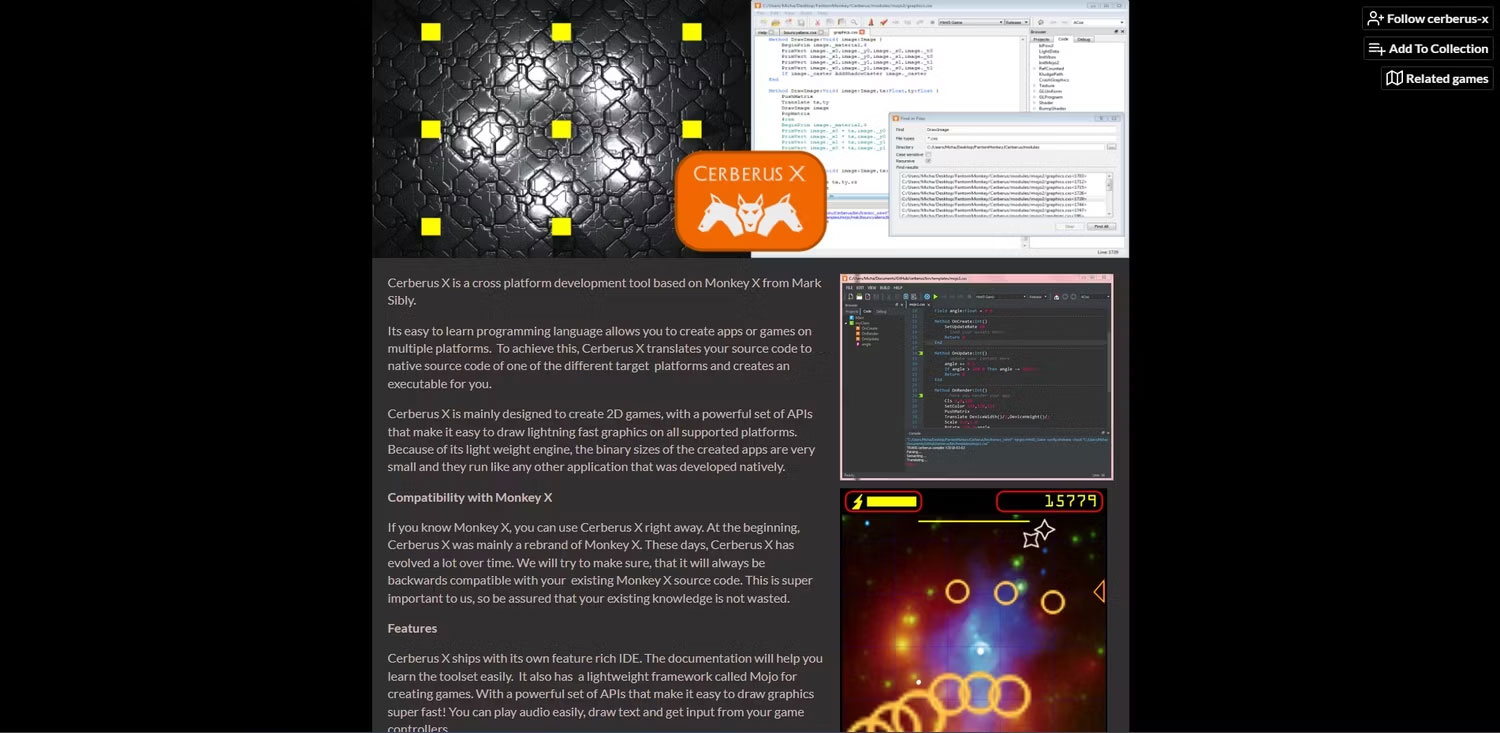
Cerberus X is a code-first tool for lightweight 2D projects. It’s worth considering if you like working in a small framework. Verify that the current build produces working exports for your operating system and your target before investing much time.
Choose by making and exporting a tiny game
Build one screen with movement, a score, and a restart. Export it to the device or browser you want players to use. This tests whether you like the editing workflow and whether the free tier can produce what you need. If coding is the unfamiliar part, start with the TipsMake programming learning paths.






Reader Comments 0
Sign in with email or Google to join the discussion.