Table of Contents
This guide explains how to resolve Tips to Fix the Computer Error Receiving Insufficient USB Capacity, starting with the most likely causes and moving through practical troubleshooting steps.
This error is called scrambling partitions, because the USB memory stick is not partitioned so it is not possible to access that portion of the non-partitioned memory. Chances are your USB is having that problem, just reinstall the partitions on the USB drive and repartition the USB storage as new and unique.
Before doing, backup the data in your USB! Performing the following steps will completely erase the USB drive. And please pay attention to step 4 if you don't want to accidentally delete the wrong one!
Step 1. In the Start Menu, press Window + R and then type diskpart.
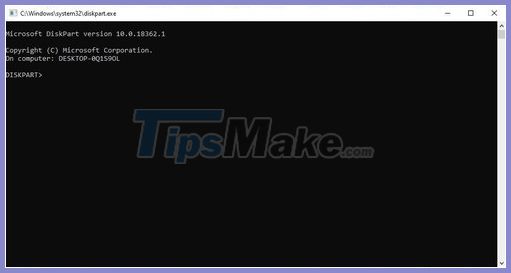
Step 2. Type 'List disk' to see all the available drive space on your computer.

Step 3. A list of storage drives will appear, including your USB drive (here my USB drive has a partition of 64GB, but when I open up the computer only get 32Gb).

Step 4. Type ' select disk XX ' in the next command line, X corresponds to the capacity of your USB drive and press Enter .
Step 5. A new command line appears, type ' Clean ' to erase the space of all partitions of the USB drive and press Enter.
Step 6: At the new command line, type ' Create partition primary ' to create a brand new partition for the USB drive with full capacity and press Enter .
Step 7. Finally, type 'Exit' to finish.
If you follow the steps above, your USB drive will return to its normal state: A single partition with all the space on the drive arranged and used correctly. No more missing space, wish you success.
FAQ
What usually causes Tips to Fix the Computer Error Receiving Insufficient USB Capacity?
The cause may involve incorrect settings, outdated software, damaged files, permission problems, device compatibility, or a temporary system issue.
What should I try first to resolve Tips to Fix the Computer Error Receiving Insufficient USB Capacity?
Restart the affected app or device, install pending updates, verify settings and connections, and follow the troubleshooting steps in order.
How can I prevent the issue from returning?
Keep software updated, maintain backups, avoid interrupted installations, and review system or device settings after major changes.
Related Articles
 5 Ways to Fix 'Insufficient Space Downloading Error' on Android5 minutes read
 Fix Windows Errors: Complete Guide: How to Fix ''insufficient System8 minutes read
 The Most Effective and Accurate Ways to Calculate Source Capacity Explained7 minutes read
 How to Handle a Computer Error Message Your Computer Is Low on11 minutes read
 Suggested Tips to Fix the Error of the Computer Not Receiving Scanned Files8 minutes read
 How to Fix the Insufficient Memory Error on the Printer the Easiest7 minutes read
Reader Comments 0
Sign in with email or Google to join the discussion.