Table of Contents
Explore it's time to stop buying regular usb drives by 2026, including the key concepts, practical examples, important considerations, and useful guidance.
Why are USB SSDs superior to traditional USB drives?
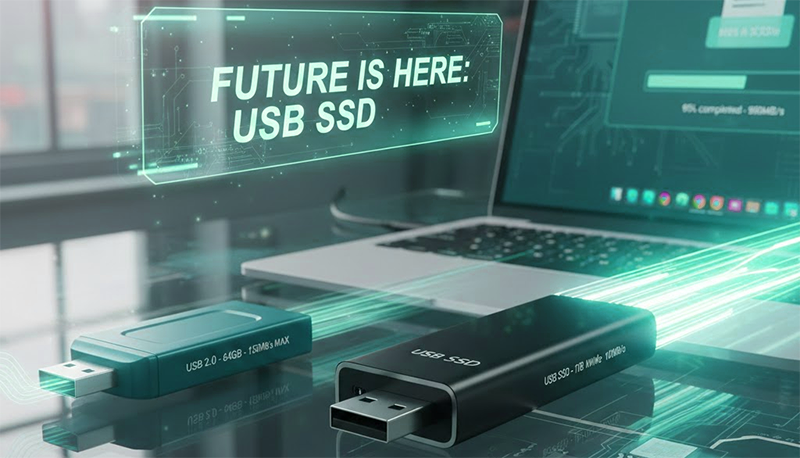
Technically, all USB drives use NAND memory chips, similar to SSDs. However, the component quality and transfer speeds on typical USB drives are usually among the lowest on the market.
- Actual speed: Most traditional USB drives only reach a maximum speed of around 150MB/s. When copying large files, the speed often drops below 100MB/s due to insufficient cache memory.
- Durability: Because they use inexpensive memory chips, USB drives generally have much lower write/erase durability compared to SSDs.
- New technology: USB SSDs use high-quality NAND chips and the NVMe protocol, allowing speeds up to 10Gb/s (approximately 1000MB/s) . Thanks to their large cache memory, these drives can maintain high speeds even when transferring hundreds of GB of data.
For example, the SK Hynix Tube T31 is essentially an M.2 NVMe drive with hidden DRAM cache inside a compact enclosure. It can maintain an average write speed of 600MB/s even when copying a massive 450GB file.
Price is no longer a barrier
The biggest advantage of USB SSDs today is that their price is now very close to that of traditional USB drives.
-
Approximately $18 : Equivalent to about 460,000 VND
-
Approximately $27 : Equivalent to about 690,000 VND
-
Under $40 : Equivalent to less than 1,020,000 VND
| Product | Capacity | Maximum speed | Reference price |
| Samsung BAR Plus (standard USB) | 128GB | ~400MB/s | Approximately $18 - equivalent to about 460,000 VND |
| Transcend ESD310 (USB SSD) | 128GB | 1000MB/s | Approximately $27 - equivalent to about 690,000 VND |
| PNY PRO Elite V3 (USB SSD) | 256GB | 1000MB/s | Under $40 - Equivalent to under 1,020,000 VND |
For just over 200,000 VND more, users can own a device with speeds comparable to a portable SSD but with the added convenience of being able to attach it to a keychain.
Should you buy a USB SSD instead of a portable SSD?
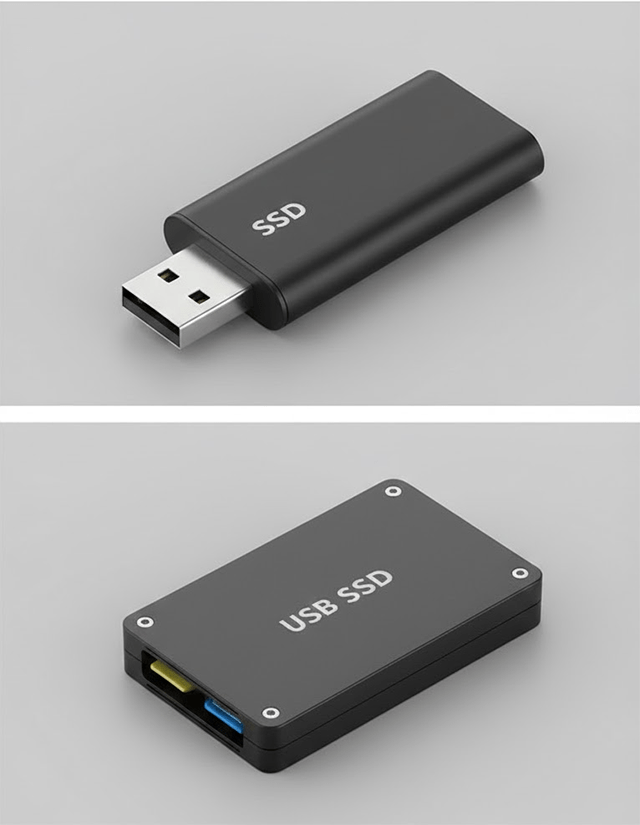
In many cases, USB SSDs are a better option than traditional portable SSDs:
- Compact and lightweight: No cumbersome cables needed, plugs directly into the computer.
- Equivalent performance: Many models, such as the TEAMGROUP X2 MAX, offer speeds of 1000MB/s, comparable to popular portable SSDs, but in a size no bigger than a fingertip.
- Value for money: Some high-end USB SSDs are even cheaper than older high-end USB models while offering twice the speed.
Conclude
The advent of USB SSDs has rendered traditional USB drives obsolete. The only reason to buy a traditional USB drive now is when you only need extremely low capacity (under 64GB), as USB SSDs typically start at 128GB. With the current need for large-scale data storage and transfer, investing in stick-type SSD technology is a cost-effective and long-term investment.
Final Thoughts
Understanding it's time to stop buying regular usb drives by 2026 makes it easier to evaluate the information and apply the most relevant recommendations. Focus on the key points above and verify details that may change over time.
FAQ
What is it's time to stop buying regular usb drives by 2026?
Explore it's time to stop buying regular usb drives by 2026, including the key concepts, practical examples, important considerations, and useful guidance.
What key points does this article cover?
The article focuses on Why are USB SSDs superior to traditional USB drives?, Price is no longer a barrier, Should you buy a USB SSD instead of a portable SSD?, with practical explanations and examples.
How can you use this information in practice?
Use the explanations to compare options, verify important details, and make a more informed decision. Apply the recommendations that best match your goals and situation.
Related Articles
 Stop Buying Regular USB Flash Drives: USB SSDs Are a Better Choice in 20267 minutes read
 Multi-level SSD: Slc, Mlc, Tlc, Qlc and Plc?9 minutes read
 How to Stop Impulse Buying: Step-by-Step Guide7 minutes read
 6 Clever and Unique Ways to Reuse Old USB Drives: Explained7 minutes read
 Looking Back on 60 Years of Miraculous Development of Hard Drives6 minutes read
 4 Habits to Help You Stop Wasting Time on Your Phone6 minutes read
Reader Comments 0
Sign in with email or Google to join the discussion.