Table of Contents
Explore scientists have found a way to make oled screens brighter without consuming.
A research team from KAIST, led by Professor Seunghyup Yoo, has just published a very noteworthy finding in the journal Nature Communications. Essentially, they have found a way to make OLED screens—the type used in most high-end smartphones and TVs—significantly brighter , without sacrificing the slim, flat design that is OLED's greatest strength.
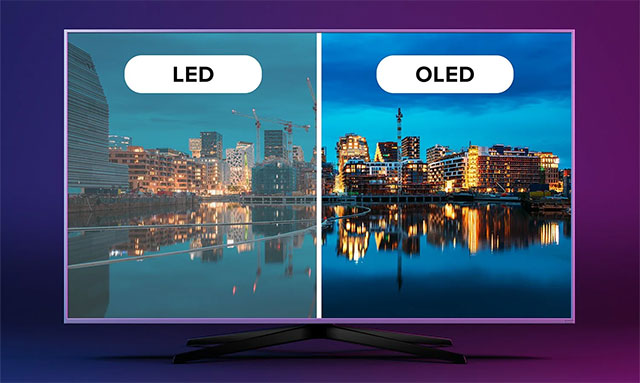
The problem lies within the current OLED technology itself
Few people know that OLEDs are actually quite inefficient . We love OLEDs for their vibrant colors and deep blacks, but behind that lies a major drawback: nearly 80% of the light produced never reaches the user's eyes . Instead, the light gets 'trapped' inside the screen's structural layers, reflecting back and forth and ultimately converting into heat.
That's also why phones often heat up when watching high-resolution videos, and why the battery drains so quickly. A large amount of energy is simply being wasted.
Previously, engineers tried to overcome this problem by attaching tiny lenses to each pixel, allowing light to escape more easily. Think of it like placing a magnifying glass over a light bulb. This method was effective, but it created problems: either the screen became thick and bulky, or the image quality was affected due to pixels blurring together.
The KAIST research team took a completely different approach. Instead of treating the light source as an infinite theoretical concept, they redesigned the display structure based on the finite, practical size of each pixel . The result is a new structure called 'near-planar', which functions similarly to the bulky lenses of the past but maintains an incredibly thin profile.
This structure helps direct light straight towards the viewer , instead of spreading to the sides and reducing image sharpness.
For the average user, this is a huge step forward
This means that future smartphones could be twice as bright without consuming more battery power . Or conversely, the screen could maintain the same brightness but consume significantly less energy, allowing the phone to last a full day of heavy use.
Furthermore, the light trapped within the screen is the cause of heat generation, and heat is always the enemy of electronic components. Therefore, these new generation OLED screens also promise to be more durable, less prone to degradation, and have a reduced risk of burn-in over time.
Researchers also stated that this technology is not limited to current OLEDs, but could also be applied to next-generation display technologies such as quantum dots . It feels like we are gradually moving beyond the era of having to choose between long-lasting batteries and screens bright enough for outdoor viewing .
Final Thoughts
Understanding scientists have found a way to make oled screens brighter without consuming more battery power makes it easier to evaluate the information and apply the most relevant recommendations. Focus on the key points above and verify details that may change over time.
FAQ
What is scientists have found a way to make oled screens brighter without consuming more battery power?
Explore scientists have found a way to make oled screens brighter without consuming.
What key points does this article cover?
The article focuses on The problem lies within the current OLED technology itself, For the average user, this is a huge step forward, with practical explanations and examples.
How can you use this information in practice?
Use the explanations to compare options, verify important details, and make a more informed decision. Apply the recommendations that best match your goals and situation.
Related Articles
 Intel Works with Google to Optimize Chromium Power Savings3 minutes read
 What Types of Screens Are Retina, Lcd, Amoled, Oled...?7 minutes read
 What Is Evo OLED Panel? What's Different from OLED?6 minutes read
 The Display Panel on the Galaxy S20 Ultra Is the 'Best Ever Made'4 minutes read
 Revoke Access Permissions for These 3 Apps to Double Your Phone's Battery Life7 minutes read
 LG Display Presents 65-inch Scrollable OLED TV Like Paper3 minutes read
Reader Comments 0
Sign in with email or Google to join the discussion.