Table of Contents
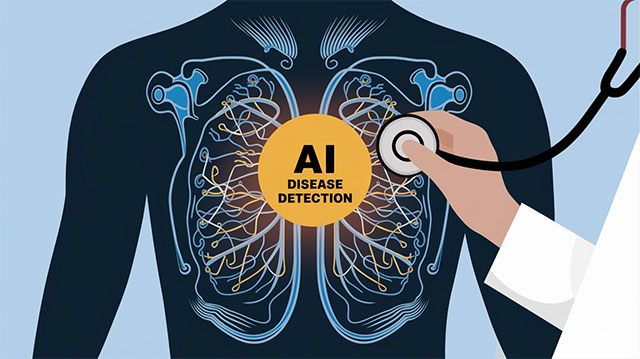
McGill University scientists develop AI DOLPHIN – a tool capable of detecting signs of disease hidden deep in cells before symptoms appear, opening a new era for early diagnosis and accurate treatment.
Researchers say that closely observing the activities inside cells could help doctors detect diseases earlier and choose more effective treatments for individual patients.
A research team at McGill University (Canada) has just developed an artificial intelligence (AI) tool capable of detecting pathological markers hidden deep in each cell – something that humans were previously unable to recognize.
The research, published in the journal Nature Communications , describes the new system, called DOLPHIN. According to the team, this technology could help doctors diagnose diseases at an earlier stage and make more accurate treatment decisions in the future.
'This tool has the potential to help doctors choose the right therapy that best suits each patient, reducing the need for 'trial and error' in treatment,' – Dr. Jun Ding, lecturer in the Faculty of Medicine, McGill University, shared.
Zoom in on the cell's genetic "puzzle"
According to the research team, pathological signs often manifest as small changes in RNA expression – factors that provide clues about the disease's appearance, severity and response to treatment.
That said, traditional genetic analysis methods often lump this signal into a single index, obscuring many important variations and reflecting only a small fraction of what is actually happening inside the cell.
Thanks to advances in AI, DOLPHIN has been able to analyze single-cell data at a more granular level, 'zooming in' to see how genes are spliced from smaller segments called Exons . This gives a better understanding of the actual state and activity of the cell.
'Genes are not single blocks – they are like Lego sets made up of many small pieces,' said lead author Kailu Song, a PhD student. 'By looking at how these pieces connect, DOLPHIN can uncover important disease markers that have long been overlooked.'
In a real-world trial, DOLPHIN analyzed single-cell data from pancreatic cancer patients and detected more than 800 pathological markers that conventional tools missed. The system was even able to differentiate high-risk patients from less severe ones, helping doctors choose more appropriate treatment.
Stepping stone towards 'virtual cells'
In the long term, this work opens up the possibility of building digital models of human cells. With the ability to create simulations more detailed than current methods, DOLPHIN could help simulate how cells respond to drugs before conducting lab experiments or clinical trials – saving research time and costs.
The team's next step is to scale up from a few datasets to millions of cells, with the goal of building more accurate and comprehensive 'virtual cell' models in the future.
FAQ
What should you know about AI detects early disease?
In practical terms, mcGill University scientists develop AI DOLPHIN – a tool capable of detecting signs of disease hidden deep in cells before symptoms appear, opening a new era for early diagnosis and accurate treatment.
Why does AI detects early disease matter?
The article highlights that 'This tool has the potential to help doctors choose the right therapy that best suits each patient, reducing the need for 'trial and error' in treatment,' – Dr.
What is the main takeaway?
The main takeaway is that thanks to advances in AI, DOLPHIN has been able to analyze single-cell data at a more granular level, 'zooming in' to see how genes are spliced from smaller segments called Exons .
Related Articles
 Signs of Heart Disease Should Not Be Ignored4 minutes read
 Eye Changes May Signal Cancer, Diabetes and High Blood Pressure6 minutes read
 Signs That Your Body Is Silently Calling for Help7 minutes read
 6 Warning Signs of a Heart Attack in Women Should Not Be Ignored6 minutes read
 Artificial Intelligence Now Helps to Detect Osteoporosis and3 minutes read
 British Researchers Train Dogs to Detect Signs of a Covid-194 minutes read
Reader Comments 0
Sign in with email or Google to join the discussion.