Table of Contents
This guide provides a clear, practical overview of "AMD's Multi-Chiplet GPU for Gaming Is Near; Could Launch with". It organizes the most useful details, explains important considerations, and highlights the steps or choices that matter most.
Currently, the biggest limitation of applying chiplet design to gaming GPUs is higher latency, as frames are not tolerant of data having to 'jump' over long distances, and to solve this problem, AMD needs to come up with a solution that bridges the gap between data and computation as closely as possible. Based on a newly revealed patent application, it has been discovered that AMD may have successfully cracked the code for a 'multi-chiplet' gaming GPU. Interestingly, the patent details the CPU instead of the GPU, but the text and mechanism indicate that it is aimed at a graphics use case.
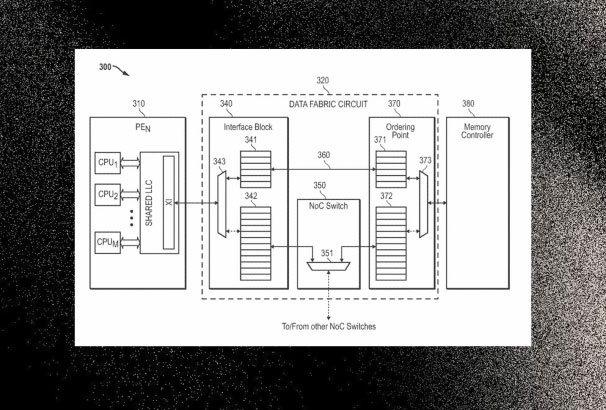
So, how exactly would AMD use a multi-chiplet design with GPUs? The key component in the patent is said to be a 'data-fabric with an intelligent switch' that bridges communication between the compute chiplets and the memory controller. It's essentially AMD's Infinity Fabric, but scaled down for consumer GPUs, since Team Red can't use HBM memory dies. The switch is designed to optimize memory access by first comparing whether a request for a graphics task requires task migration or data replication, with a nanosecond-level latency decision.
Once the data access issue is solved, the patent proposes having GCDs with L1 and L2 caches, similar to what's happening with AI acceleration. However, an additional shared L3 cache (or stacked SRAM) could be accessed via a switch, which would be used to connect all the GCDs. This would reduce the need for global memory accesses, and more importantly, act as a shared staging zone between chiplets, similar to what AMD does with their 3D V-Cache, except it's primarily for the processor. Then there's the stacked DRAM involved, which is essentially the foundation for an MCM design.
What makes this multi-chiplet patent interesting is that AMD is essentially ready for the ecosystem. The company can use TSMC's InFO-RDL bridge and a specific version of Infinity Fabric between the dies for packaging. And what makes this implementation even more interesting is that it's a scaled-down version of the AI accelerator. AMD has previously planned to unify its gaming and AI architectures under a single platform: the UDNA architecture.
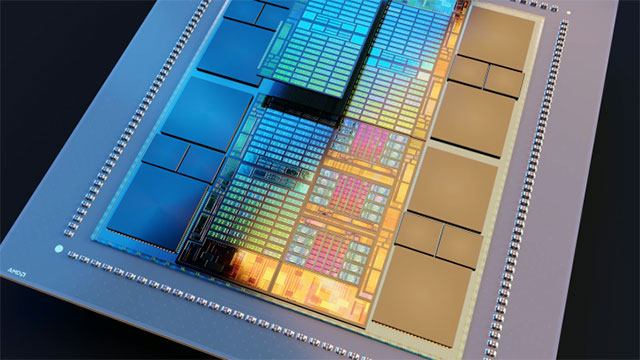
Given the limitations of monolithic designs, the graphics industry needs a change, and AMD may have one of its best chances to take the lead. However, there are complications to be addressed with chiplet designs, one of which AMD has already experienced with its RDNA 3 platform, related to latency introduced by the chiplet interconnect. However, with the new approach, combined with additional shared L3 cache, Team Red hopes to address latency issues; however, it is certainly not a simple task.
FAQ
What does this guide cover?
This guide explains amd's multi-chiplet GPU for gaming is near; could launch with, including the main steps, important details, and practical considerations.
Who is this guide for?
It is designed for readers who want a clear, practical overview and a reliable process they can follow without unnecessary complexity.
What should you check before getting started?
Review the requirements, confirm that your software or device is up to date, and save any important data before changing settings.
Related Articles
 Is Chiplet the Answer to Moore's Law?6 minutes read
 Everything You Need to Know About AMD Zen 5: What to Know7 minutes read
 Test About Computer Architecture P64 minutes read
 Battalion Multi-Touch CZ-10: Multi-touch Technology Encroaches on Laptops3 minutes read
 AMD Sets a Launch Date for the First Desktop CPU Line Based on3 minutes read
 Test of Computer Architecture P54 minutes read
Reader Comments 0
Sign in with email or Google to join the discussion.