Table of Contents
Panther Lake is the codename for Intel Core Ultra Series 3 processors. Intel's October 2025 architecture announcement introduced a scalable chiplet design built around the Intel 18A process, with hybrid CPU cores, integrated graphics, and AI acceleration. The headline performance figures are Intel's configuration- and workload-dependent claims, not a guarantee for every laptop.
What Intel announced
The architecture preview described consumer and business PCs, gaming devices, and edge applications. Intel presented Panther Lake as combining performance and power-efficiency goals associated with different earlier processor families.
“Intel 18A” is a process name. It should not be treated as a direct physical measurement or an exact equivalence to another manufacturer's “2 nm” branding.
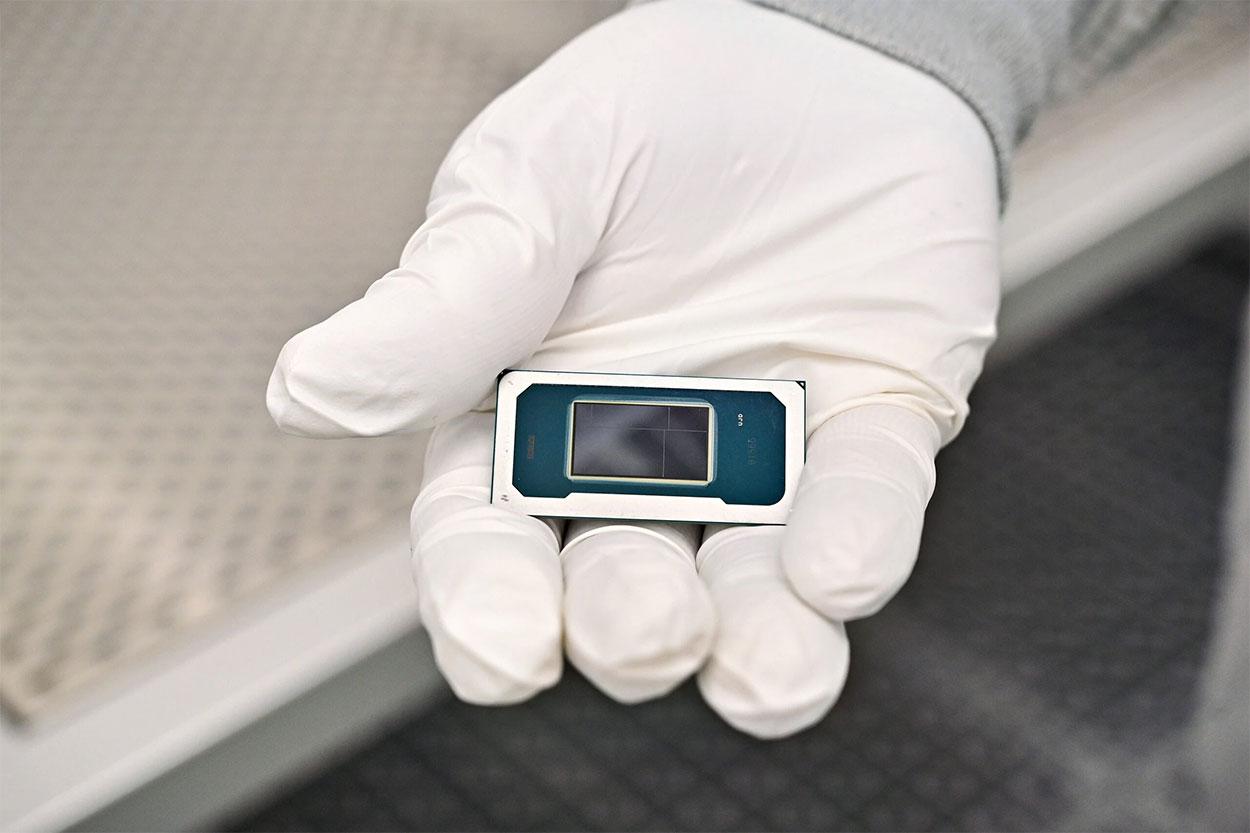
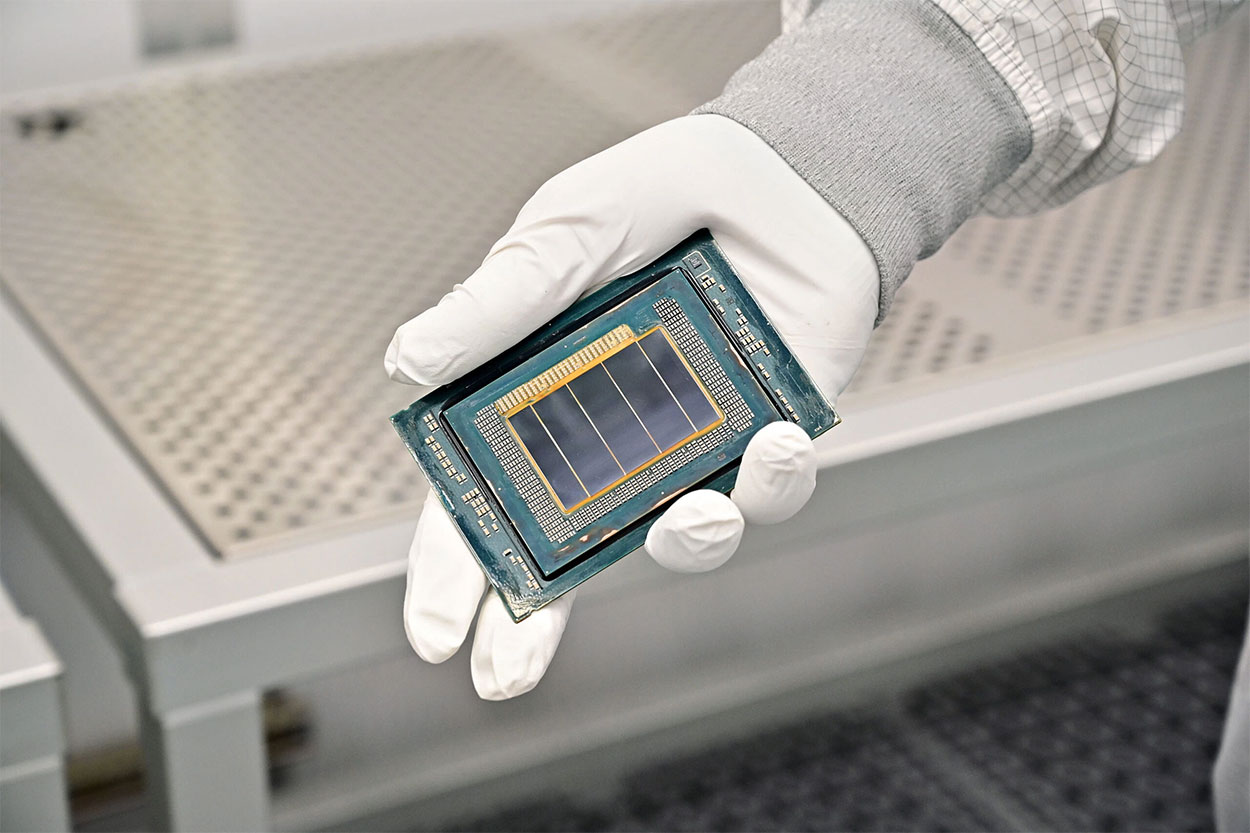
Up to 16 hybrid cores does not mean 16 P-cores
Core counts refer to a mix of core types. Intel's Series 3 edge overview lists configurations including four P-cores, eight E-cores, and four low-power E-cores for a 16-core total. Other configurations have fewer cores.
The mix matters when comparing processors: a total core count alone does not tell you single-thread speed, sustained multicore performance, or battery life.
How to read the CPU and graphics claims
Intel's preview claimed more than 50% improvements in selected CPU and graphics comparisons with earlier platforms. Such comparisons require their benchmark, power, and configuration notes. They do not mean every application becomes 50% faster or that the same gain applies against every AMD or Nvidia product.
Higher-end configurations include an Arc GPU with up to 12 Xe cores, while other variants have a smaller graphics configuration. Memory, power limits, drivers, and cooling also affect results. Compare complete systems running the applications you use.
Platform TOPS is not NPU-only performance
The “up to 180 platform TOPS” figure combines capabilities across processing components. It is not a claim that the NPU alone delivers 180 TOPS. Intel's overview lists a 50-TOPS NPU alongside other accelerators in relevant configurations.
TOPS describes a theoretical operations rate under specified conditions. It does not directly predict how fast an arbitrary AI application runs, because software support, model size, precision, and memory use matter. For context, see different AI approaches and workloads.
Availability and related products
The October 2025 preview targeted initial shipments before the end of 2025 and broader availability from January 2026. Those were announcement-time plans; check the exact processor and device listing for actual availability and specifications. Intel also discussed robotics and Clearwater Forest server processors, but those are separate deployment contexts and do not define a Panther Lake laptop's capabilities.
What to compare in a finished device
Check the exact CPU and GPU configuration, memory, sustained performance, noise, battery runtime, and price. Use like-for-like tests rather than architecture labels alone. If evaluating a system you already own, temperature monitoring can help distinguish sustained thermal limits from a processor specification.
Related Articles
 Intel Core Ultra Series 3: Panther Lake Features and Performance Claims
 NVIDIA: Raptor Lake CPU users encountering unstable errors should 'ask' Intel
 CES 2020: Intel unveils Tiger Lake CPU, promising 'badass' graphics processing performance
 Intel Alder Lake CPU conflicts with DRM software, making users unable to play games
 Intel ARC Xe-HPG 'Alchemist' GPU Leak: High Performance, Launching in 2022
 Intel shook hands with AMD to release the 8th generation chip competing with Nvidia
Reader Comments 0
Sign in with email or Google to join the discussion.