Table of Contents
Microsoft Now Wants Users to Try Its Controversial Windows Recall Feature Again is easier to approach with a clear overview and reliable steps. This guide organizes the essential information, highlights practical details, and explains what to check along the way.
Key Takeaways
- Review Microsoft now wants users to try its controversial windows recall feature again.
- Explore recall is coming back.
- Understand should recall be given a second chance.
Microsoft Now Wants Users to Try Its Controversial Windows Recall Feature Again
Microsoft's controversial Recall feature has started rolling out to Windows Insiders once again. But should you try it after it was flagged as a security and privacy risk?
Recall Is Coming Back
Microsoft announced in a Windows blog post that a preview of the Recall feature will be available in Windows 11 Build 26100.3902 for Windows Insiders in the Release Preview channel. The feature essentially works like a time machine, taking regular screenshots over time and using AI to sort and search them. This means you can search for your desktop, documents, images on websites, etc. Using natural language.
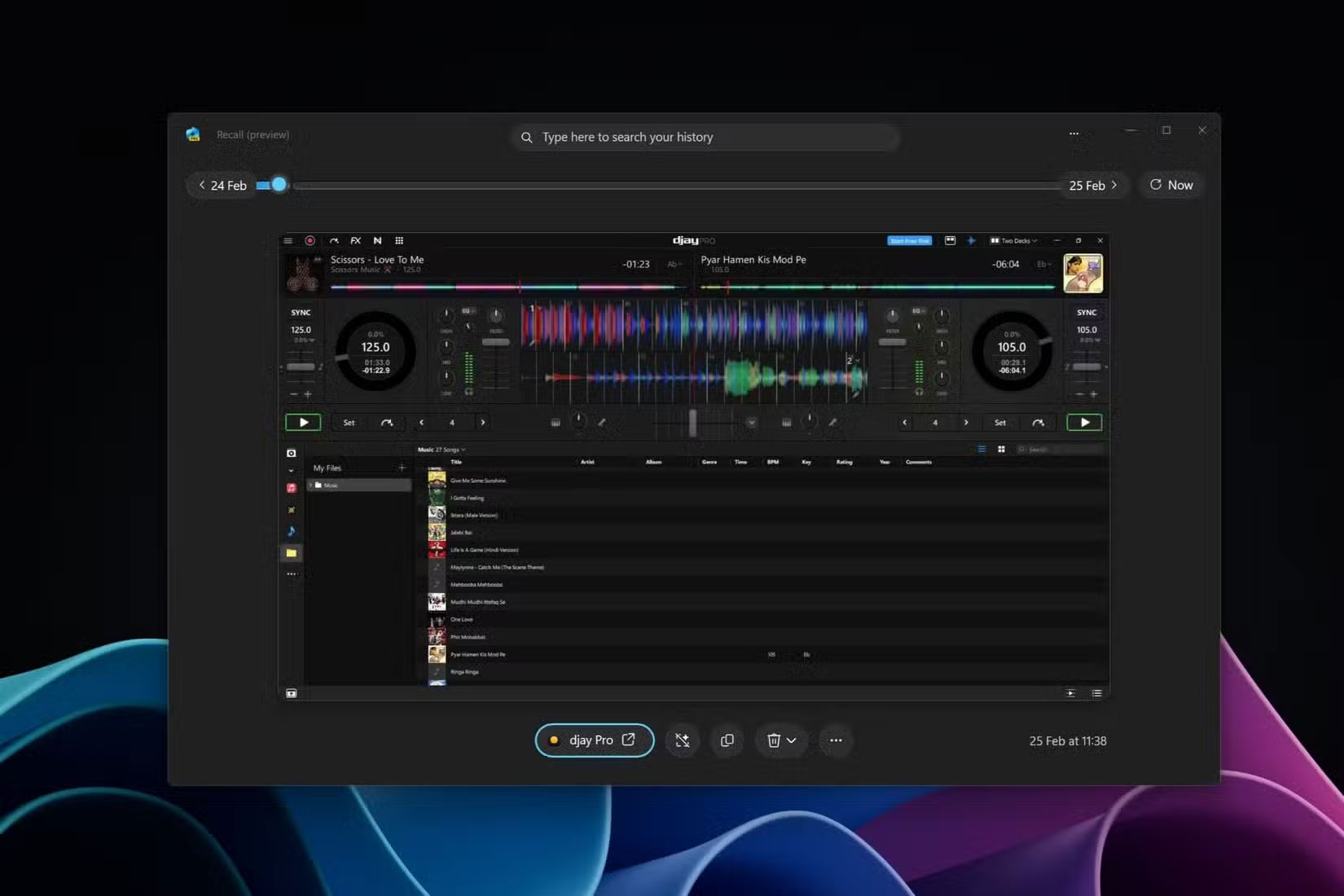
The feature gained attention for being a privacy nightmare shortly after its announcement in May 2024, forcing Microsoft to delay its wider rollout and iron out the issues. The company re-released the Recall feature to Windows Insiders in November 2024 after improving how it handles screenshots and addressing other privacy concerns.
However, this version collected sensitive information such as credit card numbers and Social Security numbers, causing Microsoft to delay the rollout further. Microsoft also promised to conduct an internal review to address any security and privacy concerns.
Currently, this feature requires you to opt in to saving snapshots. Windows Hello biometric authentication is also required so people can confirm their identity before accessing snapshots. According to Microsoft:
You always have control over which snapshots are saved and can pause snapshot saving at any time.
The rollout is limited to Snapdragon-powered Windows Copilot+ PCs, but Intel and AMD-powered Windows machines with Copilot+ AI may also see the feature rolled out over time. Other features included in the update include better Windows Search, Click to Do (preview), along with updates to Windows Narrator, Widgets, Phone Link, Taskbar, Display, Windows Share, and more.
Should Recall Be Given a Second Chance?
Recall is one of those situations where letting Windows invade your privacy makes sense. It might be a privacy nightmare for cybersecurity experts, but it's a huge convenience for regular people.
Those claims were easily debunked by cybersecurity experts while Microsoft initially made bold claims about the feature's privacy and security features. Researchers were even able to demonstrate how malware could steal data collected by Recall.
The rollout to a wider audience will test Microsoft's subsequent claims that it has fixed privacy and security issues. We could see it rolled back for further improvements if there are issues with this Recall release.
Privacy concerns aside, you should seriously give Recall a try. Microsoft has spent nearly a year addressing the issues that experts have raised in the past. Addressing those concerns, Recall provides a super-handy way to look up what you did in the past and recover lost data or memories.
Why Should You Take Windows Recall Seriously?
Explore Everything You've Been Doing Lately
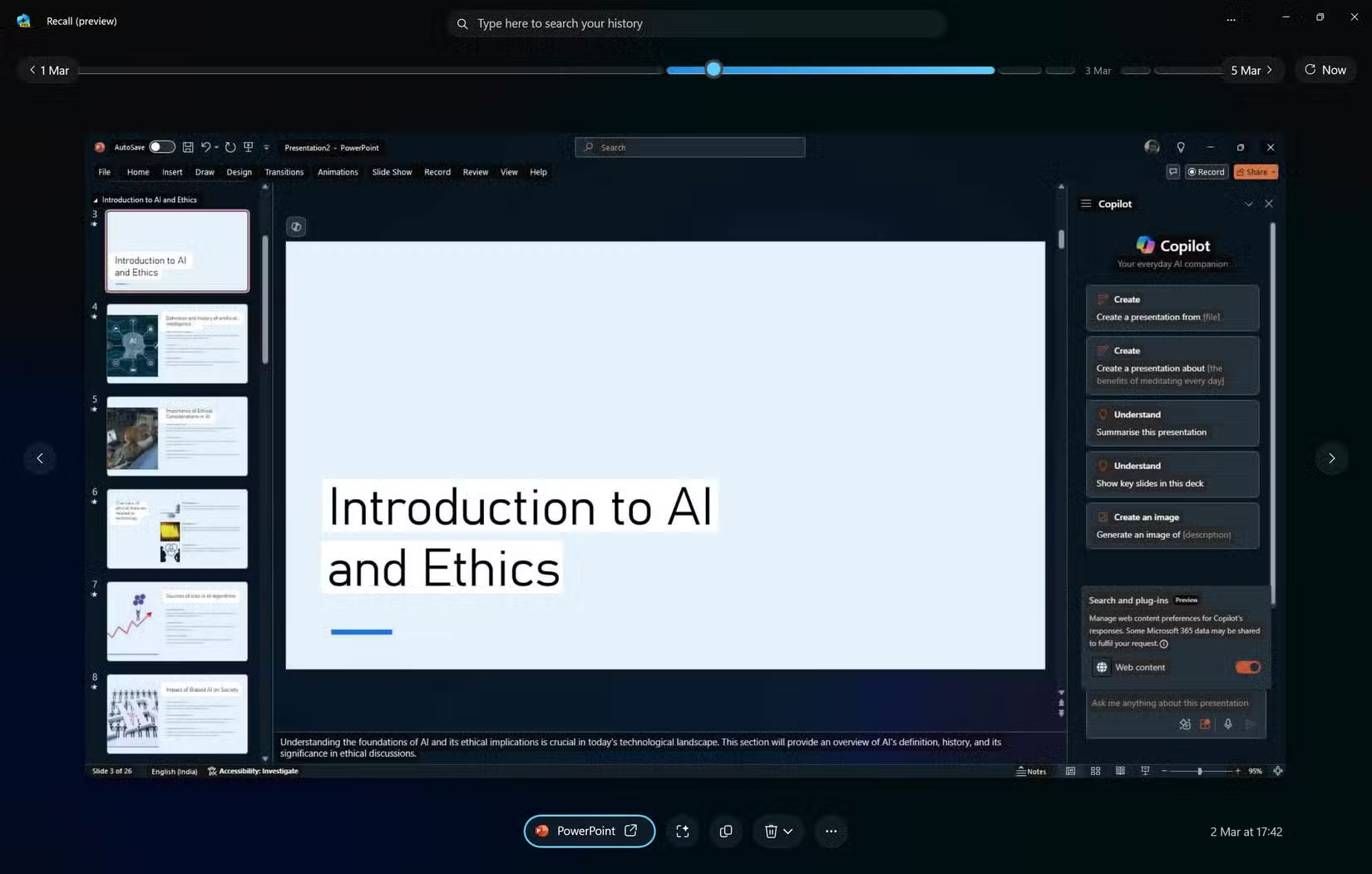
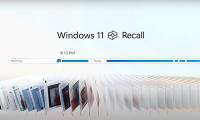
Windows Recall provides a comprehensive overview of your PC activity. It takes regular screenshots, creates a searchable and navigable history. It's not just a list of files you've opened; it's a visual timeline of everything you've done.
Have you ever worked on multiple projects at once and lost track of which files, websites, or emails were involved? Additionally, many people often get sidetracked when researching a topic for work.
Instead of relying on your browser history or searching through countless folders to recreate your activity, you can use Recall to visually scan through your past activities. This makes it easy to retrace steps or pick up where you left off.
Recall not only tracks files and web pages but also records interactions within applications. It tracks activities in the background without causing any performance issues or interruptions. All you have to do is press Windows key + J and you can start browsing through your snapshots.
Note: Recall is only available in preview for PC Copilot+. Currently, it is optimized for certain languages - English, Chinese (Simplified), French, German, Japanese, and Spanish.
This feature is also incredibly useful for identifying patterns in your workflow. Additionally, you can rediscover articles or videos that you had completely forgotten about, or a past activity that sparks new ideas and inspiration.
Windows Recall is essentially a continuously updated personal archive that allows for deeper insights into a person's digital behavior.
It's Easy to Find Something You've Done Before
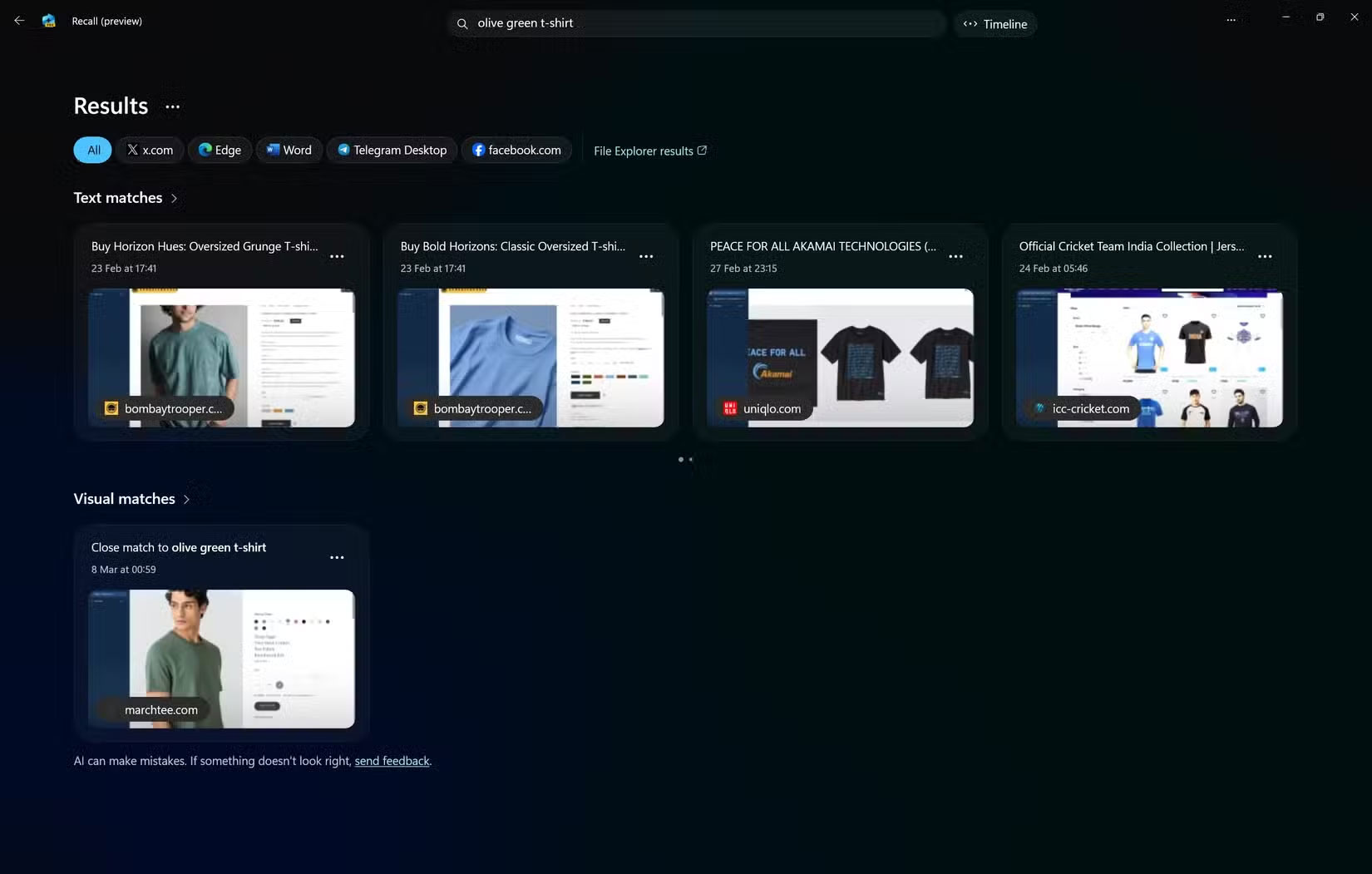
The search functionality in Windows Recall is where its real power becomes apparent.
Imagine you remember seeing a particular chart in a presentation a few weeks ago, but you don't remember which file it was in. With Recall, you can search for keywords related to the chart and it will show you a snapshot of where that chart was, even if you don't remember the file name or the application you were using.
This type of search functionality is a paradigm shift in how we interact with our digital information. You can describe what you're looking for and Windows knows how to find it.
It eliminates the frustration of endlessly searching through files and folders on your Windows PC, trying to remember the exact name or location of something you've seen before. Recall allows you to search based on visual content, keywords in documents, or even the apps you're using.
Interact with Things on the Screen Faster
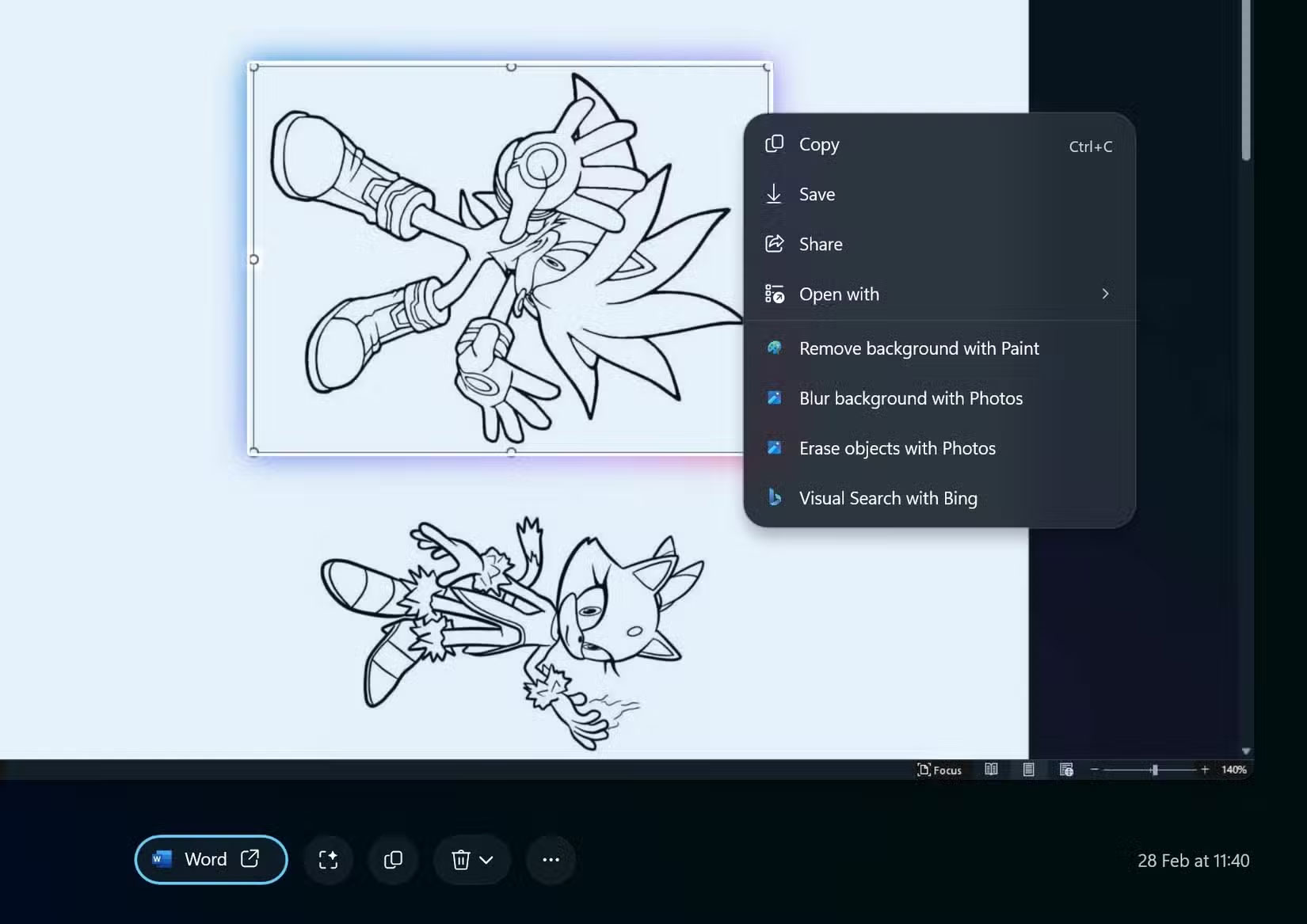
In addition to just viewing and searching your previous activity, Windows Recall can also interact with the snapshots it takes. This means you can pick up where you left off, even if you didn't explicitly save your progress.
Then there's Click to Do, a feature that helps you get things done faster by analyzing text and images on your screen that you can take action on. Microsoft assures that the analysis is always done locally on your device and only starts after you actively interact with Click to Do while many have expressed privacy concerns about Windows Recall.
This is really useful when working with complex documents and spreadsheets. You can pull up the previous snapshot if you make an edit and then realize you need to go back to an earlier version. This eliminates the worry of losing important changes or accidentally overwriting important data.
Plus, you can perform new actions on snapshots, like editing the image in the snapshot above, in a different way than you did in the past. Recall also helps keep you organized in meetings, training sessions, and brainstorming sessions. Switching between tabs, notes, and references to documents can make it hard to keep track of everything.
But with Recall, you can confidently navigate through different tasks, knowing that everything is being recorded, and you can review and act on it later. Windows Recall is currently available as a preview. Microsoft is updating it regularly. The overall vision seems to be to provide an intuitive and fluid experience where you can focus on their work without constantly worrying about managing files and saving their progress.
The ability to see past PC activity in such a visual way is truly transformative. It may sound like a privacy nightmare, but Recall is one place where letting Windows invade your privacy can actually be beneficial. Many people's experiences with Recall have been overwhelmingly positive, and you should give this new tool a chance.
Final Thoughts
The most reliable way to handle Microsoft now wants users to try its controversial windows recall feature again is to follow the process in order, verify each important setting, and test the result before moving on. Use the guidance above as a practical reference, then adjust the details for your device, software version, or specific goal.
FAQ
What should I know first about Microsoft Now Wants Users to Try Its Controversial Windows Recall Feature Again?
Many people don't find Windows Recall useful when they first try it.
How do I get the best results with Microsoft Now Wants Users to Try Its Controversial Windows Recall Feature Again?
Use current software or equipment, follow the steps in order, review the recommended settings, and test one change at a time so you can identify what improves the result.
What should I do if Microsoft Now Wants Users to Try Its Controversial Windows Recall Feature Again doesn't work as expected?
Check compatibility, permissions, connectivity, and version-specific settings. Restart the relevant device or app, then repeat the process carefully before trying a more advanced fix.
Related Articles
 Microsoft Doesn't Allow Users to Uninstall the Recall Feature in Windows 11: Explained5 minutes read
 Microsoft Is Ready to Release Windows Recall After Nearly a Year of Delay3 minutes read
 Microsoft's New Recall Feature Is Both Interesting7 minutes read
 Microsoft May Remove Unnecessary AI Features from Windows 11 Following5 minutes read
 Microsoft Declares 2026 to Be the Golden Age for PC AI, and Will Heavily Promote Recall and Copilot on Windows 117 minutes read
 How to Reset Recall in Windows 112 minutes read
Reader Comments 0
Sign in with email or Google to join the discussion.