Table of Contents
Lugging heavy textbooks across campus and juggling multiple notebooks and binders for each class is the last thing anyone wants to do in college. So many people do what countless students on social media and in their friend groups do: buy an iPad. But deciding which iPad model to buy isn't easy.
After consulting colleagues and friends who already had iPads, watching countless YouTube videos, and obsessively comparing specs, many people ended up going with the 5th-generation iPad Air. At the time, it seemed like the smartest choice. However, after recently reviewing a cheaper model, they realized they might have made the wrong decision.
iPad (A16) gives you double the storage for $100 less
Who doesn't want to save money?
I bought my 5th generation iPad Air almost two years ago, and the base model started at $599. The base model has 64GB of storage, and as a student on a tight budget, I decided to buy it anyway. The problem can be solved by moving most of my files to the cloud and keeping the iPad focused solely on schoolwork.
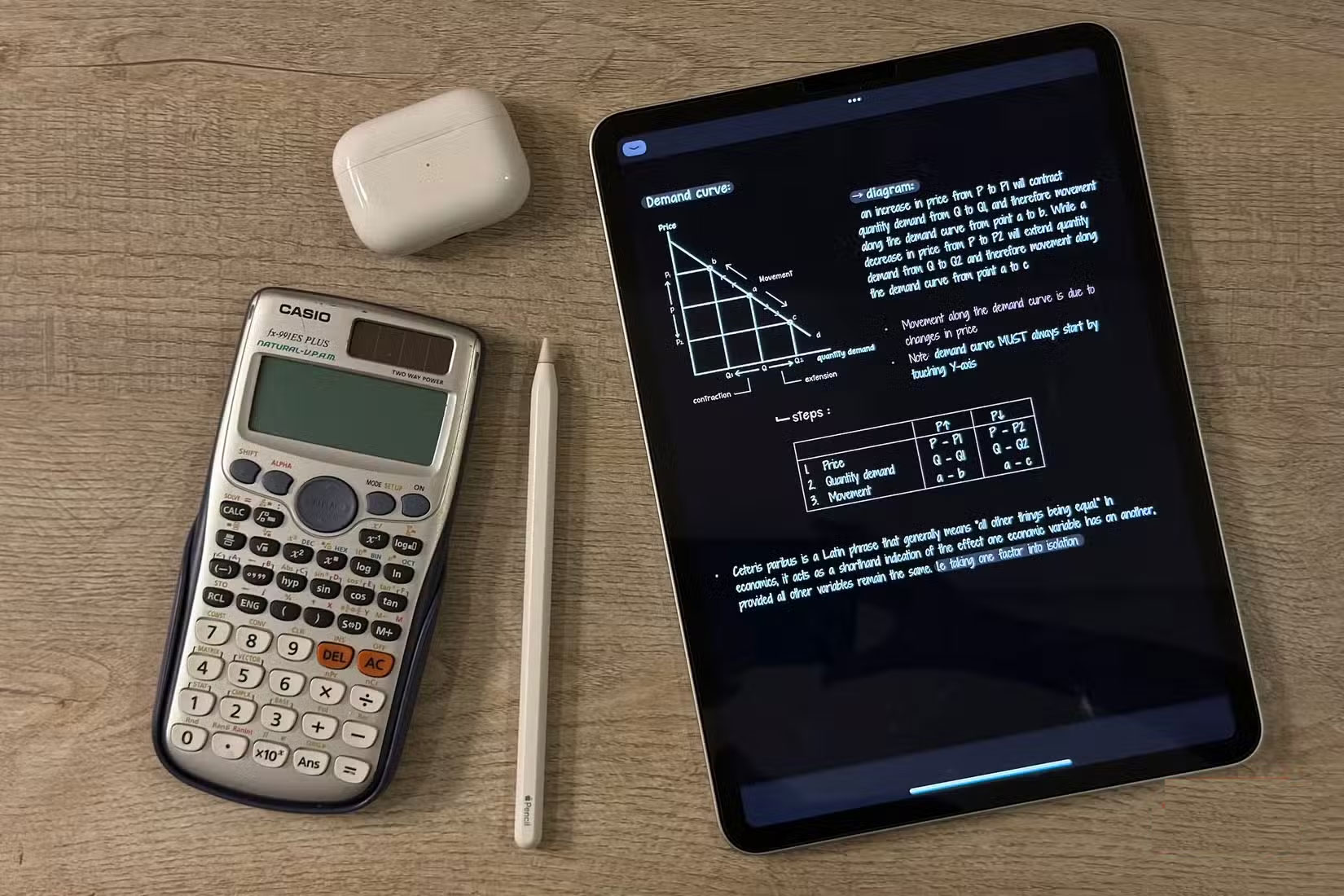
Of course, that didn't happen. Between downloading lecture slides, annotating PDFs, installing necessary apps, and occasionally storing offline videos for classes, the memory filled up faster than expected.
The performance difference is almost negligible
Fast chip doesn't matter if you're just using it for note taking
The biggest difference between the 5th-generation iPad Air and the iPad (A16) in terms of specs is the processor. The 5th-generation iPad Air is powered by Apple's M1 chip, the same chip found in some low-cost Macs, while the standard iPad runs on the newer A16 chip. I've been using the iPad (A16) for over a week, and I've been using the iPad Air for years, and there's no difference in performance between the two.
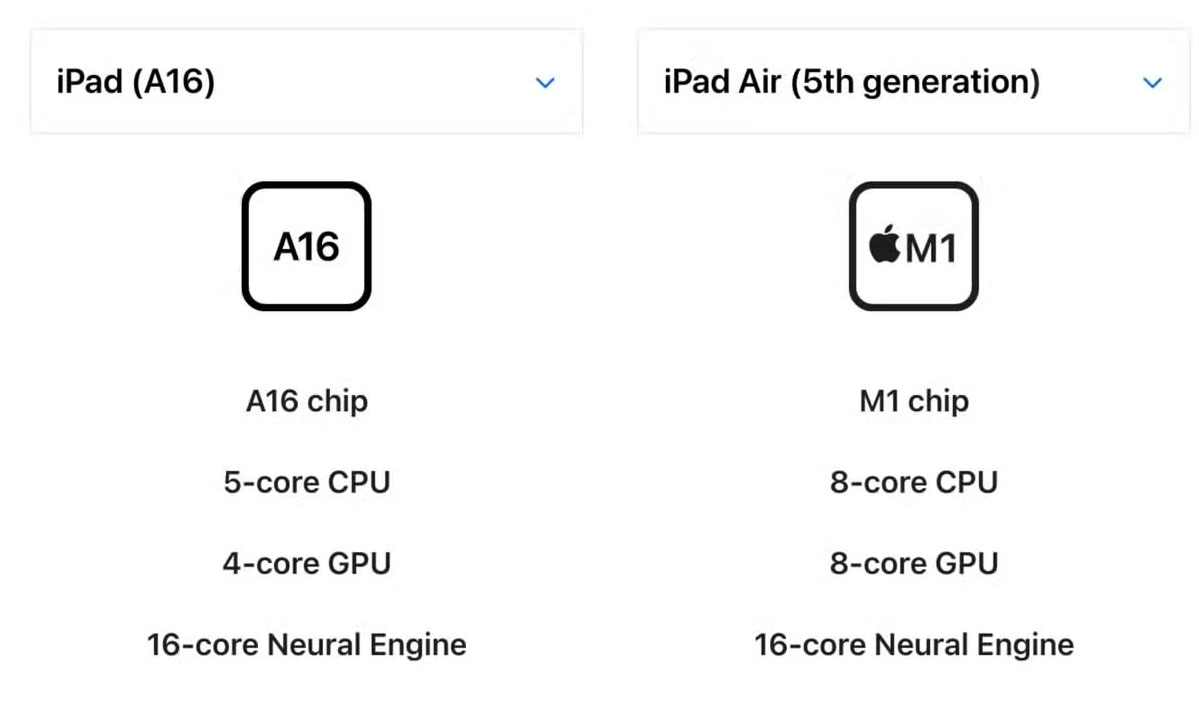
The battery life on the standard iPad is also excellent, easily getting you through a full day of use. According to Apple's specs for the M1 iPad Air and the standard iPad with the A16 chip, both can get up to 10 hours of web browsing on Wi-Fi and 9 hours on cellular. So while Apple may have placed these chips differently, you won't notice the difference in day-to-day use.
The Air is barely more portable than the budget iPad
Only a few grams thinner, almost unnoticeable
At this point, you're probably thinking - if there's no significant difference in performance, at least the Air makes up for it in portability. After all, the Air is supposed to be thinner and lighter than the rest. But like performance, the difference here is also barely noticeable.
The 5th-generation iPad Air weighs around 450g, while the iPad (A16) weighs 450g. That's about the same weight as a pencil, and you won't feel any weight carrying both around in your backpack. Admittedly, the standard iPad looks a lot thicker. However, many people don't mind the extra thickness, as it doesn't really cause any inconvenience.
The best Apple Pencils aren't compatible with the iPad (A16), but there are alternatives
Third-party styluses will be a lifesaver
While the first-generation Apple Pencil and the USB-C version were great, many people didn't like them. Having to plug the Pencil into the iPad port in such an awkward position felt outdated and inconvenient, especially since the new Apple Pencils can charge magnetically.
Unfortunately, while you'll find iPad Air models that support the newer Pencil Pro and the second-generation Apple Pencil, the standard iPad with the A16 chip only supports the older, unloved models. While that may sound like a drawback, luckily there are plenty of great third-party styluses that offer similar functionality at a fraction of the price.
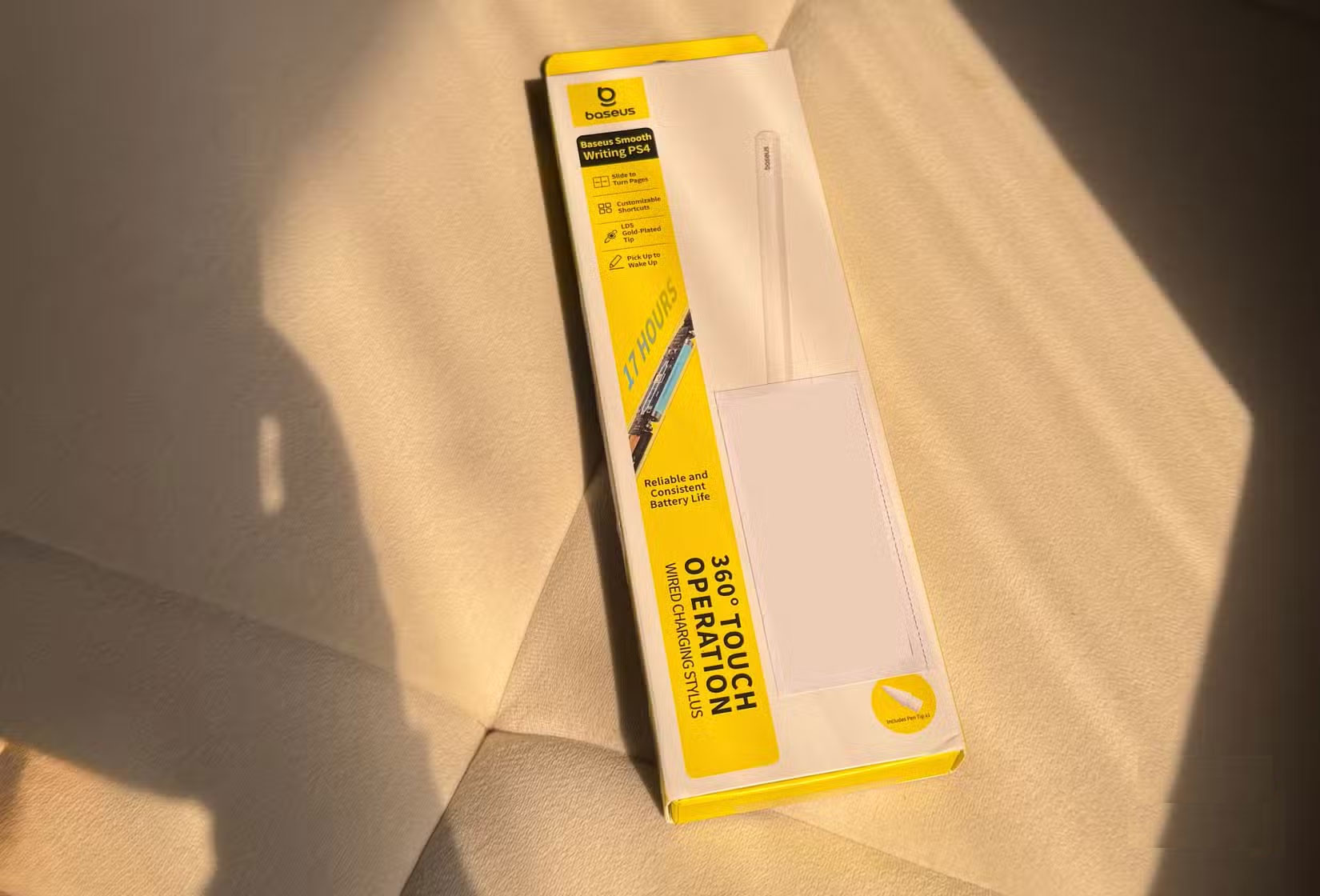
Despite magnetically attaching to the iPad, the Baseus Smooth Writing PS4 still needs to be charged via USB-C. However, its battery life is excellent, and it only needs to be charged every two or three days.
Final Thoughts
The key takeaway is that Why Many People Regret Buying iPad Air is easier to evaluate when its benefits, limitations, and real-world use are considered together. Review the details above before applying the information to a specific situation.
FAQ
What is the main point of Why Many People Regret Buying iPad Air?
Lugging heavy textbooks across campus and juggling multiple notebooks and binders for each class is the last thing anyone wants to do in college. So many people do what countless students on social media and in their friend groups do: buy an iPad.
What should you know about Who doesn't want to save money??
I bought my 5th generation iPad Air almost two years ago, and the base model started at $599. The base model has 64GB of storage, and as a student on a tight budget, I decided to buy it anyway.
What limitations should readers keep in mind?
The answer can depend on the product version, source, use case, and date of publication. Review the article's context and confirm time-sensitive details before applying the information.
Related Articles
 Should I Use Cheaper Magic Keyboard Alternatives?6 minutes read
 Why Do Many People Regret Buying a Soundbar?6 minutes read
 Don't Complain, Remember the 16 Things to Do to Live a Life8 minutes read
 6 Reasons Why Many People Regret Buying Nintendo Switch5 minutes read
 How to Thoroughly Check Old iPhone Before Buying3 minutes read
 Why Do Many People Regret Buying a Laptop Instead of a Desktop6 minutes read
Reader Comments 0
Sign in with email or Google to join the discussion.