Table of Contents
The iPhone 17's powerful battery life, fast performance, pro-level display, and high-quality camera easily make it the best iPhone for the price and a top choice for anyone looking to upgrade their phone.
The iPhone 17's powerful battery life, fast performance, pro-level display, and high-quality camera easily make it the best iPhone for the price and a top choice for anyone looking to upgrade. This base model is on par with the iPhone Pro.
Apple iPhone 17 Specifications
- Battery Life (Tested): 24 hours 31 minutes
- Camera resolution (Rear; Front): 48MP, 48MP; 18MP
- CPU : Apple A19
- Dimensions : 5.89 x 2.81 x 0.31 inches
- Operating system : iOS 26
- Screen resolution : 2,622 x 1,206 pixels
- Screen size : 6.3 inches
The standard iPhone 17 is now available for around $1,000 (256GB). The iPhone 17 has the same display as the iPhone 17 Pro (around $1,500/256GB), better battery life and performance than the iPhone Air (around $1,500/512GB), and costs much less than the iPhone 17 Pro Max (around $1,500/256GB), offering a great combination of features, performance, and value. The Air may be more impressive, and the Pro models have more advanced camera systems, but the iPhone 17 is the best iPhone for most people.
Design: Simple, elegant
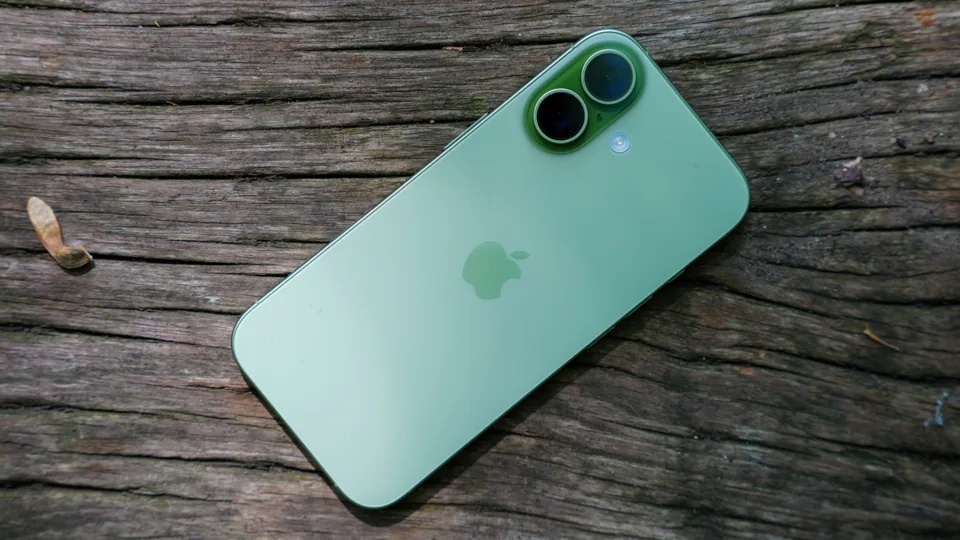
While it doesn't have the Air's slim and light design or the massive camera array of the Pro models, the iPhone 17 still strikes a good balance between size, weight, features, and usability. Of all Apple's new phones, the standard iPhone 17 looks the most similar to its predecessor, the iPhone 16.
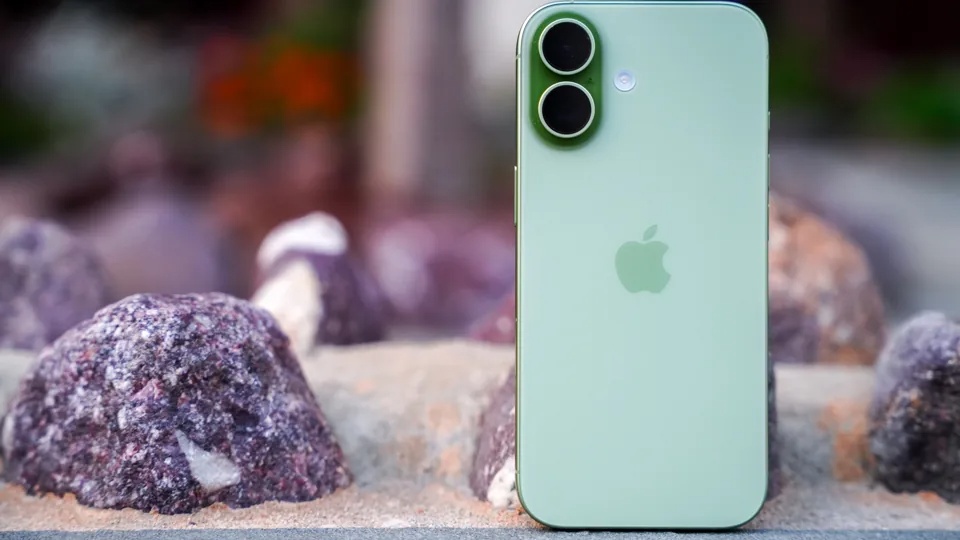
Its design is among the simplest and cleanest, combining a sophisticated Ceramic Shield 2 glass front, a Ceramic Shield glass back, and an aluminum frame with delicate lines, creating a comfortable look. This year's color versions include Lavender, Sage, Mist Blue, Black, and White.
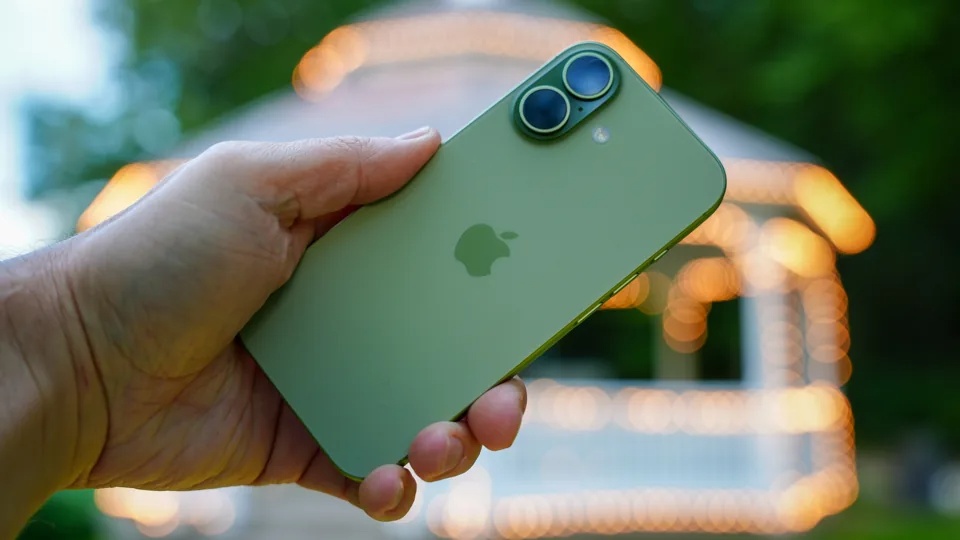
The iPhone 17 (5.89 x 2.81 x 0.31 inches, 6.24 ounces) is slightly larger and heavier than the iPhone 16 (5.81 x 2.82 x 0.31 inches, 6.0 ounces), thanks to its larger display (6.3 inches vs. 6.1 inches). The difference is so small that you won't notice it unless you hold both phones at the same time. It's still the most compact member of the iPhone 17 family.
The matte feel of the rear glass and the minimalist look of the camera cluster are big pluses. The metal frame has a nice grain that only shows up when you look closely. The phone has the same IP68 rating as the iPhone 16, the same level of dust and water resistance you'll find on the Pixel 10 and Galaxy S25.
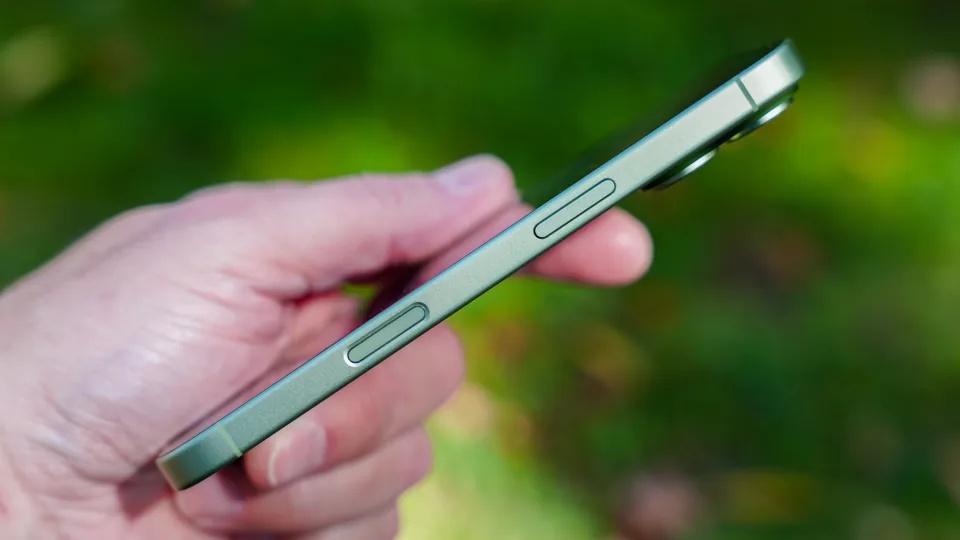
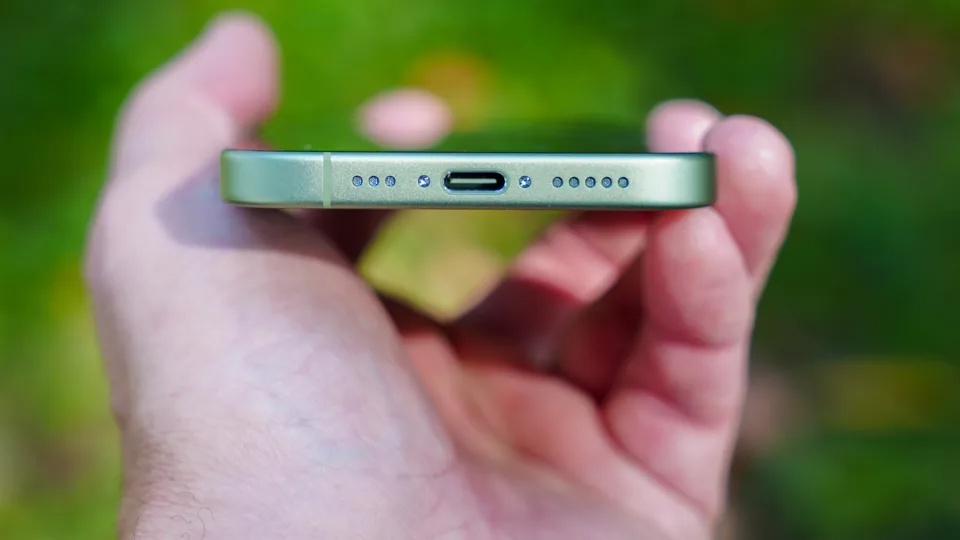
The buttons and ports are all in the same place. From top to bottom along the left edge, you'll find the Action button, Volume Up, and Volume Down. As before, you can program the Action button to perform multiple tasks. On the left edge, you'll find a large power button closer to the top and a Camera Control button a little below. All of the buttons have good feedback, while the Camera Control button feels smoother. The USB-C (v2.0) port and speaker grille are on the bottom edge, along with two small screws. You won't find a SIM card tray, a feature that's been absent since the iPhone 14. US models only support eSIM, while international models still have a physical SIM tray.
It's a shame Apple hasn't upgraded the USB port. The 2.0 port is limited to 480Mbps data transfer speeds, while the Pro models come with faster USB 3.0, which can handle speeds of up to 10Gbps (20 times faster than USB 2.0).
Professional monitors at cheaper prices
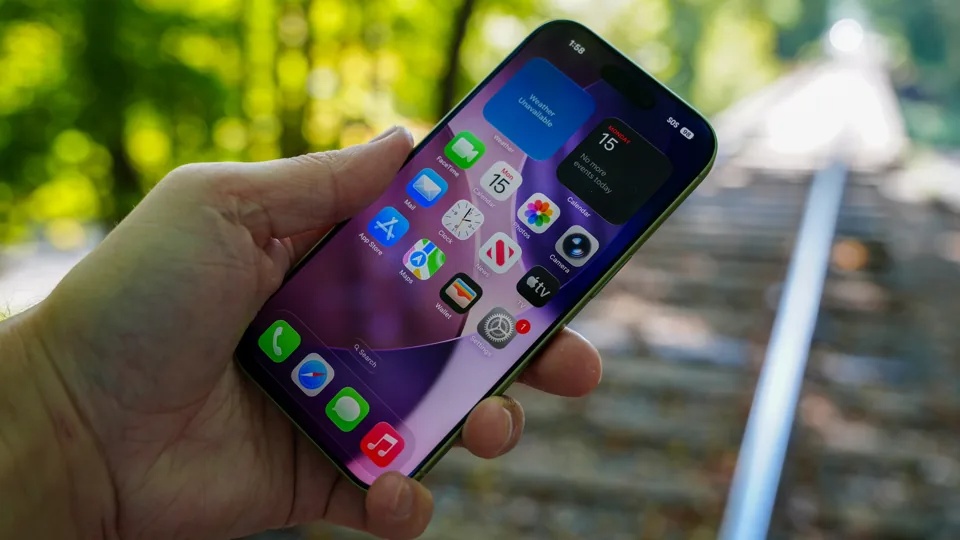
With the iPhone 17, Apple has upgraded the basic iPhone to a professional display without increasing the price. In terms of specifications, the iPhone 17 has the same display as the iPhone 17 Pro.
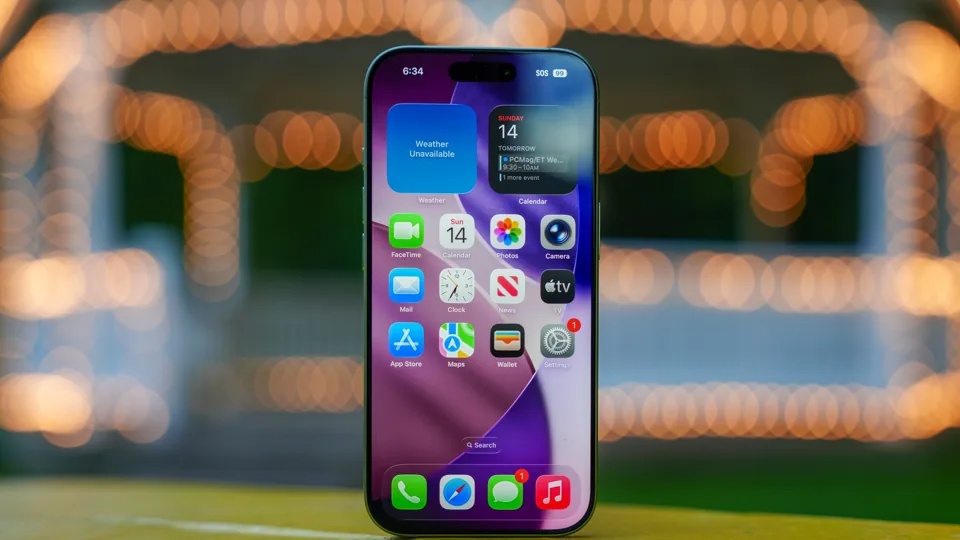
The display increases from 6.1 inches on the iPhone 16 to 6.3 inches, the resolution increases from 2,556 x 1,179 pixels at 460 ppi to 2,622 x 1,206 pixels at 460 ppi, and the brightness also jumps from a peak of 2,000 nits to a peak of 3,000 nits. Users will also get the full Dynamic Island experience with the Face ID scanner for secure biometric transactions.
More importantly, the iPhone 17 ditches the static 60Hz display of last year's phone and adopts a ProMotion display, which has a variable refresh rate from 1Hz to 120Hz, and introduces an Always-on Display feature for basic iPhone users. The Always-on Display feature (which shows wallpaper, clock, notifications, and widgets) has been available on Pro iPhone models (and budget Android phones) for years, so it's a welcome upgrade.
Performance: All the power you need
The iPhone 17's performance is as expected. It's not as fast as the Pro models, but it outperforms many Android rivals, including Google's Pixel 10, in benchmarks.
The iPhone 17 is built on Apple's base A19 processor, which includes a 6-core CPU, a 5-core GPU, and Apple's Neural Engine or NPU. What's new with the A19 is that each GPU core has its own Neural Accelerator, which the company says enhances the chip's ability to handle AI calculations. The iPhone Air gets an upgrade to the A19 Pro with the same number of cores. The iPhone 17 Pro and 17 Pro Max also get the A19 Pro processor, but each has an additional GPU core. Clock speeds have not been revealed.
As expected, the iPhone 17 has the lowest RAM of the bunch at just 8GB, while the others all have 12GB. Importantly, Apple has finally bumped the base storage from 128GB on the iPhone 16 to 256GB on the iPhone 17. You can opt for the 512GB version if you want.
In our regular battery performance tests, the iPhone 17 surprisingly runs a bit faster than the iPhone Air, while the iPhone Air gets much hotter than the iPhone 17 when running multiple tasks. Meanwhile, the iPhone Pro is about 10% faster, not as much of a difference as expected.
Ultimately, the iPhone 17, with its combination of memory and A19 power, is more than enough to handle all the apps, everyday tasks, and Apple Intelligence demands. In our tests, the phone had no trouble generating AI images, creating new Genmoji, and supporting Apple Photos' editing tools.
Battery: Job well done
Apple doesn't disclose the battery capacity of the iPhone 17, but it's enough to last a day. In the past, basic iPhones have had pretty good battery life, and the iPhone 17 is no exception.
The battery test involves streaming a full HD YouTube video over Wi-Fi with the screen brightness set to maximum. The iPhone 17 lasted 24 hours and 31 minutes. That's less than Apple's claimed 27 hours of media streaming, but still significantly better than the iPhone Air's 19 hours and 31 minutes. In our tests, the Pro and Pro Max lasted about 3 and 8 hours longer, respectively.
The iPhone 17 charges slightly faster than the iPhone 16. It can charge up to 30W wired and up to 25W wireless (with MagSafe and Qi2), similar to the iPhone Pro. We tested it with Apple's new variable-speed charger and it charged from 0% to 100% in 1 hour - a 5-minute improvement over the iPhone 16.
Camera: Excellent all-round results
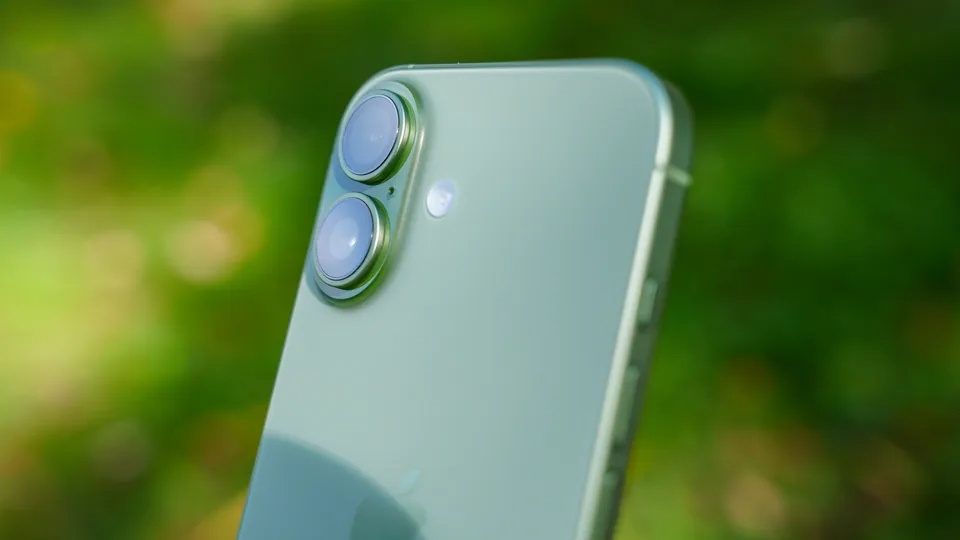
With the iPhone 17, you get two rear cameras and a redesigned front-facing selfie camera, similar to what Apple has used before, but with some improvements.
Apple has revamped the camera app for iPhone 17 and iOS 26. It's now simpler when you first launch it, showing only photo and video capture buttons. You have to swipe left or right to access more shooting modes. Some settings are a bit hidden in new menus. All the same features are still there, but they're organized differently. Your experience will depend a little on how often you use the more advanced features.
The main 48MP Fusion camera has an f/1.6 aperture and sensor-shift optical image stabilization. Like the main camera on the Air, 17 Pro, and Pro Max, it takes a combination of a 48MP photo and a 12MP photo that has been merged, then combines the data into a 24MP final result. Apple claims this gives you the best possible lighting and detail. The company has upgraded the ultra-wide camera to the same 48MP Fusion camera sensor with an f/2.2 aperture and a 120-degree field of view. The iPhone 16 has a 12MP ultra-wide camera, so this is a significant improvement for the wide-angle camera.
The combination of these cameras lets you take photos at 0.5x, 1x, 2x, and 4x optical zoom. You can use digital zoom up to 10x. The Air is limited to 1x and 2x optical zoom, while the Pro models upgrade to 8x optical zoom thanks to the additional telephoto lens.
As usual, the iPhone takes great photos. And as you can see, my test shots are sharp, well exposed, with beautiful, natural-looking colors.

The selfie camera is identical on all four new iPhones. It's an 18MP Center Stage camera with a new square sensor that lets you take wide-angle or high-angle shots no matter how you hold the phone. You can choose from four basic shooting modes, then apply portrait and other effects to get a range of impressive selfies. Selfie lovers will appreciate this addition. The front camera takes excellent photos from all angles.

The iPhone 17 has enough video tools to satisfy most casual users. In addition to 4K60 with Dolby Vision, the phone supports multiple time-shift modes, Action and Cinema modes for stylized footage, and enough resolution and frame rates to get exactly what you want. The footage I shot with the iPhone 17 looked excellent. The tools are more than enough for everyday video shooting.
Finally, the iPhone 17 has Dual Capture, which lets you record video from both the front and rear cameras at the same time. While Android phones have been able to do this for a decade or more, it's a new feature for the iPhone that will likely lead to many new content on social media. It worked well in our tests.
FAQ
What should you know about iPhone 17 details?
In practical terms, the iPhone 17's powerful battery life, fast performance, pro-level display, and high-quality camera easily make it the best iPhone for the price and a top choice for anyone looking to upgrade their phone.
Why does iPhone 17 details matter?
The article highlights that the iPhone 17 has the same display as the iPhone 17 Pro (around $1,500/256GB), better battery life and performance than the iPhone Air (around $1,500/512GB), and costs much less than the iPhone 17 Pro Max (around.
What is the main takeaway?
The main takeaway is that the Air may be more impressive, and the Pro models have more advanced camera systems, but the iPhone 17 is the best iPhone for most people.
Related Articles
 iPhone 17 Pro Max Details: Complete Guide9 minutes read
 iPhone 17 Air Details: Complete Guide8 minutes read
 iPhone 16 Plus Details: What You Need to Know11 minutes read
 Comparing the Configuration of Apple's New iPhone Trio, Xr Is the Most Buffered Smartphone3 minutes read
 How Did Bkav Announce the Details of the Face ID on the iPhone X?12 minutes read
 Fixes the Issue Where Details from Copilot Are Not Working: Explained4 minutes read
Reader Comments 0
Sign in with email or Google to join the discussion.