Table of Contents
This practical guide explains how to disable secure boot mode with clear steps and useful context. It also covers common requirements, potential problems, and the details that can help you get better results.

1. Boot into BIOS
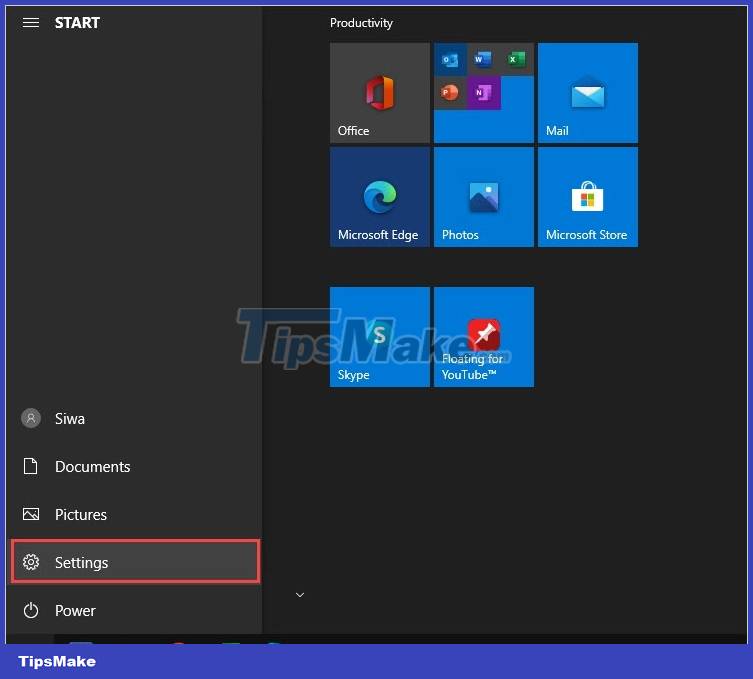
Step 1: First, you proceed to open the Start Menu and select Settings to open the settings.
Step 2: Then you choose Update & Security .
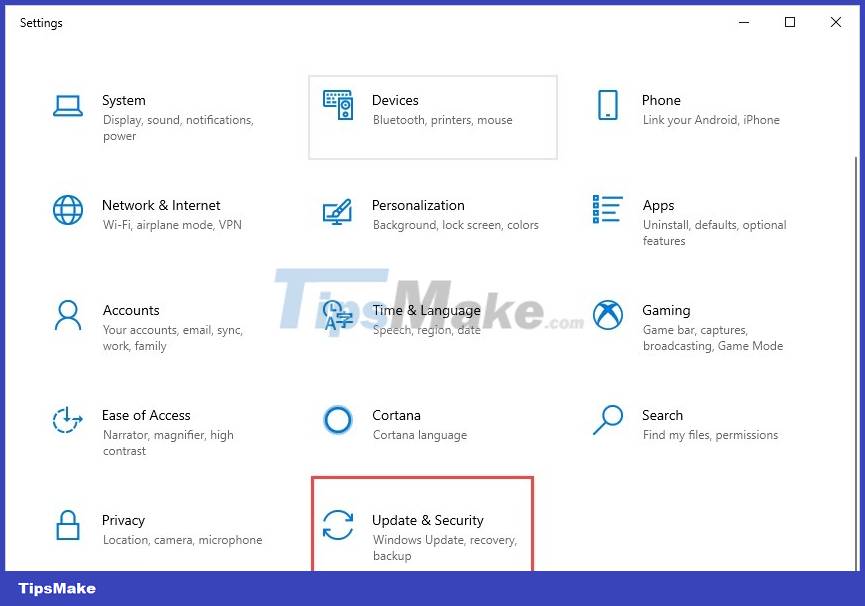
Step 3: Next, select Recovery and select Restart Now to restart the computer.

Step 4: When you boot in Recovery mode, select Troubleshoot to enter fix mode.

Step 5: you continue to select Advanced Options to open options.

Step 6: Finally, select UEFI Firmware Settings to boot the machine into BIOS.
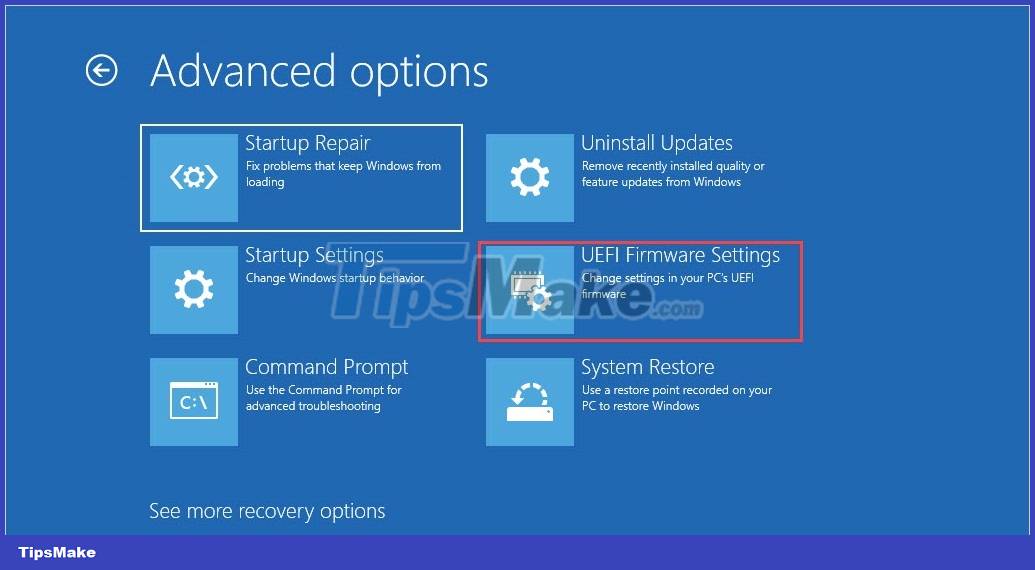
Step 7: you choose Restart to restart the machine with BIOS.

2. Set to Disable Secure Boot
The Secure Boot feature of each motherboard is located in a different location, but in general they will be in the Boot, BIOS or Security section, so give it a try! When you find the Secure Boot entry, your job is to switch them to Disable mode and you 're done.
If you use Gigabyte, ASRock, ASUS motherboards, you can see their location through the image below:
ASUS motherboard: Boot -> Secure Boot State -> Press Enter, select Disable -> F10 to save and reboot.

ASRock motherboard: Security -> Secure Boot -> Press Enter, select Disable -> F10 to save and reboot.

Gigabyte motherboard: BIOS -> Secure Boot -> Press Enter, select Disable -> F10 to save and reboot.

In this article, Tipsmake showed you how to turn off Secure Boot mode on your computer. Good luck!
Conclusion
Understanding Turn Off Secure Boot Mode makes it easier to compare options, avoid common mistakes, and apply the information in this guide more effectively. Review the relevant requirements before making changes or choosing a solution.
FAQ
How do you disable secure boot mode?
Follow the steps in this guide in order, confirm the required settings or tools, and verify the result before making additional changes.
Is it safe to disable secure boot mode?
It is generally safe when you follow the recommended instructions, use trusted tools, and avoid changing settings you do not understand.
What should you do if the process does not work?
Recheck the requirements, restart the device or application when appropriate, and review each step for missed settings or compatibility issues.
Related Articles
 How to Disable // Enable Uefi Secure Boot in Windows 105 minutes read
 Enable or Disable Secure Boot via the Asus Uefi Bios Utility6 minutes read
 How to Check Secure Boot Has Been Enabled on Your Computer or4 minutes read
 How to Turn Off Secure Boot Mode and Open Boot Legacy Mode6 minutes read
 How to Enable or Disable UEFI Secure Boot in BIOS8 minutes read
 Valve Adds Secure Boot and TPM Checks to Steam on Windows: What to Know3 minutes read
Reader Comments 0
Sign in with email or Google to join the discussion.