Table of Contents
DPI used to be considered a measure of gaming mouse power, but now it is no longer important. So what factors determine the mouse experience?
In the world of computer mice—especially gaming mice—there are few specs that get talked about as much as DPI (Dots Per Inch). Higher numbers attract more attention, and that's every marketer's dream. But when mice today reach 12,000 or even 30,000 DPI, it seems like manufacturers have gone too far.
Of course, there are still online gamers who claim that playing at 30,000 DPI sets them apart. However, the reality is that they don't actually play at that sensitivity level all the time. And unless you're a pro, you have all the more reason not to be drawn into the marketing hype surrounding the 'huge' DPI number.
Actually no need for very high DPI
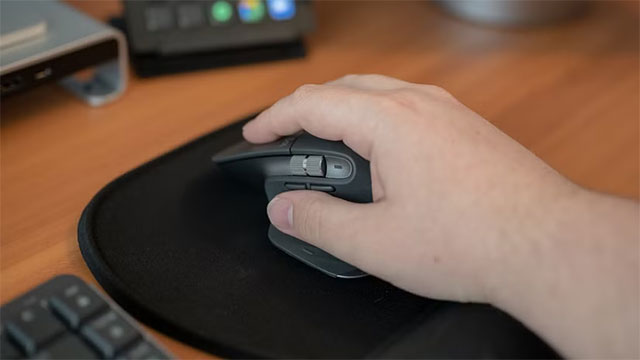
For general use, most good office mice don't have very high DPIs. The MX Master 3S, for example, only supports up to 8,000 DPI—which is already considered very high for a work mouse. This level is only necessary for a small group of professional users who need extremely high precision on large-resolution screens.
For most people, around 800 DPI is the most comfortable level for working on a computer. Above 1,600 DPI, the mouse becomes too 'jerky' and difficult to control.
Even among professional gamers, aggregated data from the Reddit community shows that most of them use a DPI between 800–3,200, with some even lower. It is very rare to exceed this.
Factors that really matter more than DPI
If DPI isn't the most important parameter, then what really matters in a mouse?
- Polling rate: This is the speed at which the mouse sends signals to the computer. For an office mouse, 125Hz is enough, but for smooth gaming, you need at least 1,000Hz.
- Stable sensor: A sensor that is vibration-free, drift-free, and tracks accurately is what makes the experience.
- Ergonomics and durability: No matter how high DPI a mouse has, it's useless if it hurts your hands. Also, build quality is much more important than marketing numbers.
When too high DPI becomes a disadvantage
Anyone who has ever tried a mouse at 8,000 DPI knows how uncontrollable it feels. At 12,000 or 30,000 DPI, the mere pulsation of your pulse is enough to move the cursor.
To combat this, manufacturers are forced to add smoothing algorithms, but this increases latency. Some even use 'DPI ramping' — meaning the DPI isn't fixed, but changes depending on movement. However, this is still software intervention and causes lag. It's no wonder that almost no eSports players play at very high DPI settings.
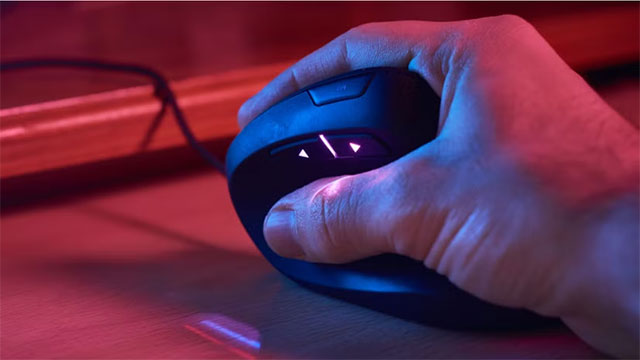
In reality, there is no one-size-fits-all DPI 'standard'. Everyone has different preferences, combining DPI and sensitivity in software/games to find the most comfortable experience.
As a general rule: start at around 800–1,600 DPI, then adjust the sensitivity in-game or in your operating system. If it doesn't feel right, consider increasing or decreasing it further.
You don't have to shy away from 8K, 12K, or 30K DPI mice, but remember that DPI shouldn't be the primary reason to buy one. More importantly, read other users' real-world experiences and see if the mouse fits your needs.
FAQ
What should you know about DPI is no longer an important parameter for computer mice?
In practical terms, dPI used to be considered a measure of gaming mouse power, but now it is no longer important. So what factors determine the mouse experience.
Why does DPI is no longer an important parameter for computer mice matter?
The article highlights that actually no need for very high DPI For general use, most good office mice don't have very high DPIs.
What is the main takeaway?
The main takeaway is that factors that really matter more than DPI If DPI isn't the most important parameter, then what really matters in a mouse.
Related Articles
 Mice: How to Teach Children How to Use the Mouse?5 minutes read
 Top 5 Best Trackball Mice 20216 minutes read
 5 Best Silent Mice (Silent Mouse)6 minutes read
 Computer Mouse: Top Best Wireless Mice 201910 minutes read
 Top 10 Best Computer Mouse 20198 minutes read
 Differentiate Optical Mice and Laser Mice13 minutes read
Reader Comments 0
Sign in with email or Google to join the discussion.