Table of Contents
This guide provides a clear, practical overview of "The Complex Psychological Mysteries of the Mind". It organizes the most useful details, explains important considerations, and highlights the steps or choices that matter most.
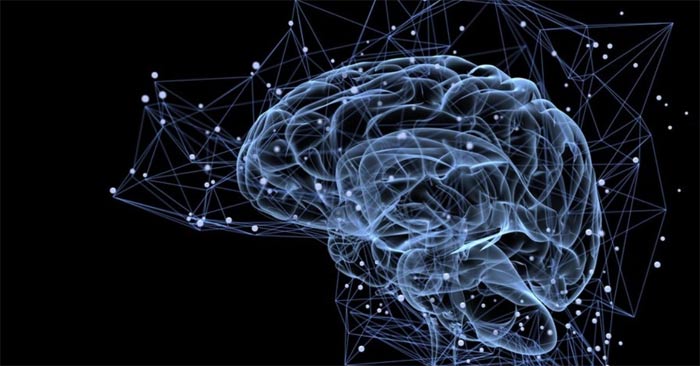
If reality feels a little off, or if a place you've known for a long time suddenly feels both familiar and unfamiliar, you're experiencing what some call a "mental glitch." This article takes you through the depths of your brain and the hallucinations it can create, whether activated or not.
What exactly is Jamais Vu?
Jamais vu is a lesser-known phenomenon than déjà vu, and it can be unsettling. Some people report that while talking to a close friend, their companion's face suddenly becomes unfamiliar for a few seconds—as if they've turned into a stranger. Others walk into a familiar building but feel as if they've never been there before. The phrase means "never seen" in French, and although it's considered rare, jamais vu is a recognized psychological phenomenon.
Experts don't fully understand what causes this phenomenon, but one theory is that neural pathways in the brain temporarily become out of sync or disconnected, disrupting your perception. A less scientific explanation is that distraction can cause your brain to process something as if it were unfamiliar, even if you already know it well. Either way, it's a small but strange shift in perception.
What is Presque Vu?
Presque vu is even more annoying than jamais vu. It's what happens when you're in the middle of a conversation and suddenly can't recall a word or phrase you've used for most of your life. You know exactly what you meant, but the word remains frustratingly out of reach. Hence the name: " almost there ." Also known as the tip of the tongue phenomenon, presque vu is incredibly common—over 90% of people experience it. Psychologists believe it happens when you remember a similar but incorrect word in advance (like "momentum" instead of "momentary"), which temporarily blocks access to the correct word. Luckily, it's harmless. But remember, the more you stress about it, the longer it will take you to recall it. So stop trying. Your brain will probably give you the answer when you least expect it.
Frequency Illusions Aren't as Real as You Think
Have you ever learned a new word, like ' serendipity ,' and suddenly started seeing it everywhere—on TV, on social media, and in books? That's the frequency illusion, also known as the Baader-Meinhof phenomenon. It's not that the word just popped up; it's that your brain is on high alert for it. This process is called selective attention. When your brain decides something is important, it filters it out over and over again. Then confirmation bias kicks in—you notice the word over and over again and start to believe it's happening more often than ever before. The illusion is harmless, but marketers know how to exploit it. When you select a topic, algorithms flood your feed with similar content. You might find yourself obsessing over something you didn't care about before. Be careful. Remember that not everything that "seems" regular is actually new.
Are prophecies real?
Precognition—the alleged ability to know the future—remains one of psychology's most controversial phenomena. It fascinates many, but the scientific consensus rejects it, largely because it violates the law of causality: an effect cannot come before a cause. That hasn't stopped thousands of people from claiming to have predicted events, whether personal tragedies or global catastrophes.
Experts often attribute these experiences to coincidence, unconscious pattern recognition, or false memories—sometimes associated with déjà vu. While intriguing, this should be viewed as imaginative prediction rather than evidence of psychic ability.
What about Reminiscence?
Precognition is the alleged ability to perceive past events that you cannot know about through normal means. Like precognition, it exists within the realms of science and paranormal belief. The most famous example is the Moberly-Jourdain incident. In 1901, Charlotte Moberly and Eleanor Jourdain claimed to have seen visions from the past while walking in the gardens of Versailles. They described strange people, buildings, and landscapes that they believed no longer existed.
They later allegedly found a map from 1783 that showed features matching the description. Skeptics have suggested that the details may have been unconsciously memorized or reconstructed from historical records. Scientists point out that there is no way to test perception, so the reliability of the recollection remains questionable. However, it remains a staple of ghost stories and time travel.
FAQ
What exactly is Jamais Vu?
Jamais vu is a lesser-known phenomenon than déjà vu, and it can be unsettling. Some people report that while talking to a close friend, their companion's face suddenly becomes unfamiliar for a few seconds—as if they've turned into a stranger. Others walk into a familiar building but feel as if they've never been there before.
What is Presque Vu?
Presque vu is even more annoying than jamais vu. It's what happens when you're in the middle of a conversation and suddenly can't recall a word or phrase you've used for most of your life. You know exactly what you meant, but the word remains frustratingly out of reach. Hence the name: " almost there." Also known as the tip of.
What should you know about frequency Illusions Aren't as Real as You Think?
Have you ever learned a new word, like ' serendipity,' and suddenly started seeing it everywhere—on TV, on social media, and in books? That's the frequency illusion, also known as the Baader-Meinhof phenomenon. It's not that the word just popped up; it's that your brain is on high alert for it. This process is called selective.
Are prophecies real?
Precognition—the alleged ability to know the future—remains one of psychology's most controversial phenomena. It fascinates many, but the scientific consensus rejects it, largely because it violates the law of causality: an effect cannot come before a cause. That hasn't stopped thousands of people from claiming to have.
Related Articles
 21 Psychological Tricks to Help You Read Anyone's Taste9 minutes read
 Simple Psychological Tips to Help You Live a Happier Life8 minutes read
 4 Tools to Help Create an Online Mind Map8 minutes read
 Top 10 Psychological Effects That Affect Human Behavior You May Not6 minutes read
 Best AI Tools for Creating Mind Maps7 minutes read
 Complex ()() Function in Python4 minutes read
Reader Comments 0
Sign in with email or Google to join the discussion.